AI for Real Estate Agents: Where It Saves Time
AI for real estate agents is software that turns the notes, listing details and client records an agent already keeps into drafts: a listing description, a reply to a buyer’s question, a follow-up after an open house. The agent reads each draft, fixes what needs fixing, and approves it before anything reaches a client or a listing site. The hours come back from the writing and the reminders, the parts of the week that keep an agent at a desk instead of at showings.
Where AI for Real Estate Saves Time
Most of an agent’s writing repeats. Every listing needs a description, every lead needs a reply, every open house needs follow-ups, and every transaction runs on the same deadlines. Real estate AI handles that kind of work well because the facts already exist in the agent’s notes, the listing record and the contract. The agent supplies the judgment, the local knowledge and the final word.
Smoother Operations
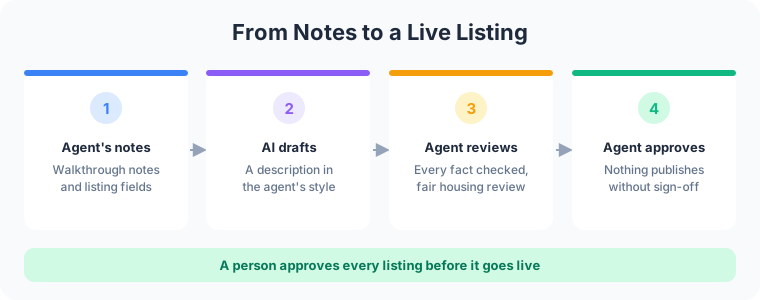
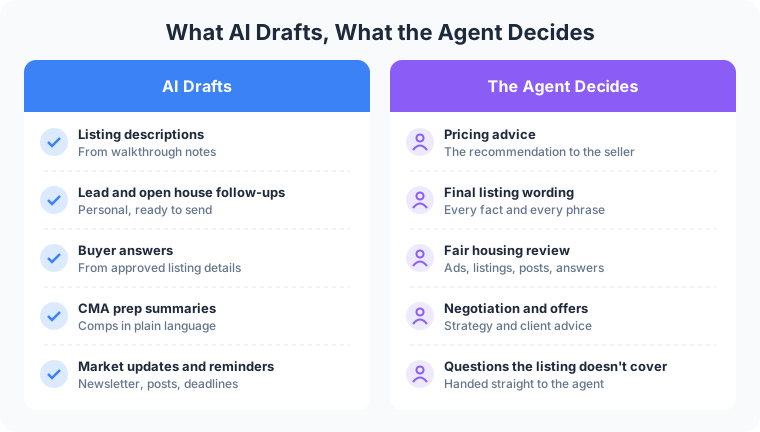
- Listing description drafts from the agent’s notes. After a walkthrough, the agent jots down the basics: the new roof, the converted garage studio, the south-facing yard, the kitchen remodel. AI turns those notes and the listing fields into a draft description in the agent’s usual style. The agent checks every fact against the property and approves the final wording.
- CMA prep summaries. The agent pulls the comparable sales. AI organizes them into a plain-language summary for the seller meeting: what sold nearby, how size and condition compare, and which differences need explaining. The price recommendation stays with the agent.
- Transaction checklist reminders. From the dates the agent enters off the contract, AI drafts reminders for each deadline, such as inspection, appraisal and final walkthrough, and drafts the matching client update for the agent to send.
Picture a listing agent finishing a walkthrough at 4pm. By the time she is back in the car, there is a draft description waiting, built from the voice memo she recorded in the hallway. She corrects the square footage of the studio, cuts one line, and approves it for the listing that evening.
More Revenue
- Lead follow-up drafts. When a lead comes in from the agent’s website, AI drafts a reply that answers what the person asked, using the listing details, and offers two showing times from the agent’s calendar. The agent reads it and sends it. A ready-to-review reply helps the agent follow up while the inquiry is fresh.
- Open house follow-ups. From the sign-in sheet and the agent’s notes, AI drafts a personal follow-up for each visitor that picks up on what they asked about during the tour. The agent approves each one before it goes out.
- Market update content. This is where AI for real estate marketing earns its place. From the monthly market numbers the agent supplies, AI drafts a neighborhood update for the newsletter, a short social post and a page for the agent’s site. The agent checks the numbers and adds the local read that only someone who works the area can give.
A buyer’s agent with a dozen active leads works the same way. Each morning, AI drafts check-ins for anyone who hasn’t heard from her in a week, each one tied to a new listing that matches what that buyer asked for. She edits two of them, approves the rest, and spends the morning on showings.

Happier Clients
- Buyer question answers from listing details. A buyer on the agent’s website asks whether the washer and dryer stay, or how old the water heater is. AI answers from the listing sheet and the details the agent approved, and passes anything else to the agent with the question attached. Questions about the neighborhood’s residents, or anything the listing doesn’t cover, go straight to a person.
- Clients who know where things stand. Deadline reminders mean the agent sends the “inspection is Thursday, here is what to expect” message before the client has to ask.
A real estate website design built around current listings and fast contact gives the AI accurate information to answer from, and gives the buyer a clear way to reach the agent.
Fair Housing: Why a Person Approves Every Listing
The federal Fair Housing Act makes it illegal for housing advertising to state a preference or limitation based on race, color, religion, sex, disability, familial status or national origin, and many states and cities protect additional groups. An AI draft can slip in wording that describes the kind of buyer a home suits instead of describing the home itself.
That is the plain reason a person reviews every AI-drafted listing, ad, social post and buyer answer for fair housing compliance before it goes out. The brokerage’s own review process and compliance guidance apply to AI-drafted copy the same way they apply to anything an agent writes by hand. This article is not legal advice. Questions about specific wording belong with the brokerage or a fair housing attorney.
How to Start Using Real Estate AI
- One workflow first. Pick the writing that eats the most hours each week, usually listing descriptions or lead replies, and get it running well before adding a second.
- The agent approves before anything goes out. AI drafts. It doesn’t send, post or publish on its own.
- Clear limits on what it can touch. Read access to listing details and the calendar, permission to write drafts, and no access to client loan or bank documents.
- The business owns the setup. The instructions, connections and data belong to the agent or brokerage, written down and handed over.
The guide to AI for small business covers how owners in other industries pick their starting point.
How Frog Stone Media Builds It
Claude Code builds. OpenAI Codex reviews. Human verified and approved.
Claude Code is the primary tool for planning and building. Codex reads the work independently and flags anything that looks off. Then a person reviews the work and how it fits your business before it goes live. The same pattern runs on Frog Stone Media’s own projects: on SacGroceries, AI reads store flyers and customer photo submissions, and a person approves everything before it publishes.
For Your Technical Team
- Grounding in listing data. Drafts and buyer answers are drawn from the listing record, agent notes and approved documents, with retrieval configured per project.
- CRM and calendar connections. Typed tools through MCP servers or vendor APIs, with least-privilege credentials and write actions queued as drafts for approval.
- Fair housing screening. A phrase list supplied by the brokerage can flag wording for the reviewer. It supports the human review and does not replace it.
- Prompt-injection defenses. Inbound lead messages and website questions are treated as untrusted data, and instructions inside them grant no permissions.
- Evals and logging. Saved sets of real listings and questions re-run when prompts or models change, with tool calls logged per project.
Have a task in mind? Email what it is, which tools it touches, and who checks the result today. Scoping starts with a free email exchange, with no sales call. Send it through the contact page, or read what the AI business automation service covers first.