Plumbing AI: Answer More Calls, Book More Jobs
Plumbing AI is software that answers the phone and texts when the crew can’t, turns a customer’s photos into a job sheet, and drafts the quote and the review request, with the owner approving anything that goes to a customer. For a shop where everyone is under a sink or in a crawl space when the phone rings, AI for plumbers means fewer calls rolling to voicemail and fewer jobs going to whichever shop picked up first.
What AI for Plumbers Handles
Some shops call it an AI CSR: a customer service rep that covers the phones and the text line at night, on weekends, and during the lunch rush when the office is short. It works from the information the owner approves, such as the service area, the hours, the on-call rotation and the rules for what counts as an emergency.
Smoother Operations
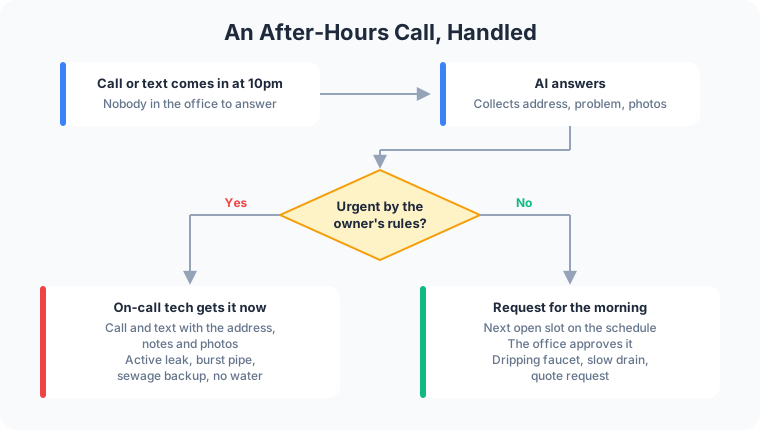
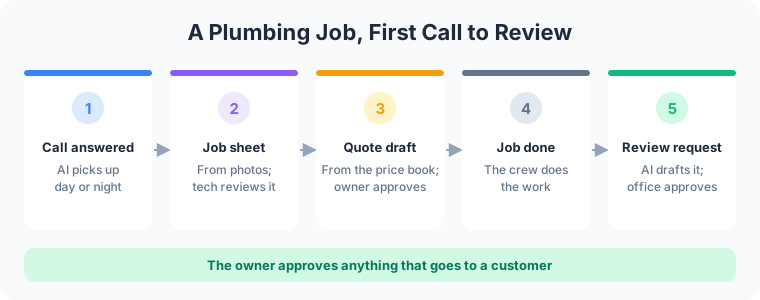
- After-hours call and text answering. At 10pm, a homeowner calls about water under the kitchen sink. AI answers, asks what is happening, and collects the address, a callback number and photos by text. An active leak, a burst pipe, a sewage backup or no water at all goes straight to the on-call tech by phone and text, with the address and notes attached. For a dripping faucet, AI prepares a booking request for the office to approve before it enters the schedule.
- Job sheet prep from photos. The customer texts a photo of the leak and the label on the water heater. AI reads the label details and the customer’s description into a job sheet: address, problem, equipment, access notes. The tech reviews it and plans parts before rolling out.
The same photo-reading pattern runs on Frog Stone Media’s own SacGroceries project, where AI reads customer photo submissions and store flyers, and a person approves everything before it publishes.
More Revenue
- Calls that become booked jobs. A caller with water on the floor calls the next number on the list if nobody picks up.
- Quote drafts for owner approval. From the job sheet and the shop’s own price book, AI drafts the quote. The owner adjusts it, approves it and sends it. Open quotes get a follow-up draft when they go quiet, and the owner decides whether it goes out.
- Service area pages. AI drafts a page for each town the shop serves from the owner’s own notes: the jobs the crew runs there most and the neighborhoods covered. The owner edits each page so it reflects real work in that town. Pages like these belong inside a plumber website design built to turn local searches into calls.
Take a two-truck shop over a weekend. AI answers the calls nobody could take, sends the urgent ones to the on-call tech, and turns the rest into booking requests. On Monday morning the owner opens a list of requested jobs with photos and drafted quotes, approves most of them into the schedule as written, and calls back the two that need a conversation.

Happier Customers
- A real answer at 2am. The customer with a leak hears what happens next and when, instead of a voicemail greeting.
- Review request follow-ups. When a job closes, AI drafts a thank-you text with a link to leave a review. The office approves each request, and every finished job gets one, happy customer or not. A customer with an open complaint also gets a call from the owner.
For a closer look at the phone side, including what to look for and the red flags, the guide to the AI receptionist for small business covers how these systems answer, book and hand off calls.
Where Plumbing AI Stops
Diagnosis, pricing exceptions, warranty disputes and upset customers stay with people. A caller who reports a gas smell hears the safety instructions the owner wrote and is handed to a person right away. AI doesn’t promise arrival times the dispatcher hasn’t set, and it doesn’t quote a price the owner hasn’t approved.
How to Start
- One workflow first. After-hours calls and texts make a natural first workflow for a plumbing shop. Get the urgent-call routing right before adding quotes or review requests.
- The owner writes the rules. What counts as an emergency, who is on call, which towns are in the service area, and what the AI says about pricing.
- A person approves before anything goes out. Quotes, review requests and website pages are drafts until the owner signs off.
- The business owns the setup. The instructions, phone connections and customer data belong to the shop, written down and handed over.
How Frog Stone Media Builds It
Claude Code builds. OpenAI Codex reviews. Human verified and approved.
Claude Code is the primary tool for planning and building. Codex reads the work independently and flags anything that looks off. Then a person reviews the work and how it fits your business before it goes live, including test calls that run each emergency rule end to end.
For Your Technical Team
- Telephony and messaging. Voice and SMS connect through the phone provider’s API. Call transcripts and photos are prepared for office approval before they enter the job record.
- Call consent. Calls are recorded or transcribed only with the consent the law requires. California requires every party on the call to consent.
- Escalation rules. Urgent-call routing reads the on-call rotation, with a fallback contact when the first tech doesn’t acknowledge, set up per project.
- Scheduling and field service connections. Typed tools through MCP servers or vendor APIs, with least-privilege credentials and booking requests queued for office approval before they enter the schedule.
- Photo reading. Vision models pull label details and job notes from customer photos, and the tech confirms them before the visit.
- Prompt-injection defenses and evals. Inbound texts and voicemails are treated as untrusted data, and saved sets of real call scenarios are re-run when prompts or models change.
FAQ
Does plumbing AI replace the office manager?
No. It covers the hours and the overflow the office can’t, then hands the office a list of booking requests, drafts and messages to approve. The office manager still confirms the schedule, talks to upset customers and makes the calls that need judgment.
Will customers know they are talking to AI?
The owner decides how the assistant introduces itself. A greeting that names the shop and says the assistant takes details and reaches the on-call tech sets a clear expectation, and the setup can let a caller ask for a person at any point.
What does a plumbing shop need to provide?
The service area, business hours, the on-call rotation, the list of problems that count as emergencies, and the price book for quote drafts. Plan on time in the first weeks to read the drafts closely and adjust the rules where the AI gets something wrong.
Can AI for plumbers work with the scheduling software the shop already uses?
That depends on the software. Where the scheduling or field service tool offers a connection, AI can read open slots and prepare booking requests that the office approves before they enter the schedule. Scoping starts with the tools the shop runs today.
Have a task in mind? Email what it is, which tools it touches, and who checks the result today. Scoping starts with a free email exchange, with no sales call. Send it through the contact page, or read what the AI business automation service covers first.