Ship the Smallest Thing That Proves It Works
Most startup ideas fail because the founders built too much before talking to real users. The full process is in the guide to building a SaaS MVP. An MVP strips your product down to the one core workflow that validates whether customers will pay for what you are building. No admin dashboards. No analytics. No integrations with systems you do not have yet. Just the core loop, deployed to production, collecting real user data.
Most MVPs launch in 6-10 weeks. Every one ships with production infrastructure, a real database, proper authentication, and a deployment pipeline that supports rapid iteration. These are not prototypes you throw away. When your MVP proves the concept, the same codebase scales into the full product.
What Goes Into an MVP (and What Does Not)
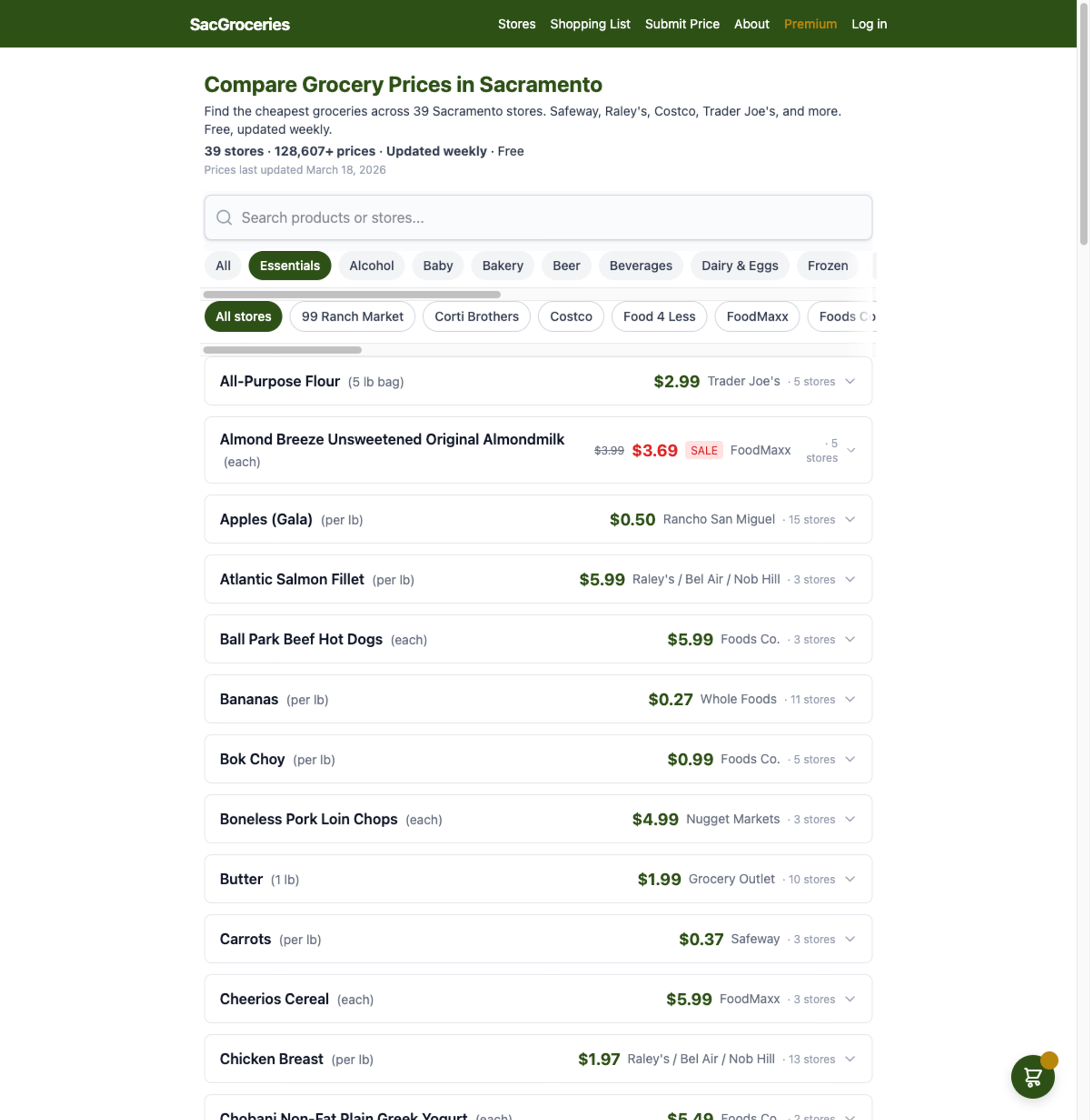
The scoping process is where most MVP projects succeed or fail. Scoping works backwards from the single action your target user needs to complete. For Sacramento Groceries, that was comparing prices across local stores. For MenuFindr, it was searching restaurant menus by dish name. Everything else waited for version two.
Feature lists get pushed back on. Every feature you add to an MVP adds 1-2 weeks to the timeline and dilutes the signal you get from early users. If you launch with 20 features, you will not know which ones matter. If you launch with three, the data tells you exactly where to invest next.
Production Code from Day One
The fastest way to waste money on an MVP is to build it with throwaway code that needs a full rewrite when you find traction. Every MVP uses TypeScript end-to-end, a properly designed database schema, and the same API architecture as a full-scale application. The difference is scope, not quality.
Sacramento Groceries launched its API on Cloudflare Workers with a D1 database. The MVP handled price comparisons across multiple stores from the edge. When the product expanded, new features plugged into the existing data model and API layer without restructuring anything.
The Stack That Scales with You
TypeScript across the frontend and backend. React or Astro for the UI. The Node.js stack or Cloudflare Workers for the API. SQLite or PostgreSQL for the database. Stripe if you need payments on day one. This stack supports everything from a simple data tool to a full SaaS platform with subscription billing and multi-tenant architecture.
Edge deployment on Cloudflare Workers means your MVP launches with global performance, automatic scaling, and zero server management. No DevOps engineer needed. No AWS bill surprises at 3am. You focus on users and product. The infrastructure takes care of itself.
After Launch: Iterate on Data, Not Assumptions
The MVP launch is the beginning of product development, not the end. Every codebase is structured for 2-4 week feature cycles after launch. You ship, measure, learn, and ship again. Most MVPs pivot at least once based on what real users actually do versus what the founder assumed they would do.
Development continues through the iteration phase. New features, bug fixes, and infrastructure updates ship continuously. When the product is ready for growth marketing, Frog Stone Media handles SEO strategy and content that drives organic signups.