The Backend Your Applications Depend On
An API is the central nervous system that connects your frontend, mobile app, partner integrations, and internal tools to your data and business logic. If you are new to the concept, start with the plain-language guide on what an API is and why your business needs one. When the API is fast, typed, and well-documented, every team that builds on top of it moves faster. When it is slow, brittle, or undocumented, every downstream system inherits those problems.
REST APIs here are built with TypeScript and Node.js applications. Every endpoint is typed end-to-end from request validation through business logic to response serialization. Zod validates all incoming data at runtime. OpenAPI documentation generates automatically from the type definitions. Your frontend developers and integration partners get a reliable contract they can build against with confidence.
Third-Party Integrations That Actually Work
Most API projects involve connecting systems. Payment processing through Stripe. Content management through WordPress. Email delivery, shipping providers, CRM syncs, inventory management. Each integration has its own authentication scheme, rate limits, error patterns, and data formats. All of that sits behind clean internal interfaces so your application code stays simple.
Amazon Creators API wraps the Amazon Product Advertising API into a typed TypeScript interface. It handles request signing, response parsing, pagination, and error recovery. The consuming application calls a single function and gets structured product data back. ContentMK integrates with the WordPress REST API for two-way content sync, managing authentication, conflict resolution, and batch operations across multiple WordPress installations.
Edge-Deployed APIs for Global Performance
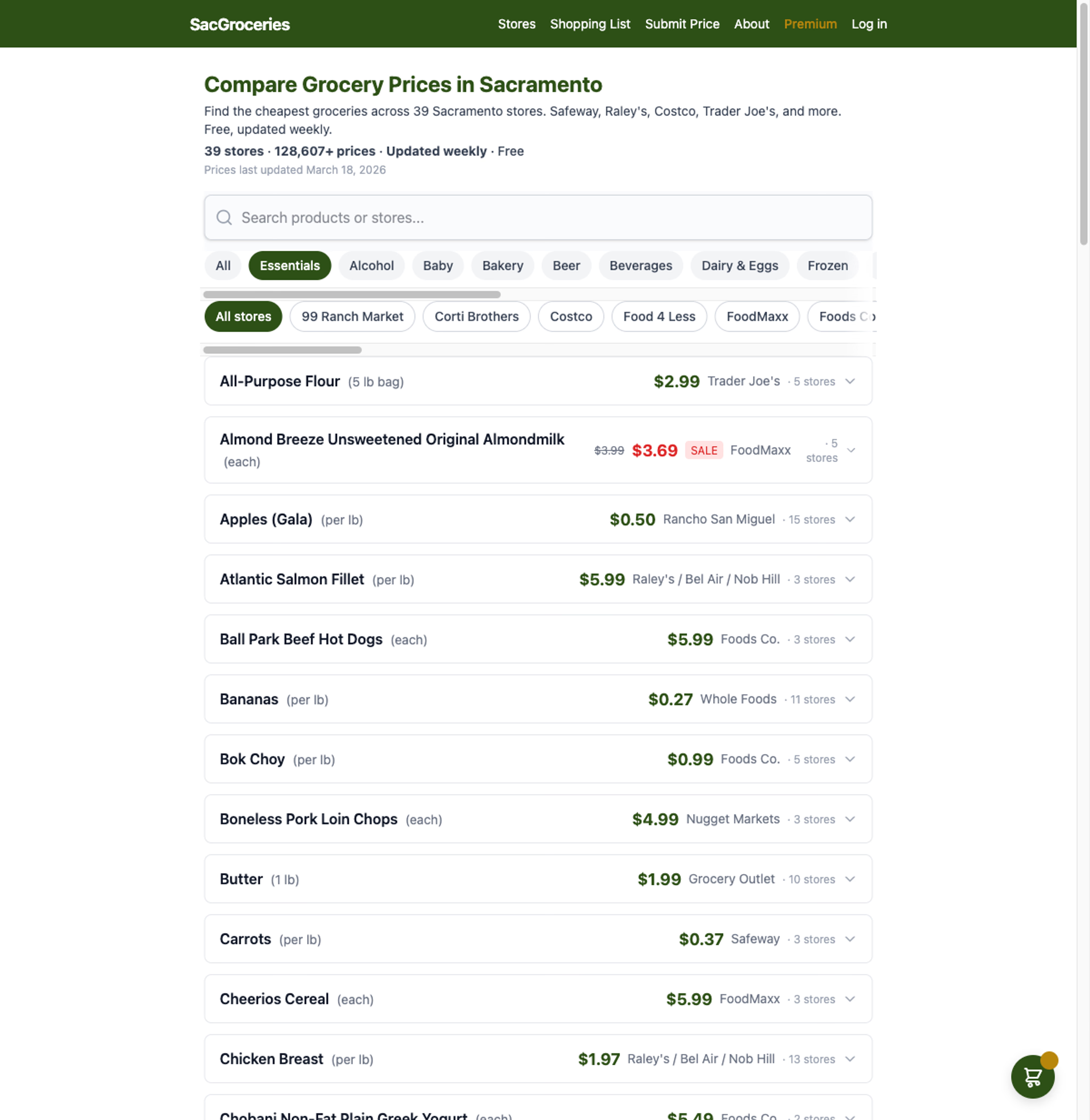
APIs that serve users worldwide deploy on Cloudflare Workers. Your API code runs at 300+ edge locations, close to wherever the request originates. Zero cold starts, automatic scaling, and no servers to manage. Sacramento Groceries runs its entire price comparison API on Workers with a D1 database, handling real-time queries across multiple data sources at edge speed.
APIs that need long-running processes, WebSocket connections, or direct filesystem access run on Node.js with Express or Hono. The framework choice depends on your deployment target and operational requirements. Both deliver the same TypeScript type safety and API design standards.
Webhook Systems and Event Processing
Modern APIs are not just request-response. They receive webhook events from Stripe when a payment succeeds, from GitHub when code is pushed, from Shopify when an order is placed. Webhook receivers include signature verification, idempotency handling, and retry logic. Failed deliveries are logged and reprocessed. Your system stays in sync even when third-party services have temporary outages.
For SaaS applications, webhook processing keeps billing state, user permissions, and application data synchronized with Stripe events in real time. No polling, no cron jobs checking for updates, no stale subscription data.
Documentation and Handoff
Every API ships with OpenAPI (Swagger) documentation that your team can explore interactively. Endpoint descriptions, request and response schemas, authentication requirements, error codes, and example payloads are all generated from the TypeScript type definitions. When the types change, the documentation updates automatically. No separate wiki to maintain.
Delivery also includes deployment procedures, environment configuration guides, and a written handoff. Your team operates the API independently after delivery. For ongoing development and marketing support, Frog Stone Media handles SEO and content strategy in-house.