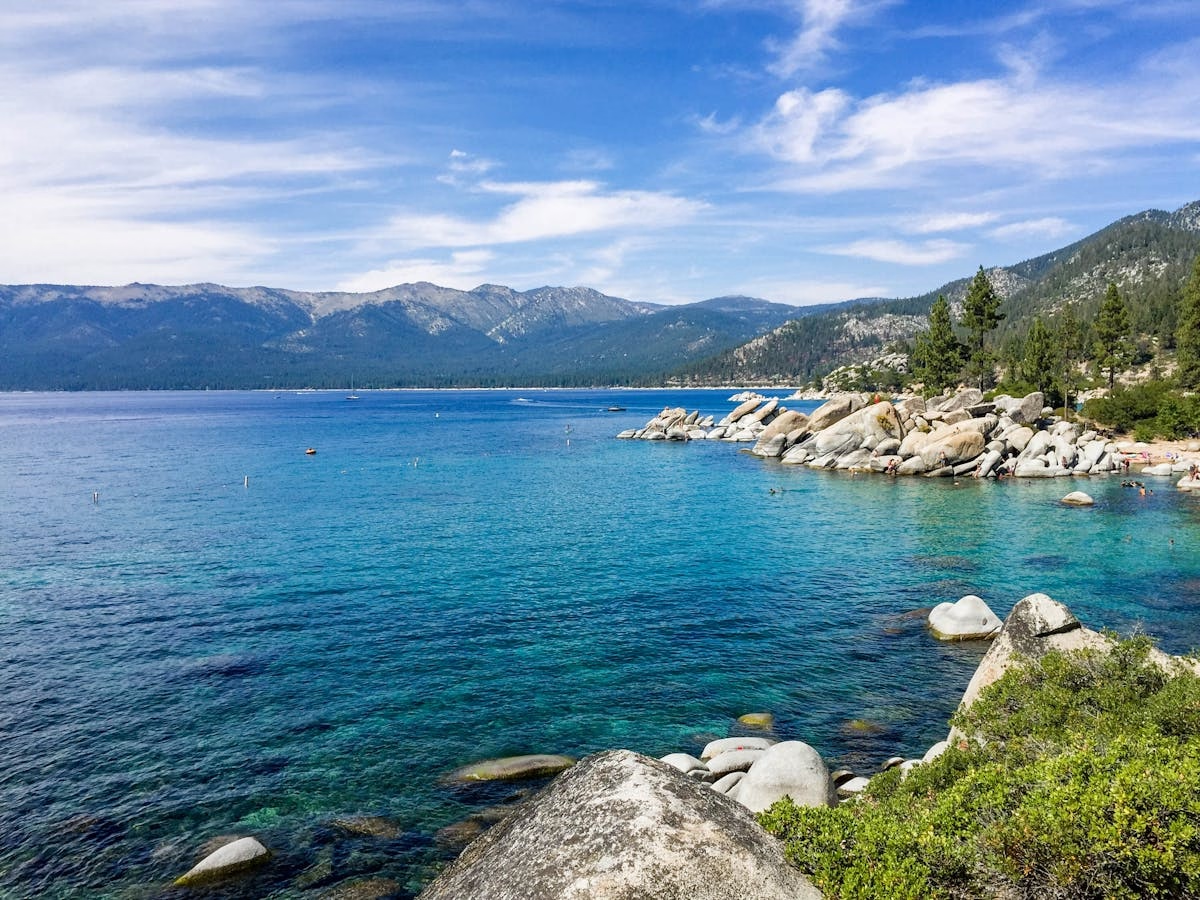
Lake Tahoe recorded 258 new business licenses in a single six-month stretch in 2024. In a basin of roughly 21,000 to 25,000 permanent residents on the California side, that is a staggering rate of new competition. Every one of those businesses is chasing the same pool of visitors, many of whom decide where to eat, where to stay, and what to book before they leave home. If your business is invisible online, you are invisible to those visitors, full stop.
This is what makes Tahoe different from every other market I work in. The economy here is not just tourism-dependent. It is tourism-sustained. One bad winter with thin snowpack, one smoke-filled August from a nearby wildfire, and margins evaporate. Your website is the one storefront that stays open, stays searchable, and keeps selling through every shoulder season and weather disruption. It is not optional infrastructure. It is survival infrastructure.
South Shore: Dense, Commercial, Entertainment-Driven
South Lake Tahoe and the Stateline corridor on the Nevada side pack more commercial density per square mile than anywhere else in the Sierra. The Heavenly Village pedestrian complex anchors the California side with restaurants, shops, and the Heavenly Gondola, pulling a constant stream of foot traffic. A few blocks east, the Nevada casino corridor runs through Harrah’s, Caesars Republic, Bally’s, and the Golden Nugget. These are large-scale hospitality operations with full convention facilities, nightlife, and entertainment programming.
Local businesses on the South Shore are competing for attention alongside those corporate entertainment machines. Base Camp Pizza Co. in Heavenly Village has carved out a real identity: gourmet pizza, live music every day on their outdoor stage, and lines that locals accept as a fact of life. That reputation was built in part through smart online presence, because visitors research their Tahoe dining before they arrive. If you are not showing up in those searches, you are handing customers to Yelp’s top result.
The search behavior here is also geographically specific. Visitors search “South Lake Tahoe restaurants,” “Stateline bars,” and “things to do near Heavenly.” Ranking for even two or three of those terms consistently is the difference between a full dining room and an empty one during the shoulder weeks.
North Shore: Boutique Towns, Local Character, High Expectations
Twelve communities ring the North Shore, each with its own personality and its own commercial center. Tahoe City is the hub. The Cobblestone Center brings Bavarian-inspired architecture to a walkable shopping district, while the Boatworks Mall sits close enough to the water to draw visitors arriving by boat. On summer Sundays, Commons Beach fills up for free concerts, drawing exactly the kind of foot traffic that boosts local businesses.
Kings Beach is in the middle of a $48 million downtown improvement project, which will change its commercial character significantly over the next few years. Businesses opening there now are getting in ahead of that transformation.
Carnelian Bay has Gar Woods Grill and Pier, one of the most recognizable dining landmarks on the lake. In business since 1988, with a 130-foot pier and a house cocktail, the Wet Woody, that has become part of Tahoe lore. Bridgetender Tavern in Tahoe City is another locally-rooted institution. These businesses built their reputations before digital marketing existed. They persist because of quality. But in 2026, quality alone does not generate reservations or drive off-season traffic. That requires a website doing consistent work.
North Shore visitors skew toward a different demographic than South Shore. They tend to stay longer, spend more at local businesses, and return annually. Incline Village on the Nevada side has some of the wealthiest residents in the country. The website quality expectations in this market are high. A template-built site with outdated photos and a broken mobile layout will cost you credibility before the customer ever calls.
The Seasonal Squeeze and the Wildfire Factor
Tahoe has two peaks: winter ski season and summer lake season. Between them sit spring and fall, when businesses reduce hours, lay off seasonal staff, and watch revenue fall off a cliff. The smart operators use their websites to generate income through those gaps. Online gift card sales, off-season promotion targeting weekend visitors from Sacramento and the Bay Area, advance booking for spring fishing or fall foliage tours. These are all website-driven revenue streams that do not require a busy beach or a powder day.
The wildfire threat has added a new variable. The Caldor Fire in 2021 devastated Sierra-at-Tahoe, closed Highway 50, and kept visitors away from the South Shore for weeks. When a fire threatens or smoke settles over the basin, the business’s website becomes its primary communication channel. Which locations are open, what the air quality situation is, whether reservations are still being honored. Businesses with no real web presence were invisible during exactly the moment they needed to communicate most.
Competing When Vail Owns the Mountain
Vail Resorts controls Heavenly, Northstar California, Kirkwood, and Palisades Tahoe, the largest ski area in California at 6,000 acres and the site of the 1960 Winter Olympics. The Ritz-Carlton at Northstar just completed a major property transformation, adding Topgolf Swing Suites to a resort that already operates at a premium price point. These corporate players have marketing budgets that individual local businesses cannot match in paid advertising.
What local businesses can compete on is specificity and authenticity. Vail’s marketing is broad and polished. It sells the resort experience. It does not explain where the locals eat after a ski day, which rental shop actually knows how to fit boots, or which coffee shop has reliable Wi-Fi when you need to work between runs. That local knowledge, embedded in a well-built, well-optimized website, is how independent businesses claim search territory that the corporate players are not fighting for.
This is why I prioritize local SEO fundamentals for every Tahoe client. Ranking for the specific searches your actual customers are typing is more valuable than competing on ad spend you will always lose.
Real Estate and Vacation Rentals: High Stakes, Online Research
The median home price in the Tahoe basin went from $345,000 in 2012 to $950,000 in 2021. At those price points, buyers spend months researching online before they contact a single agent. A real estate or property management business with a weak website is disqualifying itself from conversations it does not even know it is missing.
The short-term rental market is simultaneously lucrative and under regulatory pressure. STR regulations in South Lake Tahoe, Placer County, and Washoe County change frequently. Vacation rental operators who use their websites to communicate clearly about their properties, their compliance, and their booking terms have a significant advantage over those relying solely on Airbnb or VRBO listings. Understanding when a website rebuild is justified matters here because the STR market moves fast and a site built four years ago may not reflect current regulations, pricing, or property details accurately.
The workforce housing crisis is real context for the business environment. When 76% of local workers spend more than 30% of their income on housing, staff turnover is constant, and businesses are competing for a limited labor pool. That puts more pressure on operational efficiency, and a website that handles bookings, answers common questions, and reduces phone call volume is a genuine operational asset.
Serving the Entire Basin
The Tahoe basin is not one city. It is 30-plus communities spread across California and Nevada, from Truckee in the north, with about 16,000 residents, down through Tahoe City, Kings Beach, Carnelian Bay, Homewood, Crystal Bay, Tahoe Vista, Incline Village with roughly 9,500 residents, across the South Shore through South Lake Tahoe, Meyers, and down to Zephyr Cove on the Nevada side.
Visitors searching for businesses in the basin do not limit their searches to one town. They search the lake, the shore, the resort, and then click whatever comes up. A business based in Carnelian Bay should be visible to someone searching in Tahoe City. A restaurant in South Lake Tahoe should capture searches from visitors staying in Stateline. Online marketing that reaches across these overlapping search areas is the difference between serving your neighborhood and serving the entire basin.
I build websites for Tahoe businesses that take this geography seriously, with structure, content, and optimization calibrated for the full range of communities your customers are searching from.
I also serve businesses in Sacramento, Roseville, Folsom, Elk Grove, Rancho Cordova, Rocklin, West Sacramento, Fair Oaks, El Dorado Hills, and Auburn.