How to Build a SaaS MVP in 2026
Frog Stone Media has built three production SaaS products: Paddle Conditions (subscription-based water sport scoring), ContentMK (desktop CMS for publishers), and SacGroceries (grocery price comparison). Each one taught a different lesson about what matters when building an MVP and what is a waste of time.
Here is the process, stripped of the startup jargon and focused on what actually gets a product to paying customers.
Start With the Problem, Not the Tech Stack
Most failed MVPs start with a technology choice: “I want to build something with Next.js” or “Let’s use this new AI API.” Successful MVPs start with a specific person who has a specific problem that they are currently solving badly.
Paddle Conditions started because Michael paddles on the American River and got tired of checking five different websites every morning to figure out conditions. SacGroceries started because grocery prices in Sacramento vary wildly between stores and there was no way to compare them. ContentMK started because 2,200+ WordPress articles across two sites need managing, and the WordPress admin is not built for that.
Each product solves a problem its builder personally has. That matters because it means understanding the user deeply, testing on yourself, and knowing what “good enough” looks like without running focus groups.
Before writing code, answer three questions:
- Who has this problem? Not “everyone” or “small businesses.” A specific type of person in a specific situation.
- How are they solving it now? If the answer is “they aren’t,” the problem may not be painful enough to pay for.
- What would they pay to fix it? Not what they say in a survey. What they actually spend in time, money, or frustration on the current solution.

Pick a Tech Stack That Ships Fast
The best tech stack for an MVP is the one you already know. Do not learn a new framework while trying to validate a product idea. Speed to market matters more than architectural purity.
That said, here is the stack and why:
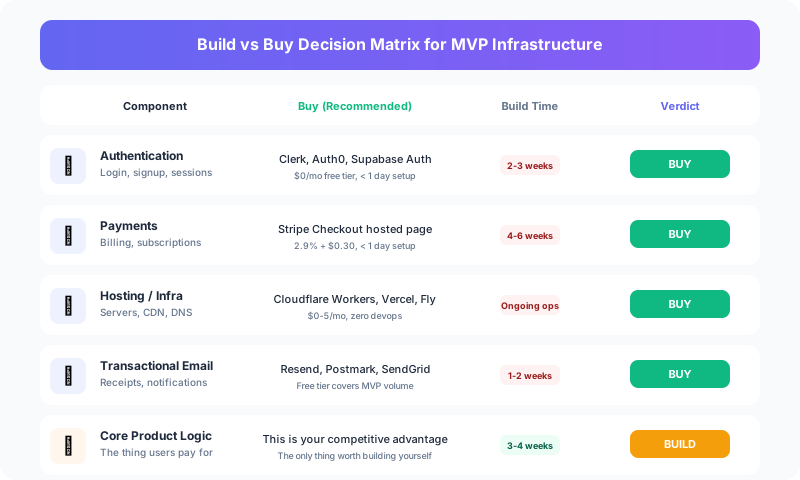
TypeScript everywhere. One language across frontend, backend, and infrastructure code. No context switching. Shared types between client and server prevent an entire category of bugs.
Cloudflare Workers for APIs. Fast responses at the edge, no servers to manage, and pricing that starts at free. For SacGroceries, the entire backend (API, database, cron jobs) runs on Cloudflare for under $5/month. That is the kind of infrastructure cost that lets you validate without burning runway.
React for the frontend. Not because it is the best framework. Because it has the largest ecosystem of components, libraries, and developers. When you need to add a date picker, a chart library, or a payment form, React has a production-ready option. That saves days during an MVP sprint.
SQLite (via D1 or local) for data. Simple, fast, and zero configuration. For an MVP, you do not need Postgres. You need a database that works and does not require a devops person to manage. When your product grows beyond what SQLite handles, you will have revenue to fund the migration.
Stripe for payments. Stripe Checkout gets you from “no payment system” to “accepting credit cards” in under a day. The hosted checkout page handles PCI compliance, card validation, and receipt emails. Do not build your own payment flow for an MVP.
Build the Core Loop First
Every SaaS product has a core loop: the primary action a user takes repeatedly that delivers value. For Paddle Conditions, it is checking the score for a saved location. For ContentMK, it is importing and auditing WordPress articles. For SacGroceries, it is searching for a product and comparing prices.
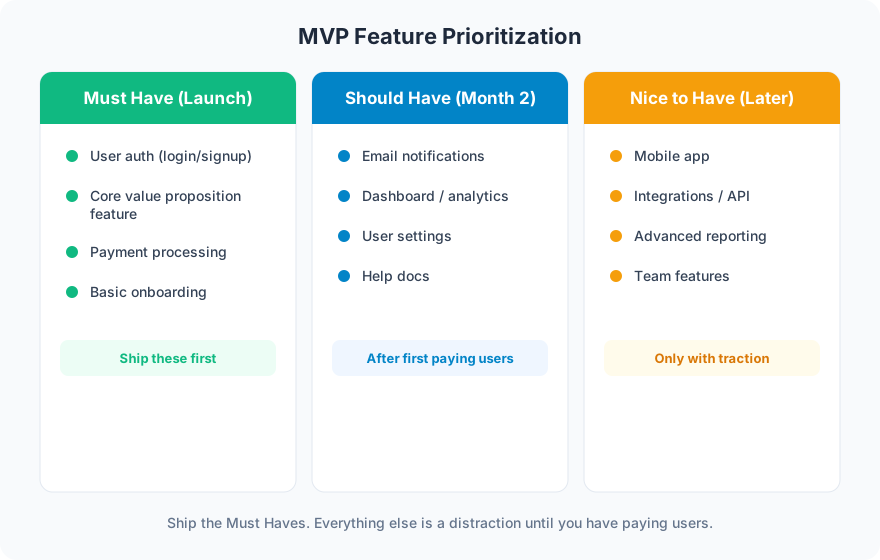
Build that loop first. Not the onboarding. Not the settings page. Not the admin dashboard. The one thing that makes a user say “this is useful” on their first visit.
For Paddle Conditions, the MVP was: add a water body, see a conditions score. No user accounts. No subscription billing. No forecast charts. Just the score. That was enough to validate that paddlers wanted this information aggregated and scored.
Everything else (accounts, payments, multi-platform support, forecast charts, Home Assistant integration) came after the core loop proved valuable.
Authentication and Billing
Do not build auth from scratch. Use a service:
- Clerk or Auth0 for email/password and social login
- Supabase Auth if you are already using Supabase
- Stripe Checkout for billing, without building a pricing page from scratch
Paddle Conditions uses Stripe for both web subscriptions and Apple IAP. The web checkout flow took less than a day to implement using Stripe Checkout’s hosted page. The Apple IAP integration took a week. If your MVP targets web users, start with Stripe only and add mobile payments later.
Price your MVP simply. One plan, one price, monthly billing. You can add tiers, annual discounts, and enterprise plans after you have paying customers. The goal is to validate willingness to pay, not to optimize revenue per user.
What to Skip in an MVP
Custom design systems. Use Tailwind CSS with default configurations. Your users care about functionality, not whether your button border radius is 4px or 6px.
Comprehensive error handling. Handle the happy path and the most common failure modes. Log everything else and fix it when it happens. Spending two days building graceful degradation for an edge case that affects 0.1% of users is not MVP work.
Performance optimization. If it loads in under 3 seconds, ship it. You can optimize after you have users who care about speed.
Multi-platform launches. Pick one platform. Web is usually the right choice because it has the lowest friction (no app store approval, no installation). Build mobile apps after you have validated the product on web.
Analytics dashboards. Use a simple analytics tool (Plausible, PostHog, or even Google Analytics) and check it manually. Building an internal analytics dashboard before you have 100 users is premature.
Launch and Iterate
Your MVP launch is not a press event. It is a test. Share it with the specific people who have the problem you are solving. Watch what they do. Listen to what they ask for. Fix what breaks.
Paddle Conditions launched to the Sacramento paddling community through local Facebook groups and a Reddit post. ContentMK is being validated on in-house WordPress sites before external launch. SacGroceries launched to Sacramento locals through neighborhood forums.
The feedback from 20 real users is worth more than the speculation of 2,000 hypothetical ones. Ship the core loop, get it in front of people, and let their behavior tell you what to build next.
What This Costs
Here is a realistic MVP budget in 2026:
- Domain: $12/year
- Hosting (Cloudflare Workers): $0-5/month
- Database (D1/Supabase free tier): $0/month
- Auth (Clerk/Supabase free tier): $0/month
- Payments (Stripe): 2.9% + $0.30 per transaction
- Development: Your time, or a developer’s quote scoped to your core workflow
The infrastructure cost of running a SaaS MVP is effectively zero until you have meaningful traffic. The real cost is development time. If you are a developer, that is your nights and weekends. If you are not, that is where hiring a developer who has built SaaS products before makes the difference between launching in 6 weeks and being stuck in development for 6 months.
MVPs and SaaS products from Frog Stone Media ship fast and validate faster. If you have a product idea and need a developer who has done this before, get in touch.