From Idea to Recurring Revenue
Building a SaaS product is different from building a website or even a standard web application. You need multi-tenant architecture that keeps customer data isolated, subscription billing that handles upgrades, downgrades, and failed payments automatically, and infrastructure that scales from your first 10 users to your first 10,000 without a rewrite. Every SaaS platform here gets all of that from day one.
This service is for founders and businesses that have a clear problem to solve and need a technical partner to turn it into a subscription product. Every SaaS application ships with TypeScript end-to-end, Stripe billing integration, tenant-isolated databases, and edge deployment on Cloudflare Workers. These are production platforms, not prototypes that fall apart under real traffic.
Start with the MVP, Not the Vision
The biggest mistake in SaaS development is building too much before you have paying users. The guide on how to build a SaaS MVP covers this exact process. Every project is scoped to the smallest feature set that proves whether customers will pay. No admin dashboards in version one. No enterprise features, no analytics, no integrations. Ship the core workflow, get real users on it, then let their behavior guide what you build next.
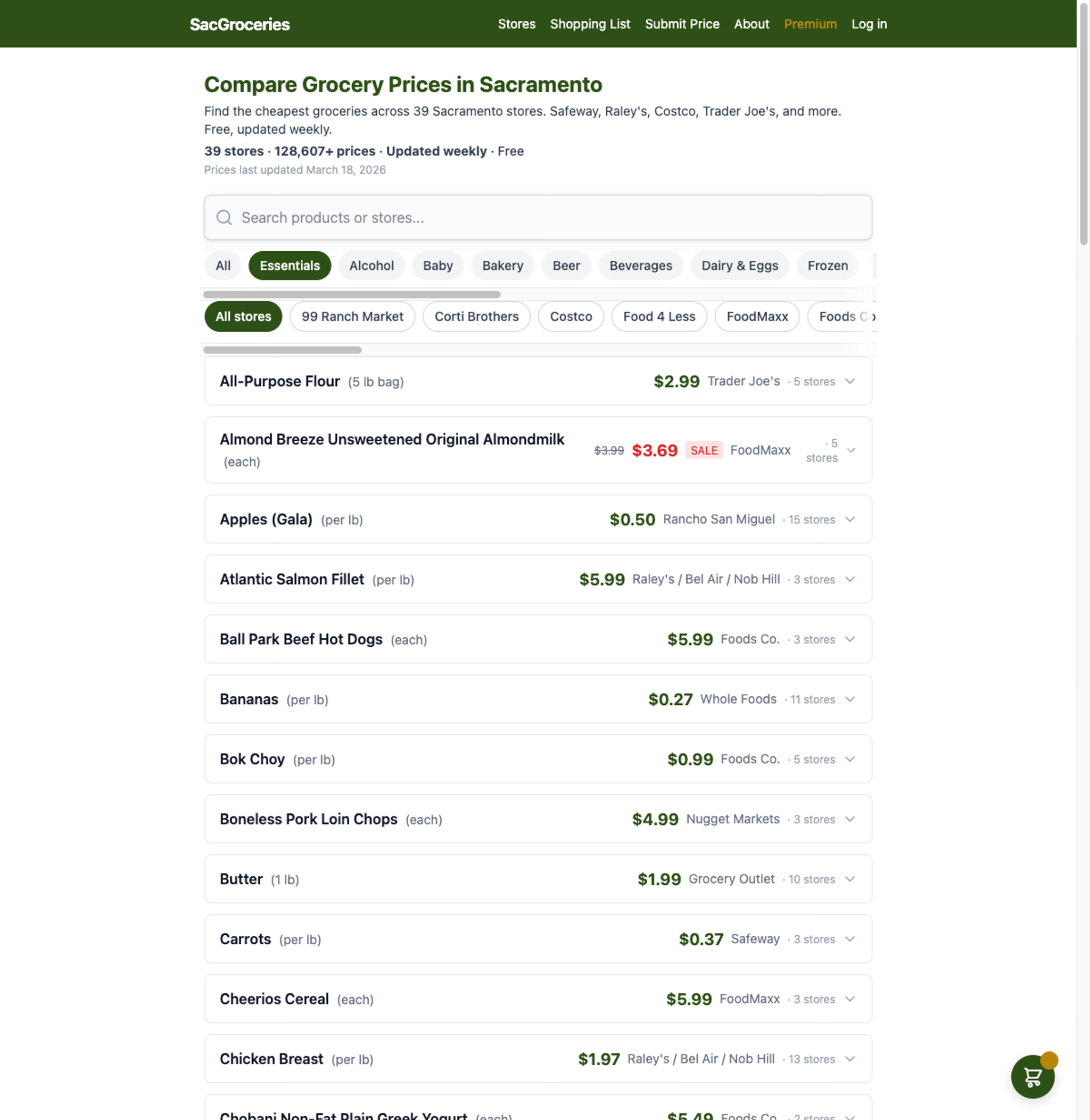
Most SaaS MVPs launch in 8-12 weeks. That includes user registration, Stripe subscription billing, the core product workflow, and basic admin tools. Sacramento Groceries launched its API-driven platform in that timeframe, running the entire backend on Cloudflare Workers with a D1 database. From MVP to production, the same codebase scaled without infrastructure changes.
Multi-Tenant Architecture That Scales
Every SaaS application uses tenant isolation at the database level. Each customer's data lives in logically separated partitions with row-level security enforced on every query, so Customer A's queries return only Customer A's data. This architecture handles hundreds of tenants on a single database instance without performance degradation, and when you need to scale further, the migration path is clean.
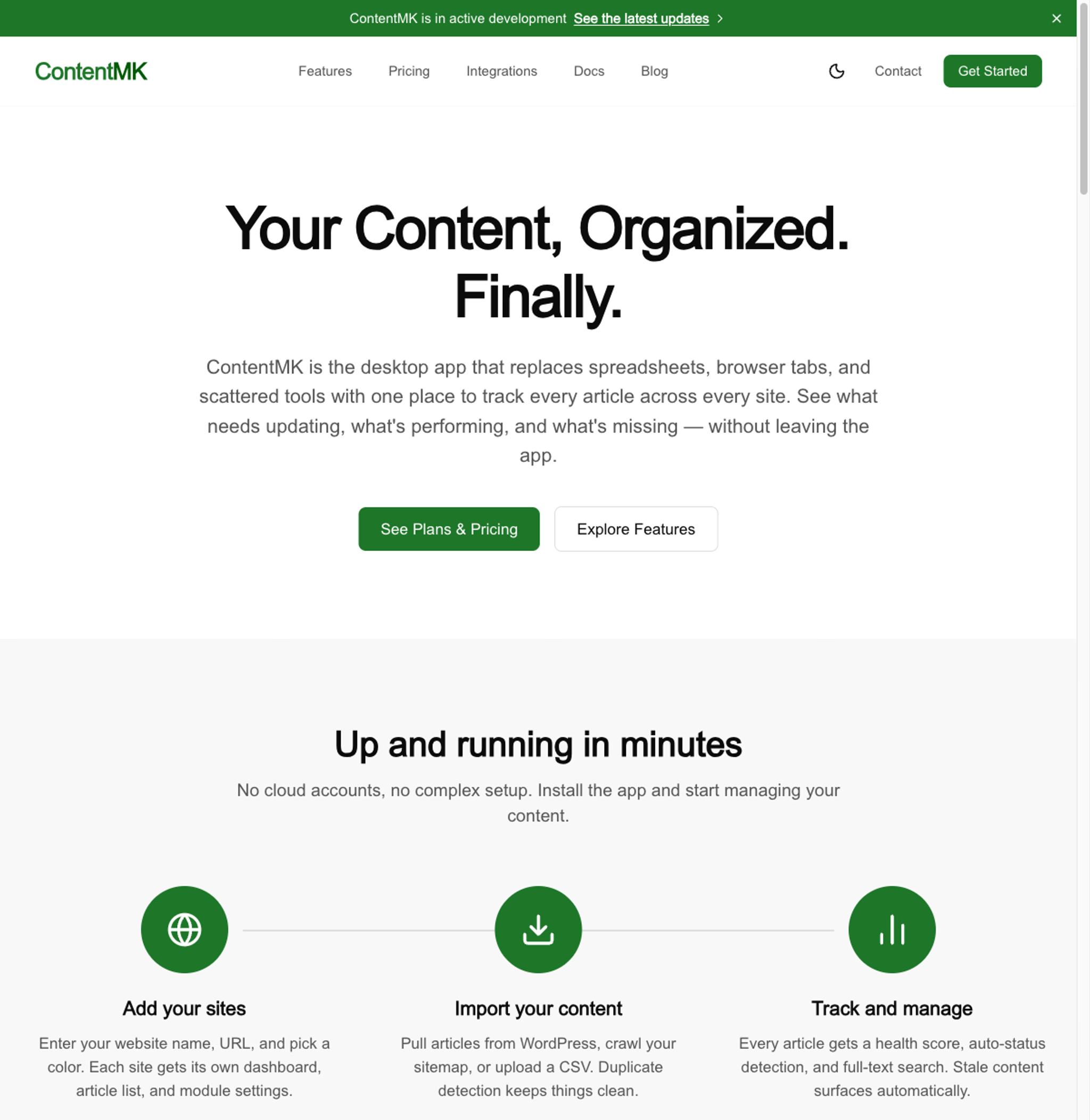
ContentMK demonstrates this approach at scale. Its 13-table database schema manages content, tags, media assets, and AI configurations across isolated workspaces. Two-way WordPress API sync runs per-workspace with separate credentials and access controls. The same architectural pattern carries into every SaaS platform.
Subscription Billing That Works Automatically
Billing is where SaaS applications get complicated fast. Stripe handles the full lifecycle: free trials, monthly and annual plans, usage-based pricing tiers, proration on plan changes, dunning for failed payments, tax calculation, and invoice generation. Stripe Webhooks keep your application state synchronized with billing events in real time. Your customers manage their own subscriptions through a self-service portal, so you are not fielding support tickets for payment updates.
The billing integration ships as part of the MVP. Your first customer can sign up, enter a credit card, and start a subscription on launch day. No manual invoicing, no spreadsheet tracking, no delayed billing setup. Billing works the day the product goes live.
Edge-Deployed for Global Performance
SaaS customers expect fast responses regardless of where they are. SaaS applications deploy on Cloudflare Workers, which runs your backend code at over 300 edge locations worldwide, close to each user. Zero cold starts, zero servers to manage, and the infrastructure auto-scales to handle traffic spikes without configuration changes.
This architecture eliminates the traditional DevOps burden that kills early-stage SaaS companies. No EC2 instances to monitor, no Kubernetes clusters to manage, no 3am alerts because a server ran out of memory. You focus on building features and acquiring customers. The infrastructure takes care of itself.
After Launch: Iterate on Real Data
Launching is the starting line. The real product development begins when actual users start interacting with your platform. Every SaaS codebase is structured for rapid iteration, shipping new features in 2-4 week cycles based on usage analytics and customer feedback. The Node.js and TypeScript foundation and modular architecture mean adding features does not require rewriting what already works.
For SaaS products that need SEO, content marketing, or paid acquisition to drive signups, Frog Stone Media handles growth strategy in-house. The technical platform and the marketing engine work together from the start.