WordThanks.com | Greenfield Content Site With a Note Builder
Astro 6 site in the thank-you-note niche, built from scratch with 101 content entries across four schemas, a tone-filtered wording browser, a client-side note builder with saved drafts, CLS-safe ad slots, and a content validation gate that runs before every build.
The bet
Thank-you-note wording is a niche with enormous search volume and almost no good sites serving it. The pages that rank are content farms: a wall of 150 nearly identical sentences with an ad between every fifth one, no way to filter, and no sense that a human being was ever going to use this while actually writing a card.
The opportunity is not more sentences. It is structure. Someone writing a thank-you note has a specific situation, which is who they are writing to and what for, and a specific tone, which is how formal they need to sound. Those two axes are the entire product, and nobody had built the site that takes them seriously.
What I built
WordThanks.com is a greenfield Astro 6 site built on four content collections with genuinely different shapes.
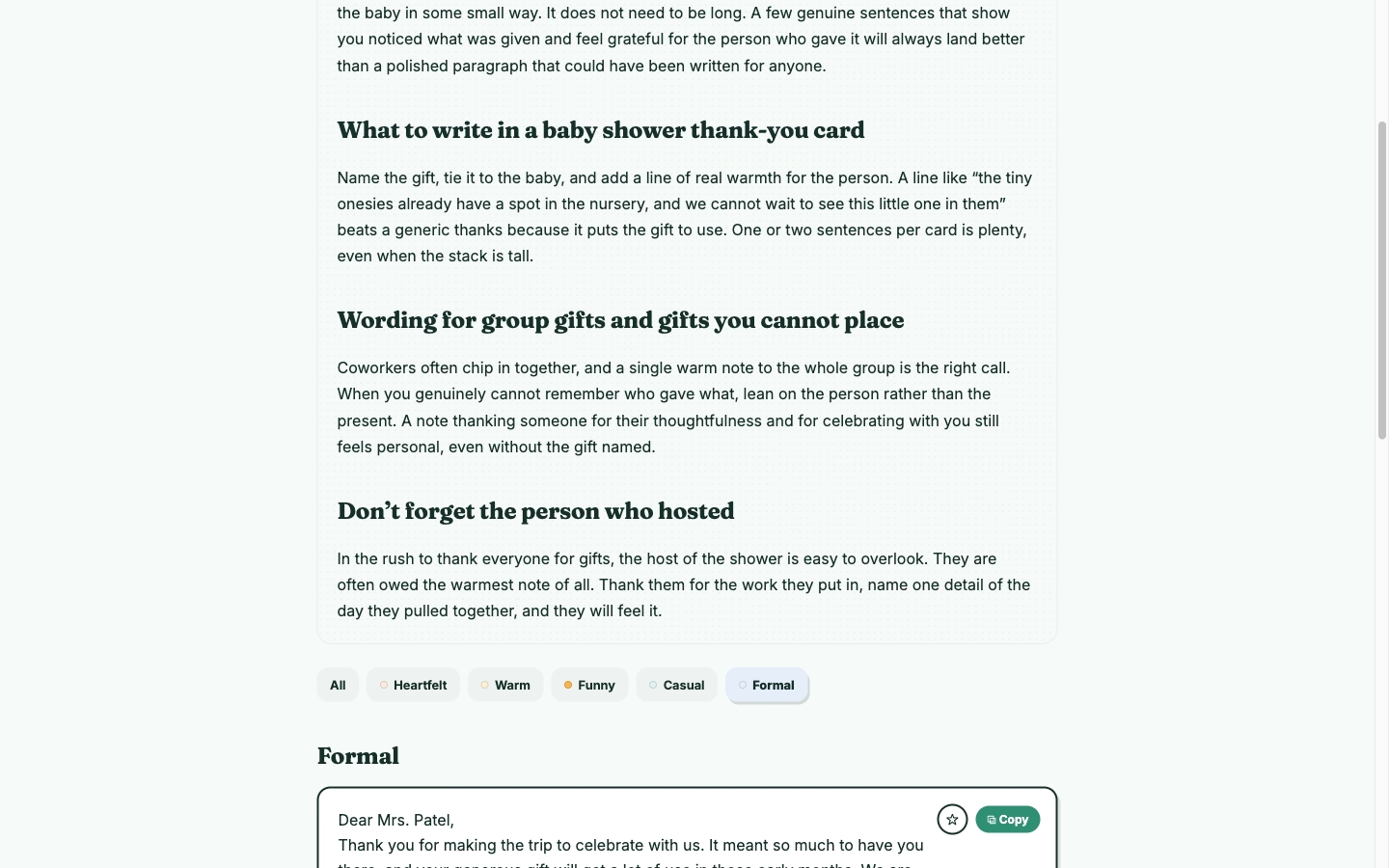
Occasions are the core, at 71 entries. Each one is a category page carrying editorial guidance plus a structured array of wording examples, where every example knows its own tone. Guides are how-to editorial. Gift guides are affiliate product pages. Quotes are a separate collection with its own rules.
Because tone lives on each example as validated data rather than as a heading in prose, the browsing experience can filter by it. Pick “formal” and the page narrows to formal wording. That is a small interaction that only exists because the content was modeled properly at the schema level, and it is the entire difference between this and the content farms it competes with.
The note builder
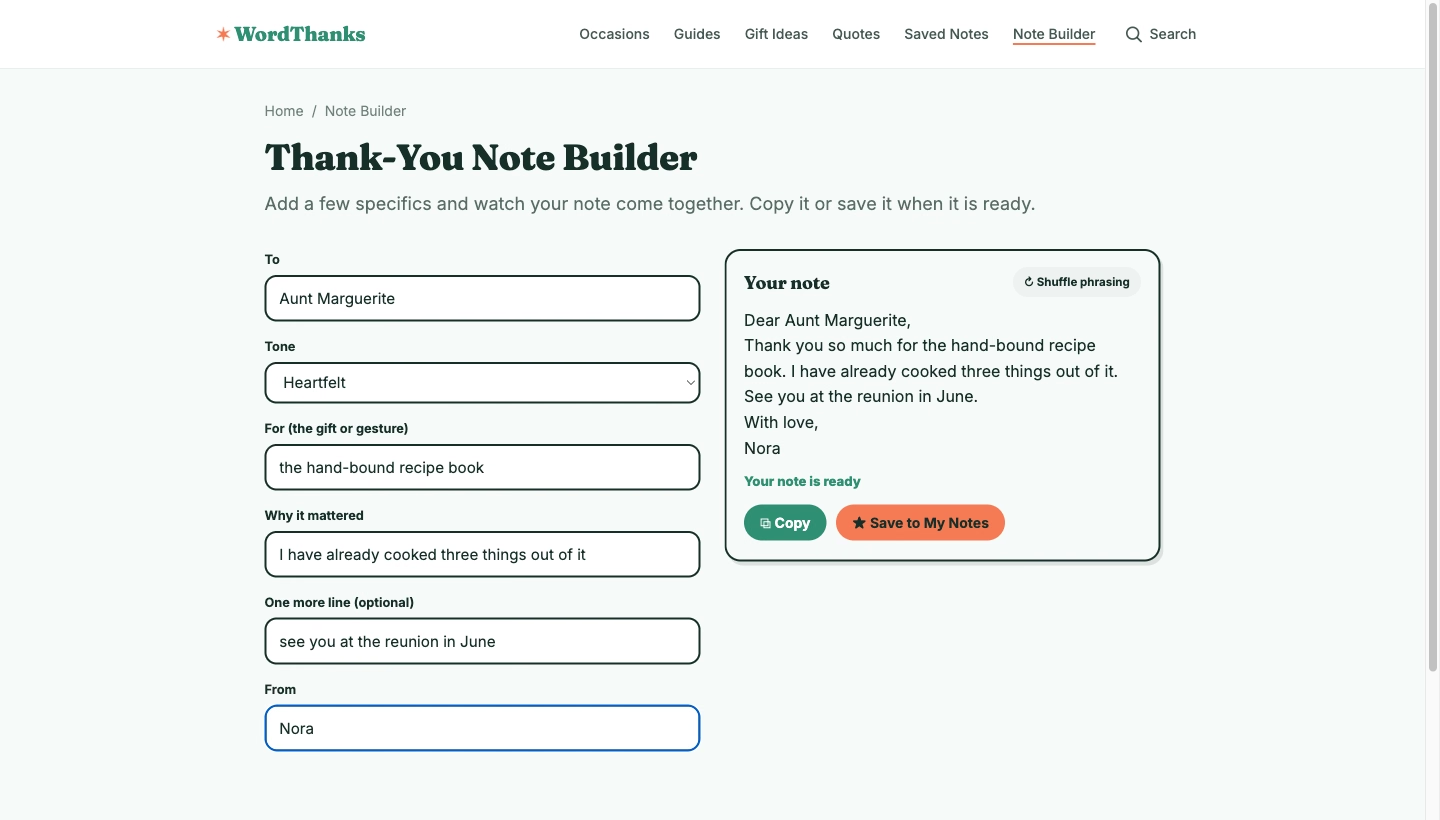
The site’s differentiator is a note builder that lets someone assemble wording into an actual draft, save it, and come back to it. Saved notes persist client-side with no account, no login, and no server.
This is the right trade for this audience. Someone writing eleven graduation thank-you notes at a kitchen table does not want to create an account, and I do not want to be storing anyone’s personal messages. Keeping drafts on the device makes the feature better and removes an entire category of privacy and storage obligation at the same time.
Ads that do not wreck the layout
The site is built to monetize through display ads, moving to a premium network once traffic supports it, with affiliate as a secondary layer on gift guides.
Ad slots are a dedicated component with reserved heights, so the space an ad will occupy is committed at render time and nothing reflows when it fills. Cumulative layout shift is the single most common self-inflicted wound on ad-supported content sites, and it is almost entirely avoidable by deciding the ad’s dimensions before the ad arrives rather than after.
Affiliate links route exclusively through a single utility module. That is a deliberate constraint: it means the tracking tag is applied in one place, and it makes it structurally impossible to leak another site’s affiliate tag onto this one, which is a real failure mode when you run several sites at once.
A build that refuses bad content
Every build runs a validation script before Astro sees the content, and the gate is unusually strict because this project is written at volume.
It sweeps for em dashes, which are banned in the house style. It strips null bytes, which is a genuine failure mode when content files are generated programmatically. It catches the YAML traps that silently break a build at scale: a colon-space inside an unquoted value, an all-digit product identifier that YAML helpfully parses as a number and strips the leading zero from, a tone value outside the allowed set, a field value beginning with a quote character that YAML reads as a quoted scalar and then chokes on.
Every one of those is a bug I would otherwise hit repeatedly and diagnose from an unhelpful parser error. Eleven test files back the utility layer underneath. The build takes slightly longer and never ships a malformed page.
Where it stands
The site is live with 101 entries across occasions, guides, gift guides, and quotes, plus Pagefind search, a printables page, and a share gallery. It is early, and the traffic story is still ahead of it.
What it demonstrates is the pattern I would apply to any content business: model the content as real data instead of formatted prose, build the one interactive feature the niche is missing, and put a gate in front of the build so quality is enforced by the machine rather than by remembering.
Like what you see?
I build tools that solve real problems. If you have an idea or a project that needs engineering, let's talk.
Get in Touch