Website Data Privacy: What Every Business Needs to Know
Every website collects data. Contact forms collect names and emails. Analytics tracks visitor behavior. Cookies identify returning visitors. If your site collects any personal data, privacy regulations apply to you.
Privacy compliance goes into every DevSac build from the start because retrofitting it later is more expensive and more disruptive. Privacy checks are part of the pre-launch website checklist.
Privacy Requirements by Regulation
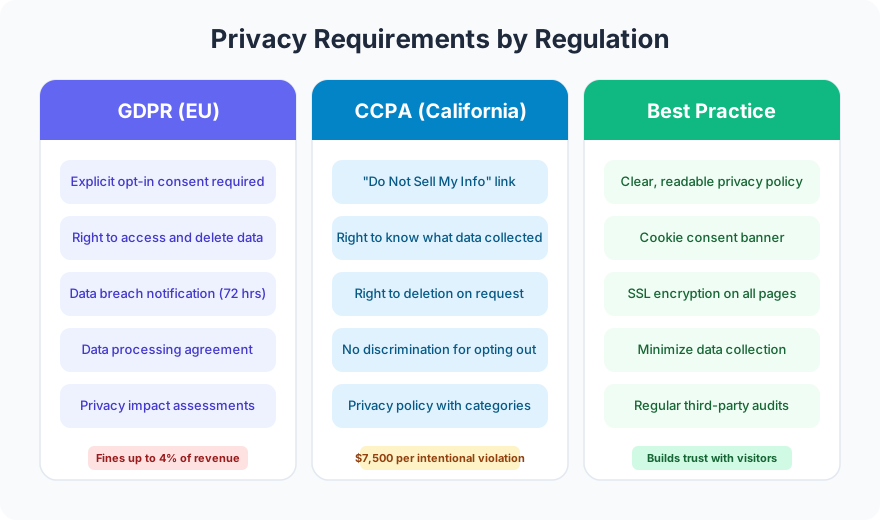
GDPR (EU visitors): Requires explicit consent before collecting data, the right to be forgotten, data portability, and a Data Protection Officer for larger organizations.
CCPA (California visitors): Requires disclosure of what data you collect, the right to opt out of data sales, the right to deletion, and equal service for users who opt out.
General best practice: Even if you are not legally required to comply with GDPR or CCPA, implementing their core principles (transparency, consent, data minimization) builds trust and protects your business.
Privacy Compliance Checklist
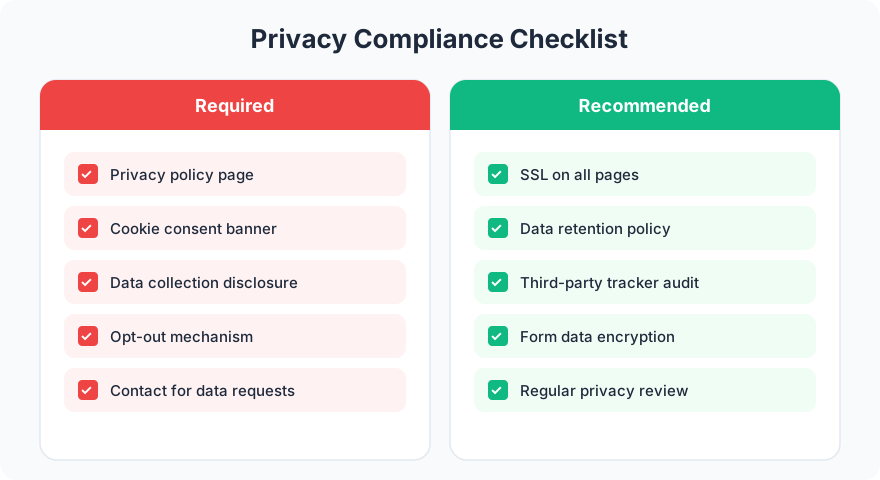
Required: Privacy policy page (linked from every page), cookie consent banner, disclosure of what data you collect and why, opt-out mechanism, and a contact method for data requests.
Recommended: SSL encryption on all pages, documented data retention policy, third-party tracker audit, form data encryption, and ongoing privacy review through a maintenance plan (annually at minimum).
Cookie Consent Done Right

Opt-in (GDPR compliant) is the strongest approach. No tracking cookies fire until the visitor actively consents. This is required for EU visitors and increasingly expected everywhere.
Opt-out (US standard) notifies visitors and allows them to decline. Cookies fire by default but can be disabled.
Notice-only just informs visitors that cookies are used. This is the minimum but may not satisfy regulatory requirements.
FAQ
Do you need a cookie consent banner?
If your site uses analytics, advertising pixels, or any third-party tracking, yes. Even Google Analytics sets cookies. A consent banner is legally required in the EU and increasingly expected in the US.
How often should you update your privacy policy?
Review annually and update whenever you add new data collection tools (a new analytics platform, chat widget, or email marketing integration). Every change in how you collect or use data should be reflected in your privacy policy.
Privacy compliance is not optional and not complicated. A privacy policy, cookie consent, and transparent data practices take an afternoon to implement and protect your business for years.
Need privacy compliance built into your site? Get in touch to handle it properly.