Web Accessibility: A Practical Introduction for Business Websites
Web accessibility means building websites that work for everyone, including people with visual, auditory, motor, and cognitive disabilities. It is both a legal requirement (ADA applies to websites) and a usability improvement that benefits all visitors.
Every Frog Stone Media site is built to WCAG AA standards. The principles are straightforward, and most accessibility improvements also improve SEO and user experience.
WCAG Compliance Levels

Level A is the minimum. It addresses the most critical barriers: alt text on images, keyboard navigation, and text alternatives for non-text content.
Level AA is the standard target for most business websites. It adds color contrast requirements (4.5:1 ratio), resizable text, and consistent navigation. This is the level every site here is built to, and what most ADA compliance requirements reference.
Level AAA is aspirational. It includes enhanced contrast (7:1), sign language for audio, and simplified language. Full AAA compliance is rarely feasible for all content.
6 Quick Wins
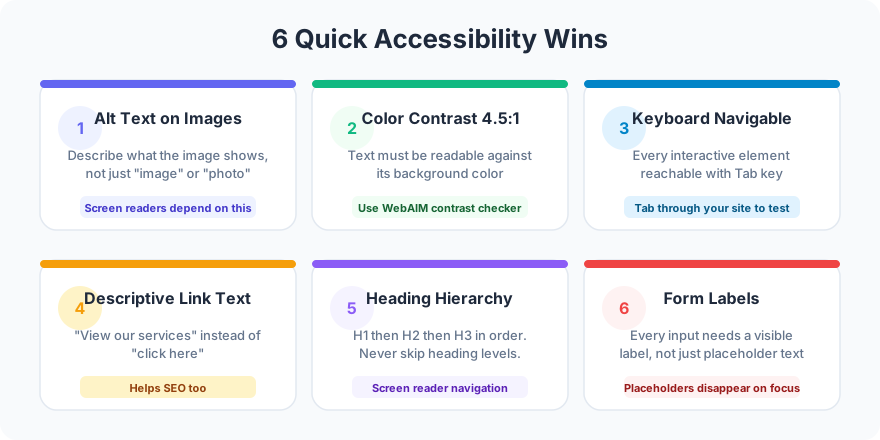
These six changes cover the most common accessibility issues and take under an hour to implement:
- Alt text on every image. Describe what the image shows, not just “image.” Screen readers read this text aloud.
- Color contrast at 4.5:1. Ensure text is readable against its background. Use a contrast checker tool.
- Keyboard navigable. Every interactive element (links, buttons, forms) must be reachable and operable with a keyboard.
- Descriptive link text. “Read our pricing guide” instead of “click here.” Screen reader users navigate by link text.
- Proper heading hierarchy. H1 → H2 → H3, in order. Do not skip levels. Headings create a content outline for screen readers.
- Form labels on all inputs. Every form field needs a visible label, not just placeholder text that disappears when you start typing.
Testing Tools
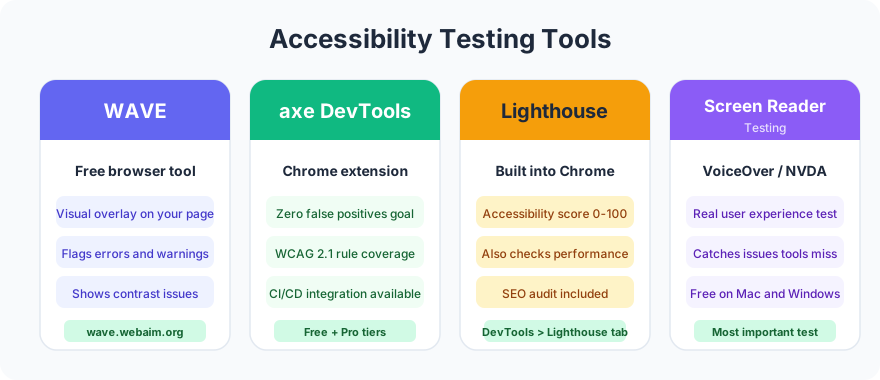
Automated tools catch about 30% of accessibility issues. The rest require manual testing (keyboard navigation, screen reader testing, cognitive walkthrough). Start with automated scans, then test manually on your most important pages.
FAQ
Is web accessibility legally required?
In the US, courts have consistently ruled that the ADA applies to websites. The DOJ has confirmed that web accessibility is covered under Title III. Building to WCAG AA is the recognized standard for compliance.
Does accessibility help SEO?
Yes. Alt text, heading structure, descriptive links, and semantic HTML are all accessibility requirements that also improve search engine crawlability. Accessible sites tend to rank better because they are structurally sound.
Accessibility is not a separate project. It is a quality standard that improves your site for every visitor. Build it in from the start.
Need an accessibility audit? Make your site work for everyone.