What Is an API and Why Does Your Business Need One?
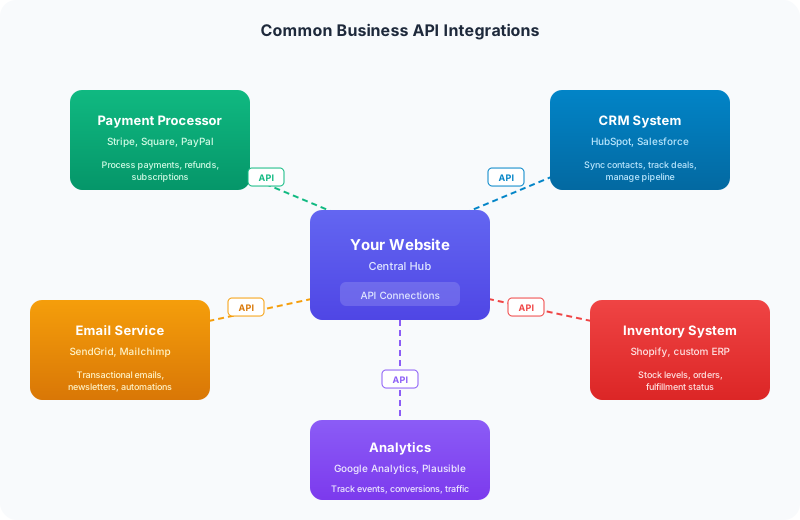
Your website talks to your payment processor. Your CRM syncs with your email marketing tool. Your inventory system updates your online store in real time. All of this happens through APIs.
An API (Application Programming Interface) is how software systems talk to each other. If you run a business that uses more than one piece of software (which is every business), APIs are already part of your operation. Understanding what they do helps you make better decisions about your technology.
APIs in Plain Language
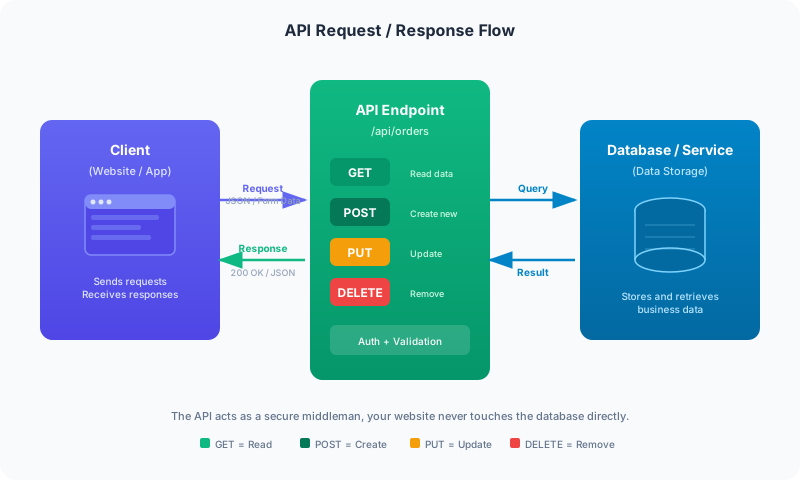
Think of an API as a waiter in a restaurant. You (the customer) tell the waiter what you want. The waiter takes your order to the kitchen. The kitchen prepares it and sends it back through the waiter. You never go into the kitchen yourself.
In software terms: your website (the customer) sends a request to a payment processor’s API (the waiter). The payment processor handles the transaction (the kitchen) and sends back a confirmation. Your website never touches the credit card data directly.
Every time you:
- Pay for something online (Stripe API)
- See a map on a website (Google Maps API)
- Log in with your Google or Facebook account (OAuth API)
- Get a shipping estimate (UPS/FedEx API)
- Receive an order confirmation email (SendGrid/Mailchimp API)
…an API made it happen.
When Your Business Needs a Custom API
Off-the-shelf APIs handle common functions (payments, email, maps). Custom APIs solve problems specific to your business.
You need data from multiple systems in one place. Your sales team uses a CRM. Your support team uses a ticketing system. Your finance team uses accounting software. A custom API can pull data from all three into a single dashboard so your operations manager does not spend 2 hours a day copying numbers between tabs.
You need to automate a manual process. If someone on your team manually exports a CSV from one system and imports it into another, that is an API waiting to be built. The data pipeline for SacGroceries was built to automatically collect, normalize, and compare prices across stores. What would take hours of manual data entry happens automatically on a schedule.
You need your website to do something dynamic. A static website shows information. An API-powered website does things: checks inventory, processes applications, calculates quotes, schedules appointments. The Paddle Conditions scoring system pulls data from 7 government sources through their APIs, computes a paddle score, and returns it in under 200ms.
You need to let other systems connect to yours. If partners, vendors, or customers need to access your data programmatically, you need an API. The Amazon Creators API lets content creators search products, get details, and generate affiliate links through a clean interface instead of navigating Amazon’s complex advertising API directly.
What Custom API Development Looks Like
A custom API project typically involves:
-
Discovery: What systems need to talk to each other? What data flows between them? What triggers an update? This is the most important phase because getting the requirements wrong means building the wrong thing.
-
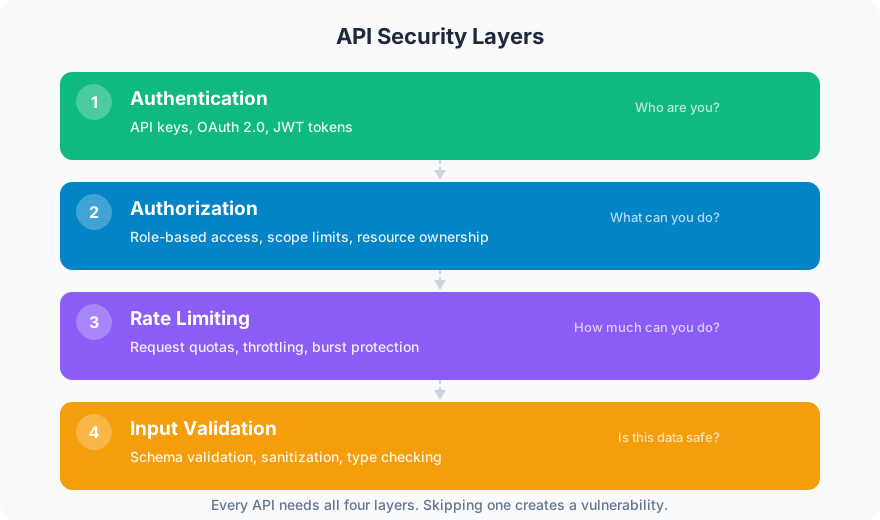
Design: Defining the endpoints (what questions can the API answer), the data format (what the answers look like), authentication (who is allowed to ask), and error handling (what happens when something goes wrong).
-
Development: Building the API with proper documentation, testing, and security. DevSac builds APIs with Node.js and TypeScript, which means type-safe contracts between the API and anything that consumes it.
-
Integration: Connecting the API to the systems it needs to talk to. This is where most of the complexity lives, because every third-party system has its own quirks, rate limits, and authentication requirements.
-
Monitoring: Once live, APIs need monitoring for uptime, response times, error rates, and usage patterns. A broken API that nobody notices for three days can cause significant business disruption.
What It Costs
API development ranges widely based on complexity:
- Simple integration (connect two existing systems): the smallest scope, often days of work
- Custom API (new functionality for your business): a larger build with its own data model and testing
- Complex data pipeline (multiple sources, transformation, scheduling): the largest scope, usually weeks of work
The variable is complexity, not code volume. An API that connects your website to Stripe takes a day. An API that aggregates data from 7 government weather services, normalizes the data, computes scores across multiple algorithms, caches results, and serves them at the edge takes weeks.
Questions to Ask Before Building
Before investing in custom API development, ask:
-
Is there an existing solution? Zapier, Make (formerly Integromat), and similar tools handle many simple integrations without custom code. If you need “when a new order comes in, add the customer to my email list,” you probably do not need a custom API.
-
What is the manual cost? If the process you want to automate takes someone 10 hours a month, that is 120 hours a year in labor. Compare that labor cost against the build estimate to see how many years the API takes to pay for itself.
-
What breaks if the API goes down? Understanding the business impact of downtime helps you budget for reliability. A payment API going down is critical. A reporting API going down for a few hours is inconvenient.
-
Who maintains it? APIs need updates when the systems they connect to change. Budget for ongoing maintenance, not just the initial build.
DevSac builds custom APIs that connect your business systems, automate manual processes, and give your website dynamic capabilities. If you have systems that should be talking to each other but are not, get in touch to find the right solution.