What Makes a Great Website? The 5 Pillars That Drive Results
A great website does two things: it makes visitors trust you and it makes taking the next step easy. Everything else is details.
Frog Stone Media has built over 100 websites. The great ones share five qualities. The mediocre ones are always missing at least one. Remove any single pillar and the site underperforms regardless of how strong the others are.
The 5 Pillars
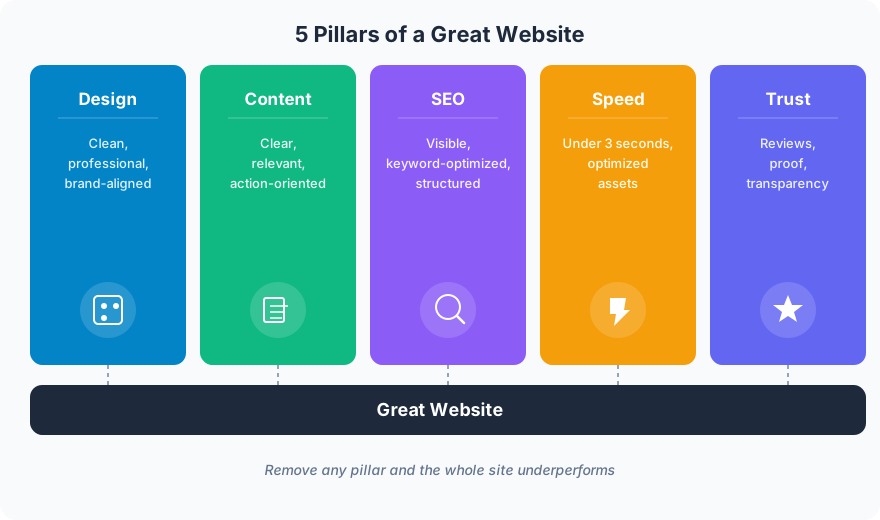
1. Design
Clean, professional, and brand-aligned. A great website does not need to be flashy. It needs to be clear. Every element serves a purpose. No decorative clutter, no auto-playing videos, no animated backgrounds that slow the page.
The design should follow web standards that visitors expect: logo top-left, horizontal navigation, CTA in the header, contact info in the footer.
2. Content
Clear, relevant, and action-oriented. Great content speaks directly to the visitor’s problem and shows how you solve it. It uses specific numbers instead of vague claims. It ends with a call to action, not a summary paragraph.
Every page should answer one question completely. If a page tries to cover three topics, it covers none of them well.
3. SEO
Great websites get found. That means keyword-optimized title tags, structured content with H2 headings, internal links connecting pages, and schema markup giving search engines machine-readable data about your business.
SEO is not a separate activity from building a great website. It is built into the structure, the content, and the technical implementation. This is exactly where AI website builders fall short: they generate pages, but the structure rarely supports the SEO work that makes those pages get found.
4. Speed
A site that loads in 5 seconds instead of 2 loses 40% of visitors before they see anything. Speed is a ranking factor, a conversion factor, and a trust factor.
Every Frog Stone Media site is built for fast loading. The techniques are not complicated: optimize images (AVIF format), minimize JavaScript, use a CDN, and choose a scalable architecture.
5. Trust
Visitors decide whether to trust your business within seconds. Testimonials, client logos, review ratings, years in business, and real team photos all build trust. Missing trust signals is the most common reason good-looking websites fail to convert.
Quick Audit Checklist
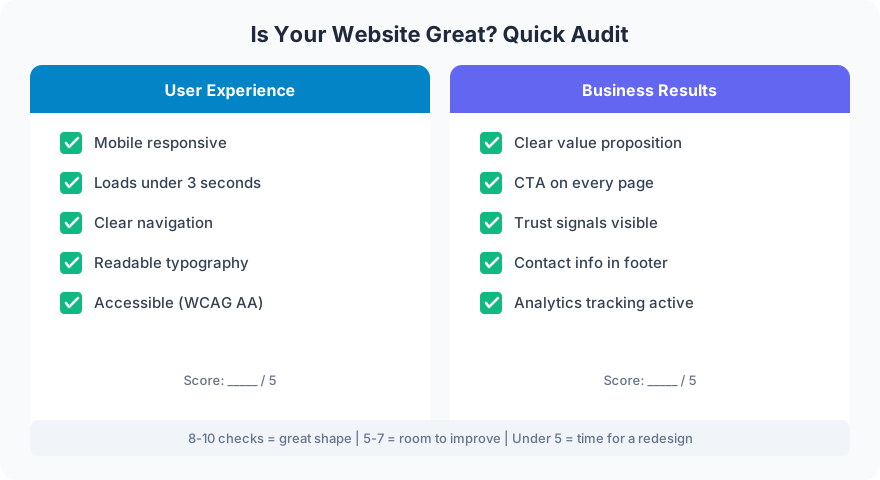
Run through this list on your own site. Every unchecked item is a conversion you are losing.
Great vs. Mediocre
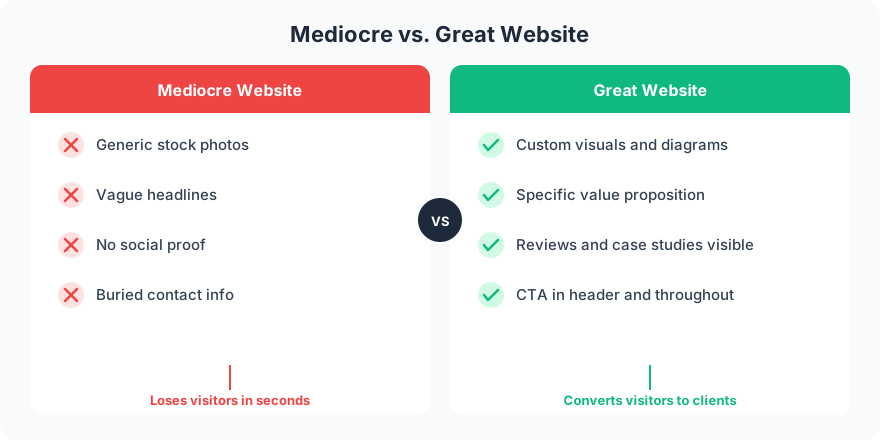
The gap between a mediocre website and a great one is not budget. It is intentionality. Mediocre websites use stock photos because real photos take effort. They use vague headlines because specific ones require knowing the customer. They hide the contact form because showing it feels “too salesy.”
Great websites do the work that mediocre ones skip.
FAQ
What is the most important quality of a great website?
Content clarity. A visitor should understand what you do, who you do it for, and how to take the next step within 5 seconds of landing on any page. Design, speed, and SEO amplify good content. They cannot fix unclear content.
How do I know if my website is good?
Check three metrics in GA4: bounce rate (under 50% is good), average engagement time (over 1 minute is good), and conversion rate (over 2% is good). If any of these are weak, audit the corresponding pillar.
A great website is not about trends or technology. It is about clarity, speed, trust, and making it easy for visitors to become customers.
Ready to build a website that actually performs? Get in touch.