Lead Generation Website Design: How to Build a Site That Drives Inbound Leads
A lead generation website has one job: turn visitors into contacts. Not pageviews, not impressions, not “brand awareness.” Contacts. Names, emails, phone calls from people who want what you sell.
Frog Stone Media has built lead generation sites for law firms, contractors, medical practices, and SaaS companies. The ones that generate leads consistently share the same structural patterns. The ones that fail are almost always missing the same elements.
Here is how to design a website that actually drives inbound leads.
The Lead Generation Funnel
Every lead generation website operates as a funnel. Visitors enter at the top, and a percentage convert at each stage. The math is simple but the implications are powerful.
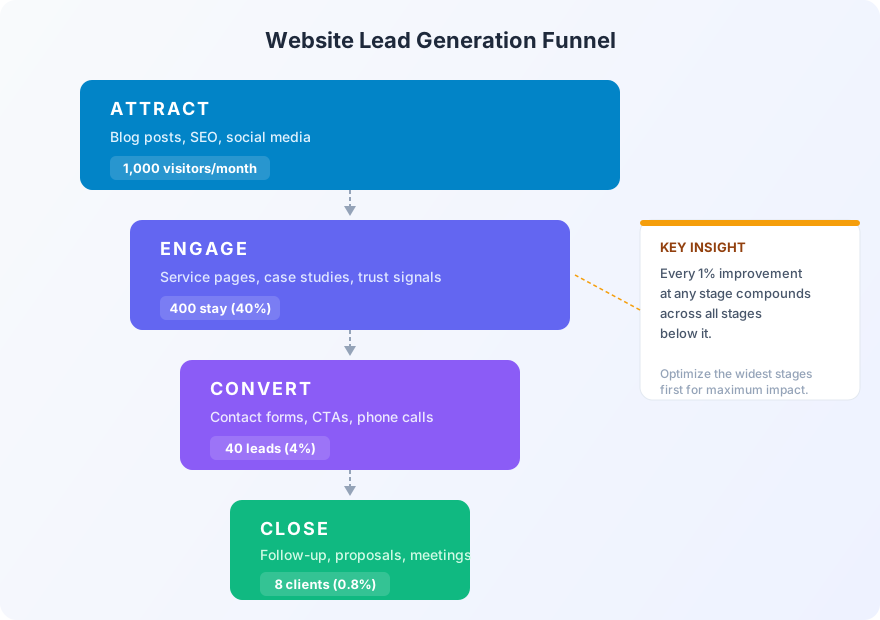
A site getting 1,000 visitors per month with a 4% conversion rate generates 40 leads. Improving conversion by just 1 percentage point (4% to 5%) adds 10 more leads per month, 120 per year, from the same traffic.
This is why lead generation website design is more valuable than traffic acquisition for most service businesses. Doubling your traffic is expensive. Improving your conversion rate by 25% costs an afternoon of design work.
Anatomy of a Lead Generation Page
High-converting pages follow a predictable structure. The same layout goes on every service page Frog Stone Media builds, with variations for industry and audience.
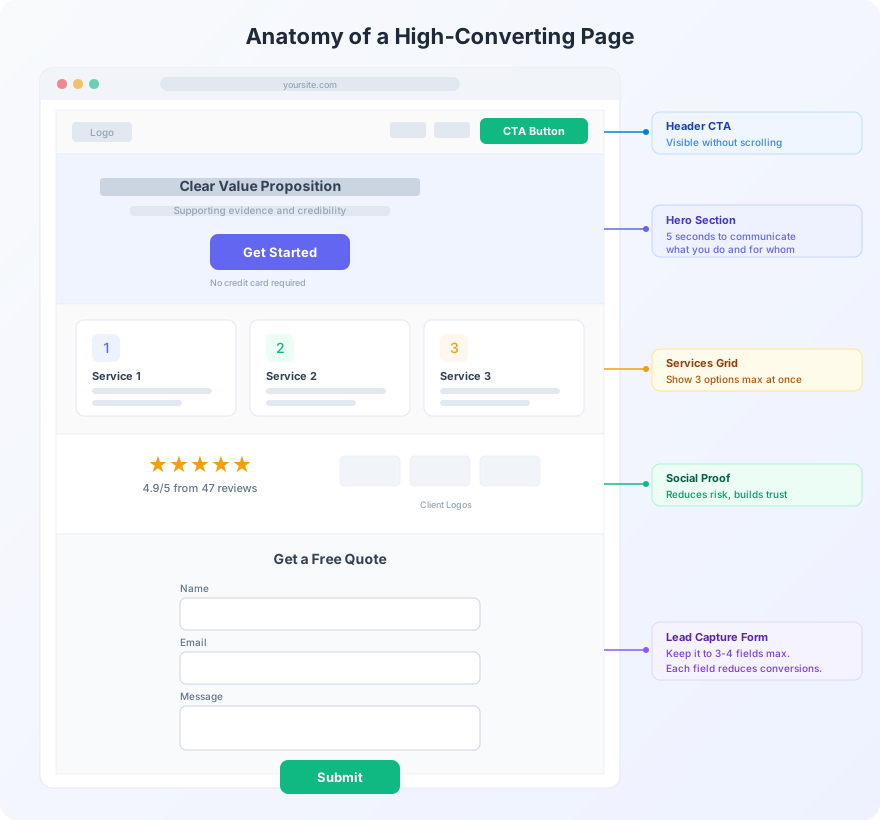
Header with visible CTA. Your phone number or a “Get a Quote” button belongs in the top right corner. 55% of marketing websites follow this convention. Visitors expect it. If your header does not have a clear next step, you are losing ready-to-buy visitors on every page.
Hero with a clear value proposition. Your homepage headline answers one question: “What do you do and who is it for?” Generic headlines like “Welcome to Our Website” or “Your Trusted Partner” convert at near-zero rates. “Sacramento Web Design for Law Firms” tells the visitor exactly what they will get.
Service cards or feature grid. Break your offerings into 3-5 distinct categories with dedicated pages for each. A single “Services” page listing everything will never rank in search results because it targets no specific keyphrase. Each service page is both a landing page for SEO and a deeper education point for engaged visitors.
Trust signals and social proof. Testimonials, case study excerpts, review ratings, and client logos. 75% of B2B buyers do their own research before contacting a company. Your trust signals are doing the selling when you are not in the room.
Contact form above the fold on key pages. Not buried at the bottom. Not hidden behind a “Contact Us” link. A visible form with 3-4 fields (name, email, phone, message) on every page where a visitor might be ready to act.
CTA Design That Converts
The call-to-action button is where most lead generation websites fail. A “Submit” button on a contact form is not a CTA. It is a label. Good CTAs tell the visitor exactly what happens when they click.
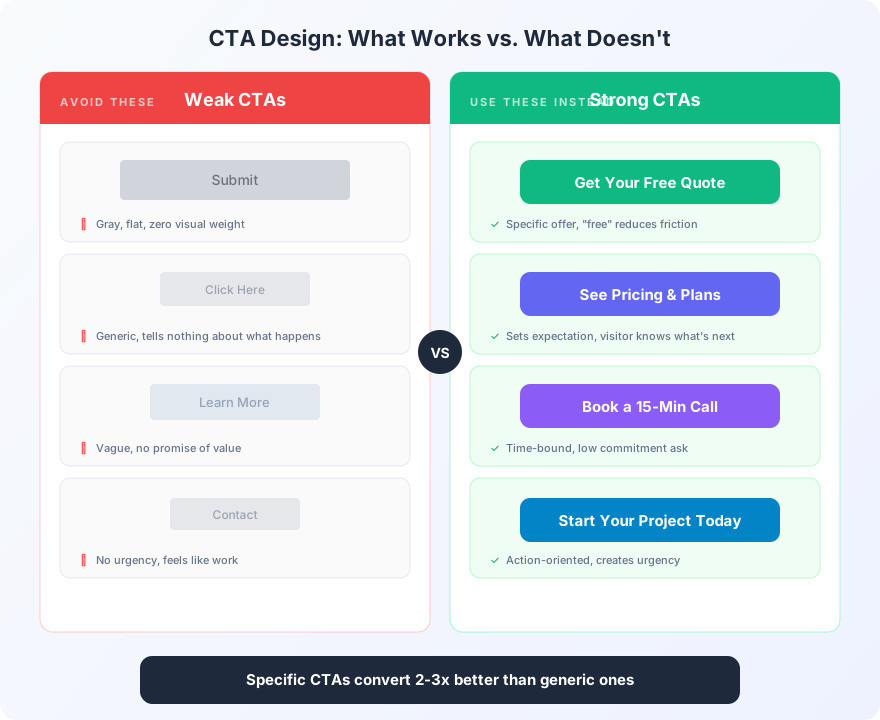
Three rules for CTAs on lead generation websites:
Be specific about the outcome. “Get Your Free Quote” beats “Contact Us” because it tells the visitor what they receive. “Book a 15-Minute Call” beats “Schedule Consultation” because it sets a time expectation.
Use contrasting colors. Your CTA button should be the most visually prominent element in its section. If your site uses blue, make the button green or amber. Contrast draws the eye.
Repeat the CTA at natural decision points. Place CTAs after the hero section, after the services grid, after testimonials, and in the footer. Visitors make decisions at different points in the page. Give them an action to take at each one.
Content Strategy for Lead Generation
A lead generation website without content is a brochure. It waits for visitors instead of attracting them. Content is how you bring qualified visitors to your site through search engines.
Blog posts attract top-of-funnel visitors. Write about the problems your prospects are researching. A dental practice writing about “how much do veneers cost” attracts someone actively shopping for a dentist. That blog post links to the dental web design service page and the visitor is one click from the contact form.
Service pages convert mid-funnel visitors. These are your money pages. Each one targets a specific keyphrase, explains your offering, includes social proof, and ends with a CTA. Service pages should be detailed enough that a visitor can make a buying decision without calling you first.
Case studies close bottom-of-funnel visitors. A visitor comparing three companies will look for proof that you have done this work before. Case studies with specific results (not vague claims) are the strongest conversion tool on any lead generation website.
Technical Elements That Affect Leads
Design gets the attention, but technical execution determines whether your lead generation website actually performs.
Page speed matters. A site that loads in 5 seconds instead of 2 seconds loses 40% of visitors before they see a single word. Build every lead generation site to load in under 2 seconds.
Mobile conversion paths. Over 60% of web traffic is mobile. Your contact form needs to work perfectly on a phone. Phone numbers need to be tappable. Form fields need to be large enough to tap without frustration. Test on real devices, not just browser previews.
Form simplicity. Every field you add to a contact form reduces completion rates by 5-10%. Use 3-4 fields maximum: name, email, phone (optional), and a brief message. If you need more information, ask for it after the initial contact.
Thank-you page tracking. Set up GA4 conversion tracking on your thank-you page. Without this, you cannot measure which traffic sources, pages, or content pieces drive actual leads. Data without conversion tracking is just noise.
FAQ
What is a lead generation website?
A lead generation website is designed specifically to attract potential customers through search engines and content, then convert those visitors into contacts through strategically placed forms, phone numbers, and calls to action. Unlike a brochure site, a lead generation website actively drives inbound inquiries rather than waiting for direct traffic.
How do I generate more leads from my website?
Start with your conversion rate. Add visible CTAs to every page, simplify your contact form to 3-4 fields, add trust signals and testimonials, and make your phone number tappable on mobile. Then increase traffic through SEO-optimized blog content targeting the questions your prospects are asking.
Why is my website not generating leads?
The most common reasons: no clear CTA on key pages, generic headlines that do not communicate what you do, no trust signals (reviews, case studies, client logos), slow page load times, or a contact form that is too long or buried too deep. Run through the page anatomy above and check each element.
A lead generation website is not a one-time build. It is a system you measure and improve. Track your conversion rate monthly, test different CTAs, and update your content as your offerings evolve. The sites that generate the most leads are the ones that get tuned over time.
Ready to build a site that generates leads consistently? Get in touch about your project.