Web Design Standards: What Modern Websites Include in 2026
Your visitors have seen thousands of websites before yours. They arrive with expectations about where the logo goes, how the navigation works, and what the footer contains. Meeting those expectations is not creative compromise. It is usability.
Web design standards are the features and layouts that appear on the majority of marketing websites. When 97% of sites put the logo in the top left, putting yours in the bottom right is not innovative. It is confusing.
Across hundreds of site reviews in every industry, the data is consistent: sites that follow standards convert better because visitors spend less time figuring out the interface and more time engaging with the content.
Feature Adoption Rates
Not every web feature is equally common. Some are nearly universal. Others are best practices that separate high-performing sites from average ones.
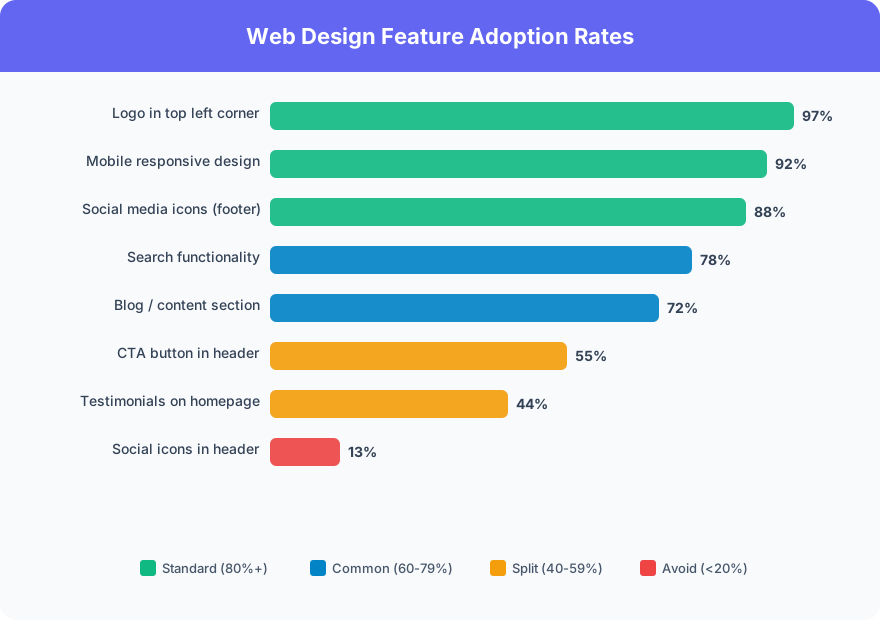
The threshold for a “standard” is 80%+. If more than 80% of sites include a feature, visitors expect it. Missing it creates friction.
- 97% place the logo in the top left. This is the single strongest convention on the web. Your logo is a home button. Visitors click it to return to the homepage.
- 92% have mobile responsive design. This was a best practice five years ago. Now it is a standard. Google penalizes non-responsive sites in mobile search results.
- 88% include social media icons in the footer. The footer, not the header. Putting social icons in the header sends visitors away from your site.
- 55% have a CTA button in the header. This is the dividing line between standard and best practice. Just over half of sites include a header CTA, but the ones that do generate more leads.
The Standard Page Layout
Marketing websites converge on a predictable layout. The elements vary by industry, but the structure is remarkably consistent.
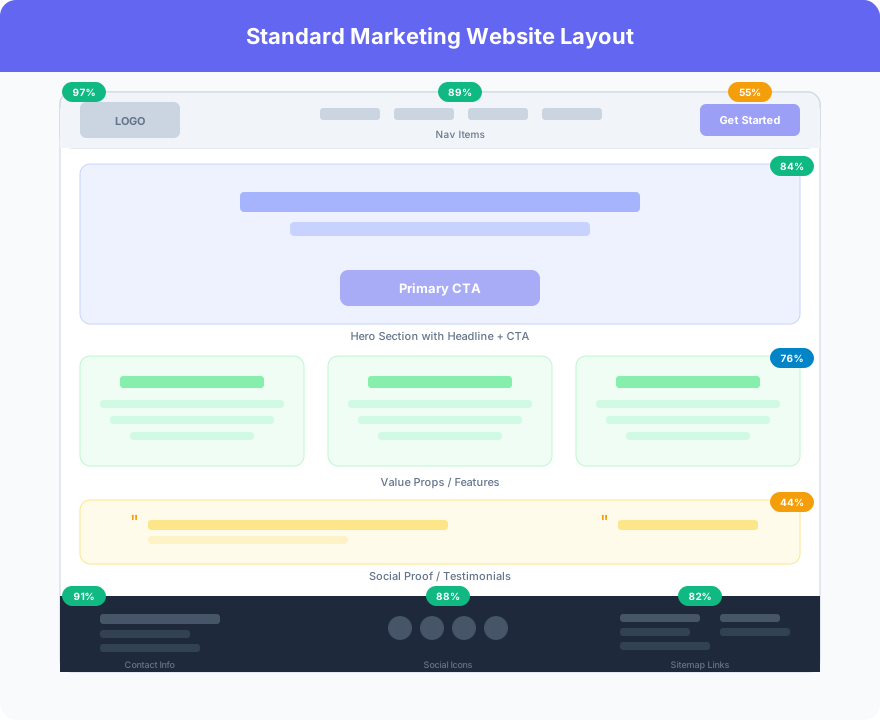
Header: Logo left, navigation center or right, CTA button far right. 89% of sites use horizontal top navigation. The header appears on every page, making it the most consistent element of your design.
Hero section: A headline, supporting text, and a primary CTA. 84% of marketing homepages include some version of a hero section. The best ones communicate what the company does in a single glance. The worst ones use vague slogans that could apply to any business.
Value proposition section: Three to four cards or columns highlighting key services, features, or benefits. 76% of homepage designs include this pattern. It works because it breaks complex offerings into scannable chunks.
Social proof: Testimonials, client logos, or review ratings. Only 44% of sites include social proof on the homepage. This is a best practice, not a standard, which means adding it gives you an edge over half your competitors.
Footer: Contact information (91%), social media icons (88%), and sitemap-style navigation links (82%). The footer is the second most-viewed area of a website after the header. Treat it as a navigation tool, not an afterthought.
Standards vs. Best Practices
Standards are what most sites do. Best practices are what the best sites do. The gap between them is where differentiation lives.
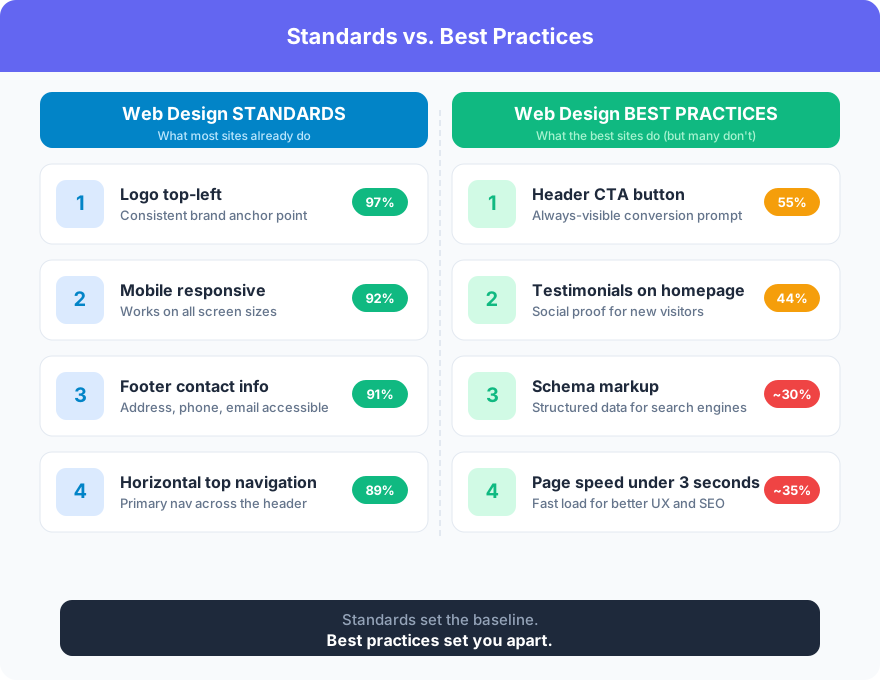
Standards set the baseline. If your site is missing features that 90% of sites include (logo placement, mobile design, footer contact info), visitors will notice. Not consciously. They will just feel that something is off.
Best practices set you apart. Features like header CTAs (55%), homepage testimonials (44%), schema markup (~30%), and fast page speed (~35% load under 3 seconds) are not universal yet. Implementing them puts you ahead of half the market.
The strategic move is to meet every standard and then add best practices systematically. Do not reinvent the wheel for features that work. Innovate where it matters.
Standards for Every Project
These are non-negotiable on every Frog Stone Media site:
Logo as home button. Clicking the logo returns to the homepage. Every visitor expects this. Do not break it.
Horizontal navigation with descriptive labels. The main menu sits at the top of the page with labels that describe what the company does, not generic terms like “Services” or “Solutions.” See the full navigation guide for details.
Mobile-first responsive design. The site works perfectly on phones, tablets, and desktops. Design starts mobile first and scales up, not the other way around.
Contact information in the footer. Phone number, email, address (if applicable), and social media links. The footer appears on every page. Make it useful.
SSL everywhere. Every page served over HTTPS. No exceptions.
Structured data. LocalBusiness, Organization, FAQ, and BreadcrumbList schema on every applicable page. This is not standard yet (under 30% adoption), but it should be.
When to Break Standards
Standards exist because they work for most sites. But some situations justify deviation:
Portfolio and creative sites. If your audience is designers, architects, or artists, unconventional layouts demonstrate creative capability. The deviation is intentional and audience-appropriate.
App-like interfaces. Web applications (dashboards, SaaS tools) follow application design patterns, not marketing site patterns. A sidebar navigation is standard in apps but unusual in marketing sites.
Brand-specific conventions. Some brands have established patterns that their audience knows. Deviating from a brand-specific convention to follow a general web standard can confuse loyal users.
The rule: break standards intentionally and for a specific reason. If you cannot articulate why the deviation serves the user, it is a mistake.
FAQ
What are web design standards?
Web design standards are the features, layouts, and design patterns that appear on the majority of marketing websites. They include conventions like logo placement (top left), mobile responsive design, horizontal navigation, and footer contact information. They are usability guidelines based on user expectations.
How often do web design standards change?
Slowly. Core standards (logo placement, navigation structure, footer content) have been stable for over a decade. New standards emerge gradually as features reach 80%+ adoption. Mobile responsive design became standard around 2016. Schema markup is trending toward standardization now.
Should my website follow all web design standards?
Yes, unless you have a specific reason to deviate. Standards exist because users expect them. Meeting expectations reduces friction and improves conversion rates. Innovate in your content, messaging, and value proposition, not in where you put the logo.
Web design standards are not restrictions. They are a foundation that frees you to focus on what actually differentiates your site: your content, your value proposition, and your proof points. Build on the standard layout, then make it unmistakably yours.
Need a site that meets every standard and exceeds expectations? Get in touch to build it.