What Vibe Coding Actually Means for Professional Web Development
Vibe coding went from a social media joke to a real workflow in about six months, and I now use it on every project I ship. The idea is simple: describe what you want in plain language, let an AI coding tool generate the implementation, and steer the results with feedback instead of writing every line by hand. Andrej Karpathy coined the term in early 2025, and by mid-2026 it has become a legitimate part of how production software gets built.
I use vibe coding regularly in my web development work. Not for everything. Not blindly. But for the right problems, it has cut implementation timelines dramatically. Here is what it actually looks like when a professional developer uses this approach on real projects.
Where Vibe Coding Delivers
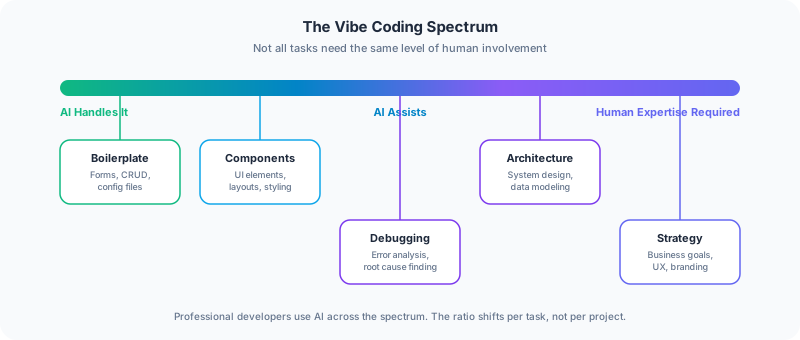
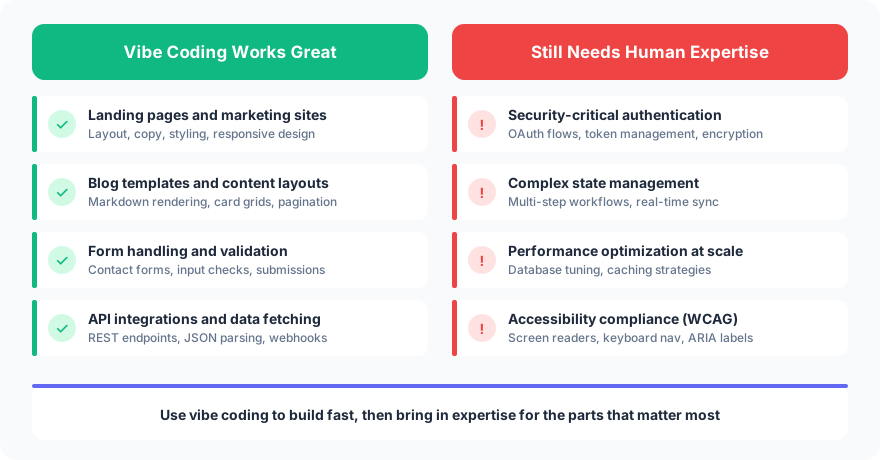
Rapid prototyping and MVPs. The biggest win is going from idea to working prototype in hours instead of days. When I built the initial scoring interface for Paddle Conditions, the dashboard layout, gradient cards, score circles, and responsive grid came together in a single session. The kind of UI work that used to mean half a day of writing JSX and tweaking Tailwind classes now happens in a conversation. You describe the layout, review what comes back, adjust, and move on.
This matters for client work too. When a Sacramento business owner says “I want something like this but with our colors and three columns instead of two,” vibe coding turns that feedback into a working mockup immediately. No waiting for a revised comp. No back-and-forth over wireframes. The client sees their idea rendered in real code, in real time.
Component generation. Every web project has components that are necessary but not interesting. Pricing tables, FAQ accordions, feature grids, testimonial carousels. These follow known patterns. Vibe coding handles them efficiently because the pattern is well-established and the variation is in content and styling, not architecture. I built 10 shared service page components for this site using this approach, each one customized for different content types but following a consistent design system.
Content-heavy pages at scale. I shipped 24 service pages and 9 industry vertical pages for DevSac in a single sprint. Each page needed unique copy, industry-specific statistics, proper JSON-LD schema markup (Service, BreadcrumbList, FAQPage), internal linking, and meta optimization. Vibe coding handled the structural work, generating page templates with the right schema, consistent frontmatter, and proper component imports, while I focused on the content strategy and keyword targeting that actually drives rankings.
Boilerplate and configuration. Meta tag optimization across 77 pages. Sitemap generation. Deployment scripts. MIME type configuration. These are tasks where the requirements are clear, the implementation is mechanical, and getting them right is more about thoroughness than creativity. Vibe coding eliminates the tedium without sacrificing accuracy.
Where It Falls Short
Architectural decisions. Vibe coding does not know that your client’s restaurant needs online ordering integration with their existing POS system, or that a law firm’s website needs specific disclaimers in specific jurisdictions. AI website builders operate at the other end of this spectrum, generating complete sites without any code, but the trade-off is even less control over architecture, performance, and custom requirements. It does not understand that building a 1,000-page nutrition reference site like WHFoods.info requires a data model where foods reference nutrients, nutrients reference foods, recipes reference both, and none of it creates circular dependencies. Those decisions come from experience, not prompts.
Performance optimization. A vibe-coded component will work. It will not necessarily be fast. When I build on Cloudflare Workers, edge performance matters at the millisecond level. D1 database query optimization, worker size limits, cron trigger scheduling for data pipelines, these require understanding the platform’s constraints. AI tools generate correct code. Experienced developers generate efficient code.
Brand voice and content strategy. Every page on this site is written in first person because that is the voice I have built across 15+ years of client work. The SEO strategy behind each service page, which keywords to target, how to structure internal links, what statistics actually convince a business owner to pick up the phone, that is not something you describe in a prompt. Vibe coding can execute on a content plan. It cannot create the plan.
Security and compliance. WCAG accessibility compliance, HIPAA considerations for medical websites, PCI requirements for e-commerce, these are not vibe-able. I run full WCAG AAA accessibility audits on every site I build. The audit itself can be AI-assisted, but knowing what to audit, understanding the legal requirements, and making architectural decisions that support compliance from the ground up requires domain expertise.
What This Means for Web Development Pricing
Here is the part most developers are not talking about. Vibe coding compresses implementation timelines. A landing page that took 8 hours to build from scratch now takes 2. A full service page architecture that would have been a week-long project deploys in a day.
This does not mean websites should cost less. It means clients get more for the same investment. Instead of paying for 8 hours of writing JSX, you are paying for the strategy, architecture, and quality assurance that makes a website actually perform. The developer who uses vibe coding to build faster and then reinvests that time into SEO optimization, accessibility compliance, and performance tuning delivers a better product than the developer who hand-codes everything and runs out of budget before the meta tags are right.
That is the real shift. Vibe coding is not replacing developers. It is raising the floor on what a professional website includes.
How I Use It in Client Projects
Every project I take on uses a mix of traditional development and vibe coding, proportioned to what the work actually needs:
Strategy and architecture get full human attention. Keyword research, site structure, conversion flow, technology choices. This is where experience matters most, and it is where most web projects succeed or fail.
Implementation uses vibe coding where it fits. Component generation, page templates, content scaffolding, deployment automation. The structural work that follows established patterns.
Quality assurance gets AI-assisted thoroughness that would not be economical otherwise. WCAG audits across every page, meta tag validation, internal link analysis, schema markup verification. Tasks that benefit from systematic checking at a scale manual review cannot match.
The result is websites that are built faster, tested more thoroughly, and optimized more deeply than what was possible two years ago at the same price point.
If you want a developer who uses every available tool to deliver better results, not just faster code, let’s talk about your project.