How to Write Testimonials That Actually Convert (With Examples)
Go to any business website and count the marketing claims on the homepage. “Trusted partner.” “Industry-leading results.” “Exceptional service.” Now count how many of those claims are backed by evidence. The gap between claims and evidence is where conversions die.
Testimonials are the fastest way to close that gap. They are third-party endorsements that trigger the conformity bias: when prospects see that other people chose you and were happy, choosing you feels like the safe decision. But most businesses waste their testimonials by burying them on a dedicated testimonials page that gets 12 visits per month, or by collecting quotes so generic they could apply to any company in any industry.
Here is how to collect, write, and place testimonials that actually move the needle.
Why Most Testimonials Fail
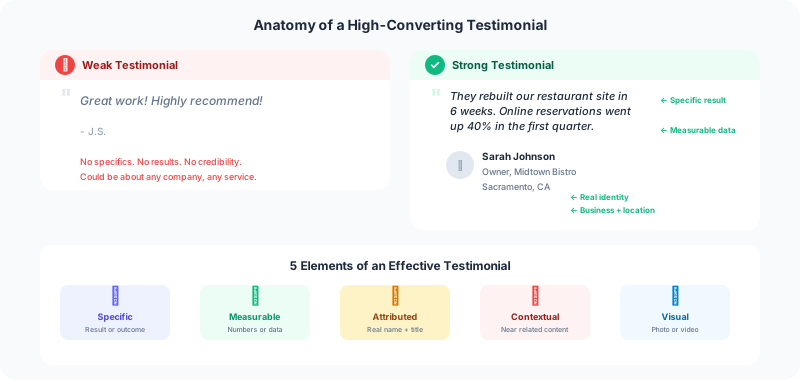
A testimonial that says “Great work! Highly recommend!” does nothing for your conversion rate. It has no specifics, no measurable outcome, and no real attribution. A visitor reading it cannot determine what service was provided, what result was achieved, or whether the person leaving the testimonial is even real.
The best testimonials are specific, measurable, attributed, contextual, and visual.
How to Collect Testimonials Worth Using
Ask the Right Questions
Do not ask clients “Can you write us a testimonial?” That produces vague praise. Instead, ask specific questions that prompt specific answers:
“What was the situation before we started working together?” This establishes the problem and makes the testimonial relatable to prospects in similar situations.
“What specific result did the project deliver?” This produces the measurable outcome that gives the testimonial credibility. Traffic numbers, revenue changes, time saved, leads generated.
“What surprised you about working with us?” This produces the genuine, human detail that generic testimonials lack. The unexpected insight is what readers remember.
“Would you recommend us? If so, to whom specifically?” This defines the ideal client in the testimonial itself, helping prospects self-identify.

Draft It for Them
Most clients are happy to give a testimonial but do not have time to write one. After the call or email exchange, write a two to three sentence draft based on their answers and send it back for approval. This is not fabrication. It is professional writing. The client reviews, edits, and approves before it goes live.
Every Frog Stone Media client project gets a testimonial draft. The client’s words, polished into something that reads well on a website. Approval rates are close to 100% because the draft is already based on what the client said.
Catch Them in the Wild
Grateful emails, positive responses to project deliveries, enthusiastic social media mentions. These are all testimonials waiting to happen. When a client sends a message like “the site looks amazing, we have already gotten three leads this week,” ask if you can use that quote on your website. Most people say yes immediately because they just expressed the sentiment naturally.
Where to Place Testimonials (This Is Where Most Sites Get It Wrong)
The single biggest mistake: creating a testimonials page. Check your analytics. Testimonial pages consistently rank among the lowest-traffic pages on any website. Nobody navigates to a testimonials page on purpose.
Instead, place testimonials directly next to the claims they support. A quote about your thorough process goes next to your process section. A quote about fast turnaround goes next to your timeline section. A quote about measurable results goes next to your case studies.
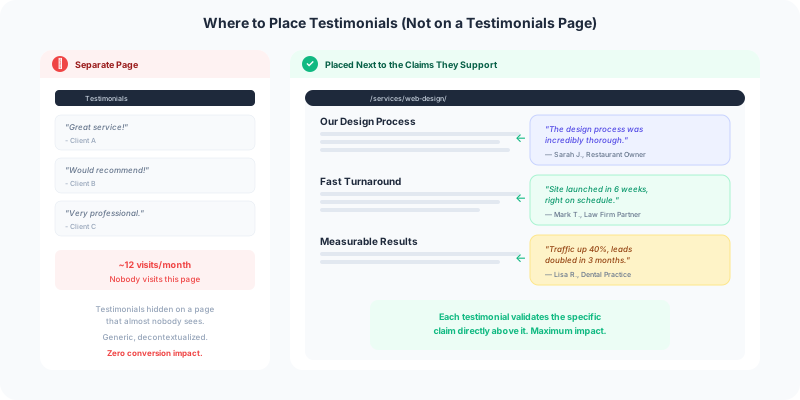
This contextual placement goes on every service page built through Frog Stone Media’s web design services. Each section of the page makes a claim, and directly below that section is a client quote that validates the claim. The visitor never has to take your word for it.
Specific Placement Guidelines
Homepage: One to two testimonials below the fold, near your service overview. Use your strongest, most results-oriented quotes.
Service pages: One testimonial per major section. Match the testimonial topic to the section content. A quote about your design process belongs in the design process section, not randomly at the bottom.
Blog posts: Add a relevant client quote when you reference a project you completed. “When I rebuilt a restaurant site last year, online reservations increased 40%” becomes far more credible when followed by the client’s own words confirming it.
About page: Testimonials about working with you personally belong here. A quote about your communication style or professionalism reinforces the human story the about page tells.
Pricing/cost pages: Testimonials about value and ROI belong here. “The investment paid for itself in the first quarter” addresses the price objection directly.
How to Format Testimonials for Maximum Impact
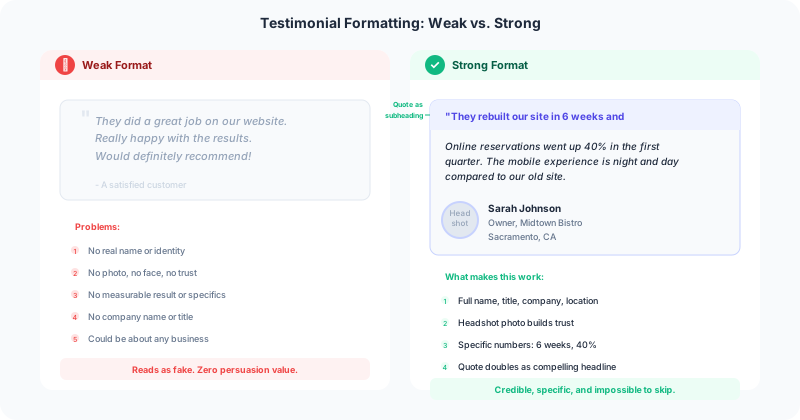
Use the client’s name, title, and company. “Sarah J., Owner, Midtown Bistro, Sacramento” is infinitely more credible than “S.J.” or just “A satisfied customer.”
Include a photo if possible. Faces build trust. Even a small headshot next to the quote makes the testimonial feel more real.
Keep it short. Two to four sentences. Long testimonials get skimmed. If a client gives you a paragraph, pull out the strongest two sentences and use those.
Use the quote as a subheading. Instead of a section header that says “Testimonials” or “What Our Clients Say” (which visitors skip), use the actual quote as the header: “They rebuilt our site in 6 weeks and leads doubled.” That gets read even by people who are scrolling fast.
Never use carousels. Testimonial sliders hide 80% of your social proof behind clicks that only 5% of visitors make. Stack testimonials vertically so visitors see them all as they scroll.
How Many Testimonials Do You Need?
More than you think. Amazon dedicates 43% of product page real estate to reviews and social proof. That is not an accident. There is no point of diminishing returns on evidence.
Start by getting one strong testimonial for each service you offer. Then build toward one testimonial per major claim on each page. A service page with five sections and five supporting testimonials converts at a fundamentally different level than a service page with a lonely quote at the bottom.
Every marketing claim on your website is an opportunity to add a supporting testimonial. If your site is making promises without evidence, you are asking prospects to trust you on faith. Get in touch to see exactly where testimonials will have the most impact on your pages.