5 Ways to Improve Any Webpage by Adding Specificity
Vague copy kills conversions. Every time a visitor reads “we help many businesses grow,” their brain files it under “generic” and moves on. Specific copy stops the scroll because it sounds real. It sounds earned.
I have rewritten hundreds of web pages for clients. The single fastest improvement is always the same: replace vague language with specific evidence. Here are five ways to do it today.
1. Replace “Many” and “Several” With Numbers
“We have helped many businesses” becomes “I have built 47 websites for Sacramento businesses since 2021.” The number does not need to be huge. It needs to be real. Visitors trust “12 five-star Google reviews” more than “tons of great reviews” because a number is verifiable.
Go through your homepage right now. Every time you see “many,” “several,” “numerous,” or “a lot,” swap in an actual count. If you do not know the number, go count.
2. Name Industries, Clients, or Locations
“We work with local businesses” is invisible. “I build websites for HVAC contractors, dental offices, and law firms in Sacramento” is a magnet for those exact audiences. Named industries signal expertise. Named locations signal proximity.
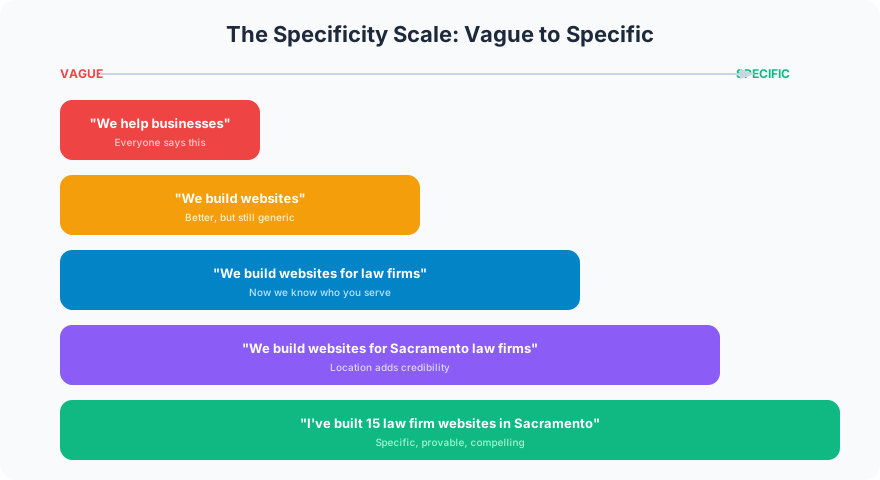
If you have permission to name clients, do it. “Built the online ordering system for Pangaea Bier Cafe” carries ten times the weight of “built restaurant websites.”
3. Add Timeframes to Every Claim
“Fast turnaround” means nothing. “Delivered in 3 weeks” means everything. Timeframes anchor expectations and build trust. I include delivery timelines on every service page I write. “Most sites launch within 4 to 6 weeks from signed contract” gives the visitor a concrete picture.
The same applies to results. “Increased traffic” is forgettable. “Increased organic traffic 140% in 90 days” is a headline.
4. Cite Actual Results
If a client’s bounce rate dropped from 68% to 41% after a redesign, say so. If form submissions doubled, say so. Results are the strongest specificity tool you have. I keep a spreadsheet of client outcomes for exactly this reason.
No results yet? Use industry benchmarks. “The average small business website converts at 2.35% according to WordStream data. I build sites that target 4% or higher.” That is still specific and still credible.
5. Write in First Person
“Our team of experts” is corporate filler. “I have 5 years of experience building Astro and WordPress sites” is specific and human. First person forces specificity because you cannot hide behind a committee. You are staking your name on every claim.
For more on turning evidence into trust on your pages, read my post on evidence and trust signals that convert visitors.
FAQ
How specific is too specific?
You cannot be too specific as long as the details are accurate. I have never seen a client lose conversions because their copy was too precise. The risk is always on the vague side. If you have the data, use it.
What if I do not have impressive numbers yet?
Use the numbers you have. “3 websites launched this quarter” is more persuasive than “multiple projects completed.” Small, real numbers beat large, fake ones. Start tracking results now so you have better numbers in 6 months.
Want copy that sounds specific, credible, and conversion-ready? Reach out and I will rewrite your most important page with real numbers and evidence.