How to Add Social Proof to Your Website: 7 Types That Convert
Social proof is the principle that people follow the actions of others. On a website, it means visitors trust you more when they see that other people already trust you. Reviews, testimonials, client logos, and case studies are all forms of social proof.
Every page needs social proof because the data is clear: pages with social proof convert at higher rates than pages without it. The type matters less than the specificity.
7 Types of Social Proof
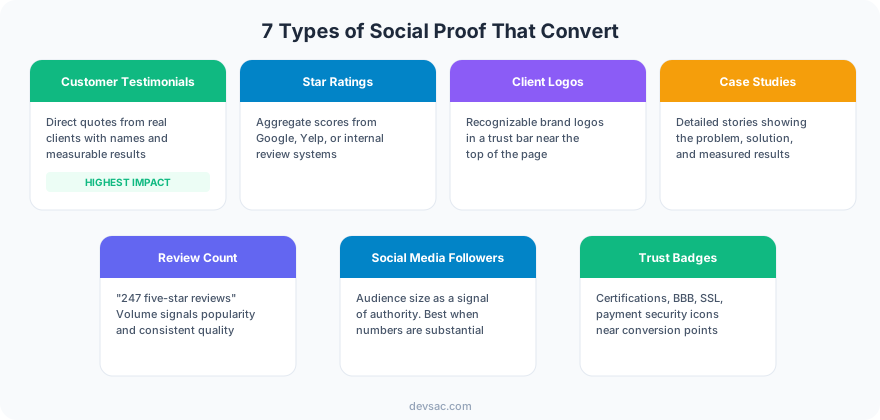
Customer testimonials. Direct quotes from named clients with specific results. The most persuasive form of social proof because it combines a real person with a measurable outcome. See the full testimonial collection guide.
Star ratings and aggregates. “4.8/5 from 200+ reviews” communicates trust in a single line. Aggregate ratings are more credible than individual reviews because they represent a pattern.
Client logos. Instant recognition. If visitors see brands they know and trust, your credibility transfers. Use logos only if your clients are recognizable. Otherwise, testimonial quotes work better.
Case studies. Detailed stories of challenges solved with measurable results. The most powerful form of evidence because it demonstrates both process and outcome.
Review counts. “200+ five-star reviews” is a volume signal. High review counts indicate a track record. Display the count alongside the aggregate rating.
Social media followers. Less powerful than reviews but still a signal. Large follower counts suggest popularity. Only display if the numbers are impressive for your industry.
Trust badges. Awards, certifications, association memberships, security seals. Each badge is a third-party endorsement of your credibility.
Where to Place Social Proof

Trust bar near the top. Client logos or an aggregate rating visible before scrolling. This establishes credibility before the visitor reads your pitch.
Testimonial after your claims. Place a specific testimonial right after your service description. The testimonial confirms what you just claimed.
Review count or case study near the CTA. Social proof placed right before a call to action reduces risk at the moment of decision.
Weak vs. Strong Social Proof
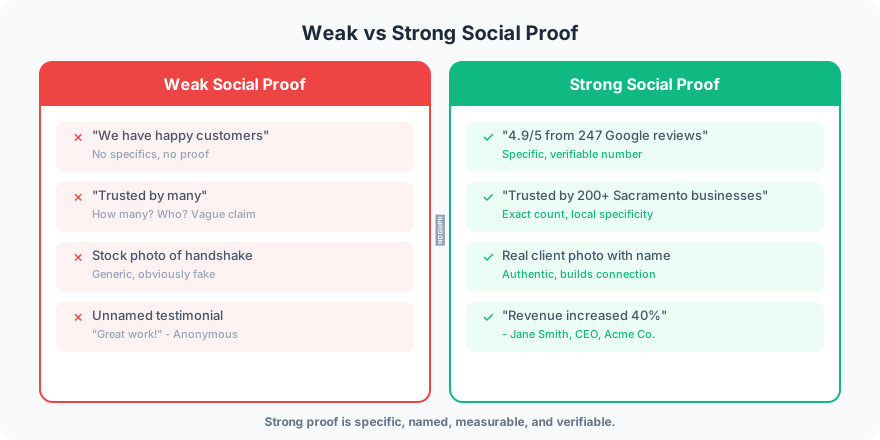
The gap between weak and strong social proof is enormous. “We have happy customers” is noise. “4.9/5 from 247 Google reviews” is evidence. “Revenue increased 40%” with Jane Smith, CEO, and her photo is proof.
Every piece of social proof should answer: who said it, what was the result, and can the visitor verify it?
FAQ
How much social proof does a page need?
At minimum, 2 elements per page: one near the top (trust bar or rating) and one near the CTA (testimonial or case study). Service pages should have 3-4 elements. The about page should have the most social proof on the site.
What if I do not have testimonials yet?
Start with what you have. Years in business, number of projects completed, certifications, and association memberships are all social proof. As you complete projects, ask for testimonials immediately while the experience is fresh.
Social proof is not optional. It is the difference between a visitor trusting your claims and verifying them. Add it to every page, make it specific, and watch your conversion rates improve.
Want social proof baked into your site design? Get in touch to build trust into every page.