About Page Best Practices: 7 Elements That Build Trust and Convert Visitors
Your about page is one of the top 3 most visited pages on your website. Open your analytics and check. It is there, right behind your homepage and probably ahead of most service pages.
This makes sense. When someone finds your business through search or a referral, the first thing they want to know is: who are these people and can I trust them? Your about page answers that question. A good one builds confidence. A bad one sends visitors to your competitor.
Whether the business is a solo practitioner, an agency, or a company with 50+ team members, the formula is the same. Here are the 7 elements that consistently build trust and drive conversions.
The Ideal About Page Structure
Before diving into individual elements, here is a starting-point layout for every about page build.
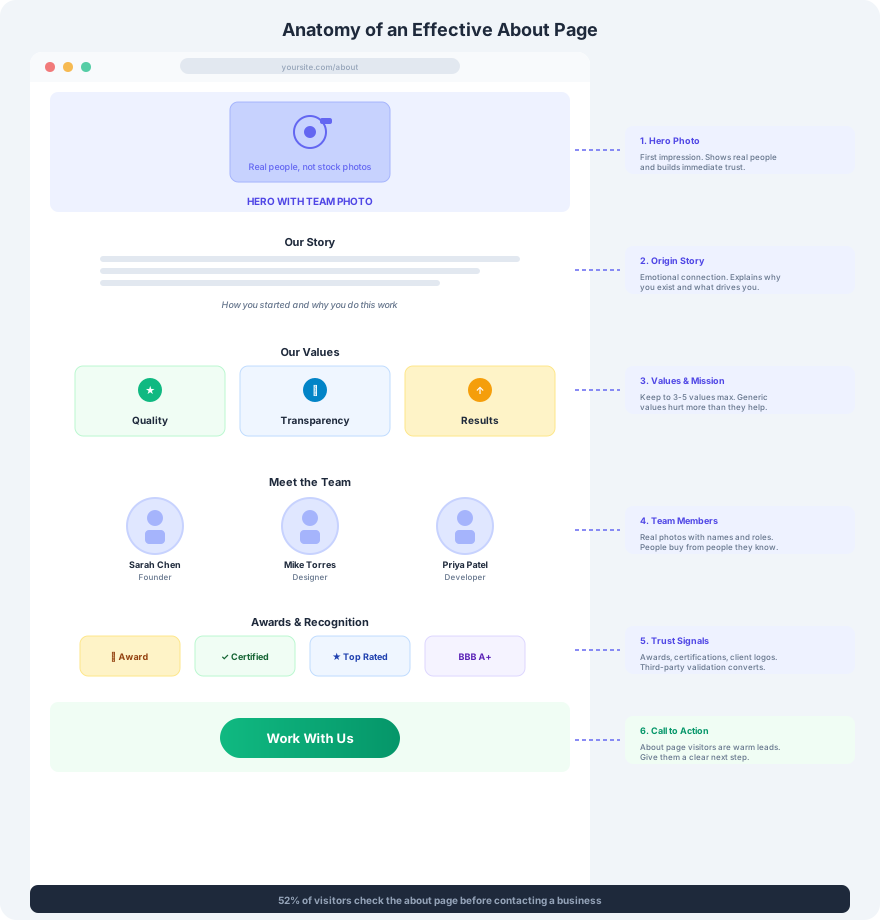
This layout works because it follows the visitor’s natural decision-making process. They want to see who you are (hero photo), understand your story (origin), evaluate your values, see the actual people, verify credibility (trust signals), and then take action. Every section moves them one step closer to reaching out.
1. Real Team Photos
Stock photos on an about page are the fastest way to destroy trust. Visitors can spot a stock image instantly. When they see generic people in a generic office, the message is clear: this company is hiding something.
Use real photos of real people. They do not need to be professional headshots from a $5,000 shoot. A well-lit photo taken with a modern phone in good natural light works. What matters is authenticity, not polish.
For solo practitioners, this means your own photo. Not a stock photo of someone who looks vaguely like you. Not a logo. Your face, your name, and a brief statement about what you do.
2. Your Origin Story
Every business has a founding story. Most about pages skip it entirely and jump straight to “Our Mission” or “Our Values.” That is a mistake. People connect with stories. They do not connect with mission statements.
Your origin story answers: why does this company exist? What problem did you see that nobody else was solving? What happened that made you start this?
Keep it under 200 words. This is not your autobiography. It is the moment that led to the business. For Frog Stone Media, it was building websites for 20+ years and watching Sacramento businesses get overcharged for outdated WordPress sites. That specific frustration is more compelling than any generic mission statement.
3. Clear Statement of What You Do
Your about page is not an SEO page. It does not need to target keywords. But it absolutely needs to tell visitors what you do in plain language.
This mistake is everywhere: about pages that talk about company culture, values, and team backgrounds without ever stating what the company actually does. A visitor who lands on your about page via a sitelink (the small links below your main search result) can arrive with zero context.
One sentence, above the fold: “I build websites for Sacramento businesses” or “We design e-commerce platforms for DTC brands.” Then expand from there.
4. Company Values (3-5 Maximum)
Values matter. Research from Edelman shows 58% of consumers buy from brands based on their beliefs and values. But listing 12 values is the same as listing zero. Nobody reads a wall of aspirational buzzwords.
Pick 3-5 values that actually differentiate you. “Quality” and “Integrity” are not differentiators because every company claims them. “We ship within 48 hours of approval” is a value you can demonstrate. “We do not lock clients into long-term contracts” is a value that changes buying behavior.
State each value in one sentence and prove it with a specific example.
5. Trust Signals and Social Proof
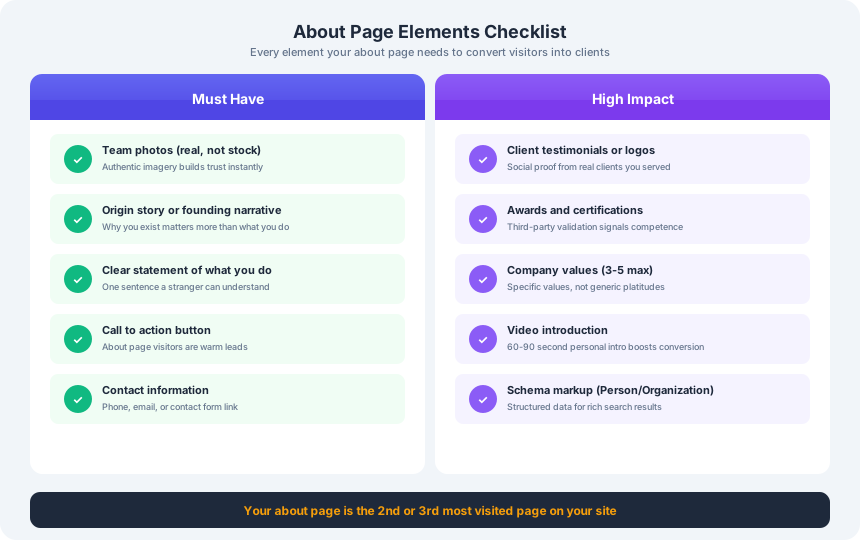
Your about page is where trust signals have the most impact because visitors are actively evaluating whether to work with you.
Client logos work if you have recognizable names. If your clients are small local businesses, skip the logos (nobody recognizes them) and use testimonial quotes instead.
Awards and certifications add credibility when they are relevant. A “Best Web Design Company 2025” badge matters. A random Chamber of Commerce membership badge does not.
Numbers tell the story. “15 years in business” and “200+ projects delivered” are more persuasive than paragraphs of copy. Use specific numbers, not rounded ones.
6. Schema Markup
Your about page will not rank for commercial keywords. But it can enhance your Google Knowledge Panel through structured data.
Add Organization or Person schema with your name, founding date, location, and specialties. This helps Google understand your business entity and can improve how your brand appears in search results.
Solo practitioner sites get Person schema, and company sites get Organization schema. Both include founder information, area served, and the services offered. The technical implementation takes 30 minutes and improves your overall search presence.
7. A Call to Action
Your about page is on the path to conversion. Visitors who read your about page are evaluating you. They are close to making a decision. If the only thing they can do after reading is hit the back button, you are losing leads.
Add a clear CTA. “Start a Project” or “Get in Touch” with a link to your contact page. Place it after your trust signals section, when credibility is at its peak.
Every about page needs CTAs in two places: mid-page (after the origin story) and at the bottom (after trust signals). Visitors who are convinced early take the first CTA. Visitors who need more information take the second one.
Common Mistakes to Avoid
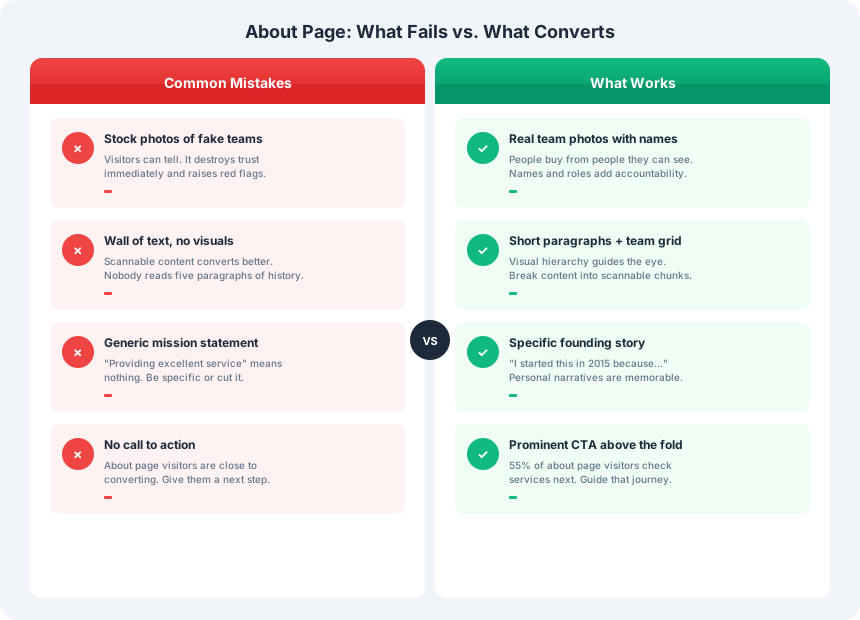
The four most common about page mistakes:
Stock photos of fake teams. Visitors can tell. It destroys trust instantly. If you are a solo operator, own it. One authentic photo beats five stock images.
Wall of text with no visual breaks. Break content into short paragraphs, add team photos, use icons for values. Your about page should be scannable, not a novel.
Generic mission statements. “Providing excellent service since 2010” communicates nothing. Replace it with a specific founding story or a concrete differentiator.
No call to action. 55% of about page visitors navigate to a service or contact page next. Make that path obvious, do not make them hunt for it.
FAQ
What should I include on my about page?
At minimum: a real photo, a clear statement of what you do, your founding story, 3-5 company values, trust signals (testimonials, certifications, or client logos), and a call to action. Schema markup is a high-impact addition that takes 30 minutes to implement.
How long should an about page be?
500-1,000 words for most businesses. Long enough to tell your story and establish credibility, short enough that visitors actually read it. If you have a lot to say, break it into sections (story, team, values, press) instead of one massive page.
Should my about page have SEO keywords?
No. About pages are not keyphrase-focused. They rank through sitelinks (the small links below your main search result) not through traditional keyword targeting. Focus on telling your story authentically rather than optimizing for search terms.
Your about page is where visitors decide if they trust you. Stock photos, generic copy, and missing CTAs all send the same message: this company did not care enough to show up as themselves. Real photos, a real story, and a clear path forward is all it takes.
If your about page is not building trust, get in touch about a redesign.