Neuromarketing Web Design: 6 Psychology Principles That Convert
Every design decision on your website triggers a psychological response. Color choices, element placement, word order, and visual hierarchy all influence how visitors feel, what they trust, and whether they take action.
This is not manipulation. It is alignment. Good neuromarketing design aligns your website’s visual and structural choices with how human brains naturally process information.
6 Principles That Drive Conversions

Anchoring. The first number a visitor sees becomes their reference point. Show your premium plan first, and your mid-tier plan feels like a deal. This is why pricing pages list the most expensive option first.
Social proof. People follow others. Testimonials, reviews, and client logos convert because they show that other people already trust you.
Scarcity. Limited availability increases perceived value. “3 project slots remaining this quarter” creates urgency without being dishonest.
Reciprocity. Give something valuable before asking for anything. Free guides, useful blog posts, and free consultations build goodwill that converts into business.
Loss aversion. People are more motivated by what they might lose than what they might gain. “Your competitors are already doing this” is more motivating than “You could benefit from this.”
Serial position effect. Visitors remember the first and last items in any list. Put your best navigation items at the beginning and end of your menu.
Color Psychology in Web Design
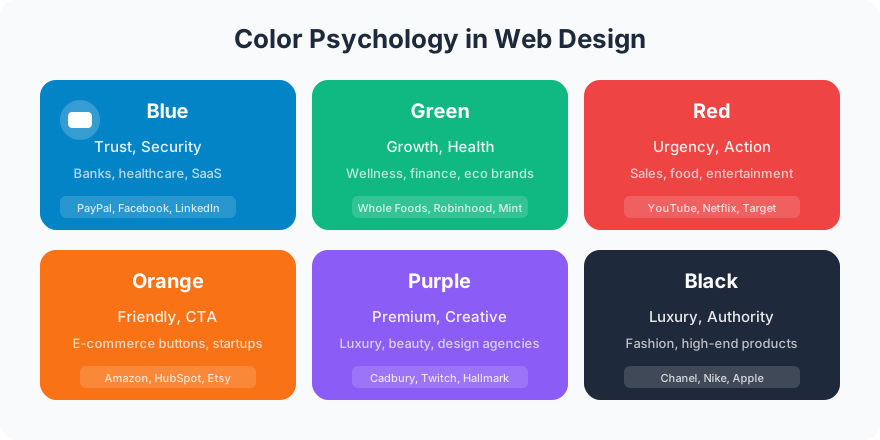
Color choices are not arbitrary. Blue builds trust (banks, healthcare). Green signals growth (finance, health). Red creates urgency (CTA buttons). Your brand colors should align with the emotions you want to evoke.
Visual Hierarchy

Visitors do not read web pages. They scan. Their eyes move from large to small, top to bottom, high contrast to low contrast. Your visual hierarchy should match this pattern: the most important information is the largest and highest on the page.
FAQ
Is neuromarketing manipulative?
No. These principles describe how human attention and decision-making naturally work. Using them in design means aligning your website with how people already process information. The goal is clarity and ease, not deception.
Which principle has the biggest impact?
Social proof. Adding specific testimonials and review ratings to a page consistently produces the largest conversion improvement because it leverages both authority and herd behavior simultaneously.
Every website uses psychology whether the designer intended it or not. Understanding these principles lets you make intentional choices instead of accidental ones.
Want psychology-informed design for your site? Get in touch about a site that converts.