How to Increase Your Website Conversion Rate: 5 Levers That Work
Your website gets traffic. But traffic without conversions is just visitors looking around and leaving. The conversion rate is the metric that tells you whether your site is doing its job.
Conversion rates tracked across every client site show a consistent pattern: small improvements in conversion rate produce larger revenue gains than the same effort spent on traffic acquisition. Doubling traffic costs thousands. Improving conversion by 1 percentage point is an afternoon of design work. If you want to quantify that impact in dollars, the website ROI guide shows how to calculate the revenue lift from conversion improvements.
The Conversion Rate Formula
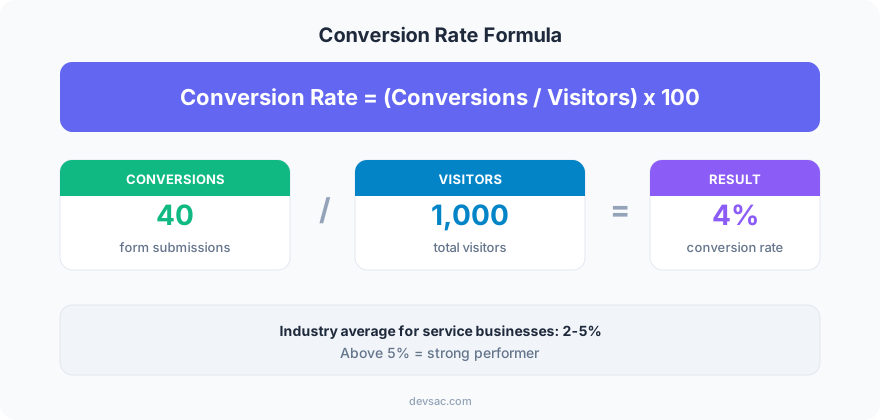
A 4% conversion rate means 40 out of every 1,000 visitors take action. For service businesses, the industry average is 2-5%. Above 5% means your site is performing well. Below 2% means something is broken.
Improving from 2% to 4% does not require more traffic. It requires better pages.
5 Levers That Improve Conversion
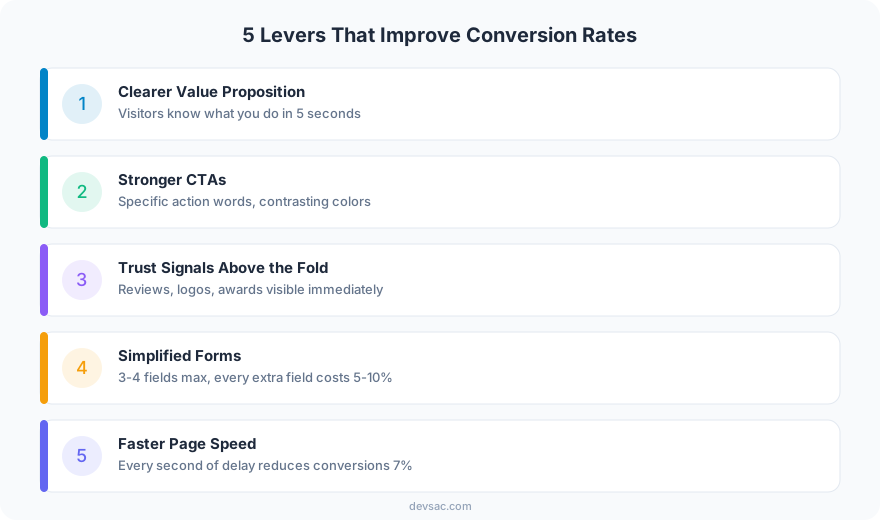
1. Clearer Value Proposition
If visitors cannot tell what you do within 5 seconds of landing on your homepage, they leave. “Sacramento Web Design for Law Firms” converts. “Innovative Digital Solutions” does not.
2. Stronger CTAs
Specific calls to action outperform generic ones by 2-3x. “Get Your Free Quote in 24 Hours” beats “Contact Us” because the visitor knows exactly what happens next.
3. Trust Signals Above the Fold
Evidence and proof points visible before scrolling build immediate credibility. A review rating, client logos, or years-in-business stat placed near the hero section increases trust at the moment it matters most.
4. Simplified Forms
Every field you add to a contact form reduces completion by 5-10%. Keep it to 3-4 fields maximum: name, email, phone (optional), and message. If you need more information, ask for it after the initial contact.
5. Faster Page Speed
Every second of page load delay reduces conversions by approximately 7%. A site that loads in 5 seconds instead of 2 loses 21% of its potential conversions. Optimize images, minimize JavaScript, and use a CDN.
How to Test Changes
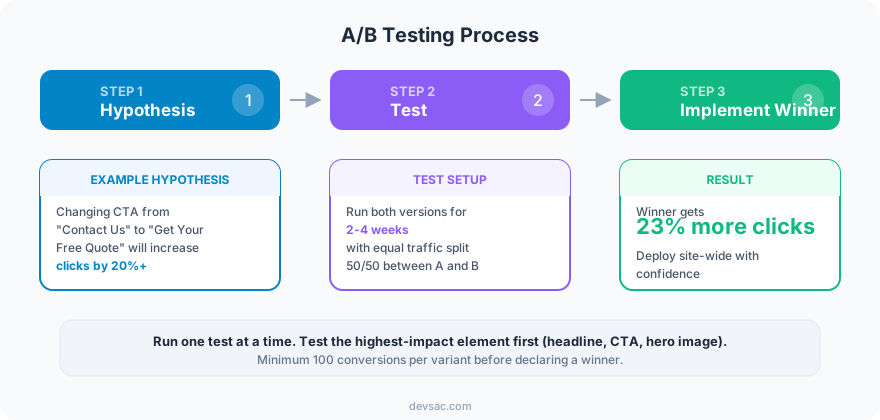
Do not guess. Test. Change one element at a time, split traffic between the original and the variation, and measure the difference over 2-4 weeks. The data tells you what works.
Common tests that produce measurable results: CTA button text, headline wording, form field count, testimonial placement, and hero image selection.
FAQ
What is a good website conversion rate?
2-5% is average for service businesses. Above 5% is strong. Above 10% is exceptional. The right benchmark depends on your industry and what counts as a “conversion” (form submission, phone call, chat initiation).
How quickly can you improve your conversion rate?
Some changes show results in days (CTA text, form simplification). Others take weeks (page speed improvements, content rewrites). The fastest wins come from fixing the most obvious problems first: missing CTAs, unclear headlines, and broken forms.
Traffic is expensive. Conversion optimization is cheap. Fix your conversion rate before spending another dollar on ads or content. If your site is not generating inquiries at all, the problem is likely structural. Start with the fundamentals in the lead generation website guide.
Want a conversion audit of your site? Find out what you are losing.