Best Real Estate Websites: What Top Agents Do Online
97% of homebuyers start their search online. The agent with the better website captures the lead before the first showing. Not the agent with the most experience or the biggest brokerage. The one whose website has the best search experience, the most useful neighborhood content, and the easiest way to get in touch.
Here is what the best real estate websites do differently, and what every agent should steal.

What Generates Real Estate Leads Online
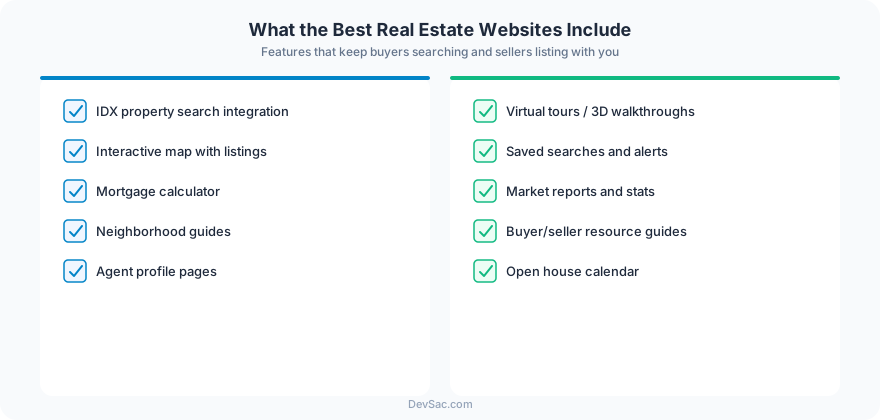
Real estate website visitors fall into three groups:
Active buyers are searching for listings. They want fast, accurate search with good filters and saved search alerts. If your IDX search is slower or less complete than Zillow, they leave.
Sellers want to know what their home is worth and who can sell it. They are looking for market data, comparable sales, and agent track records. A free home valuation tool is the highest-converting seller lead magnet.
Researchers are 6-12 months from buying or selling. They are reading neighborhood guides, market reports, and school information. This is your content marketing audience, and they become leads when the timing is right.
1. Zillow
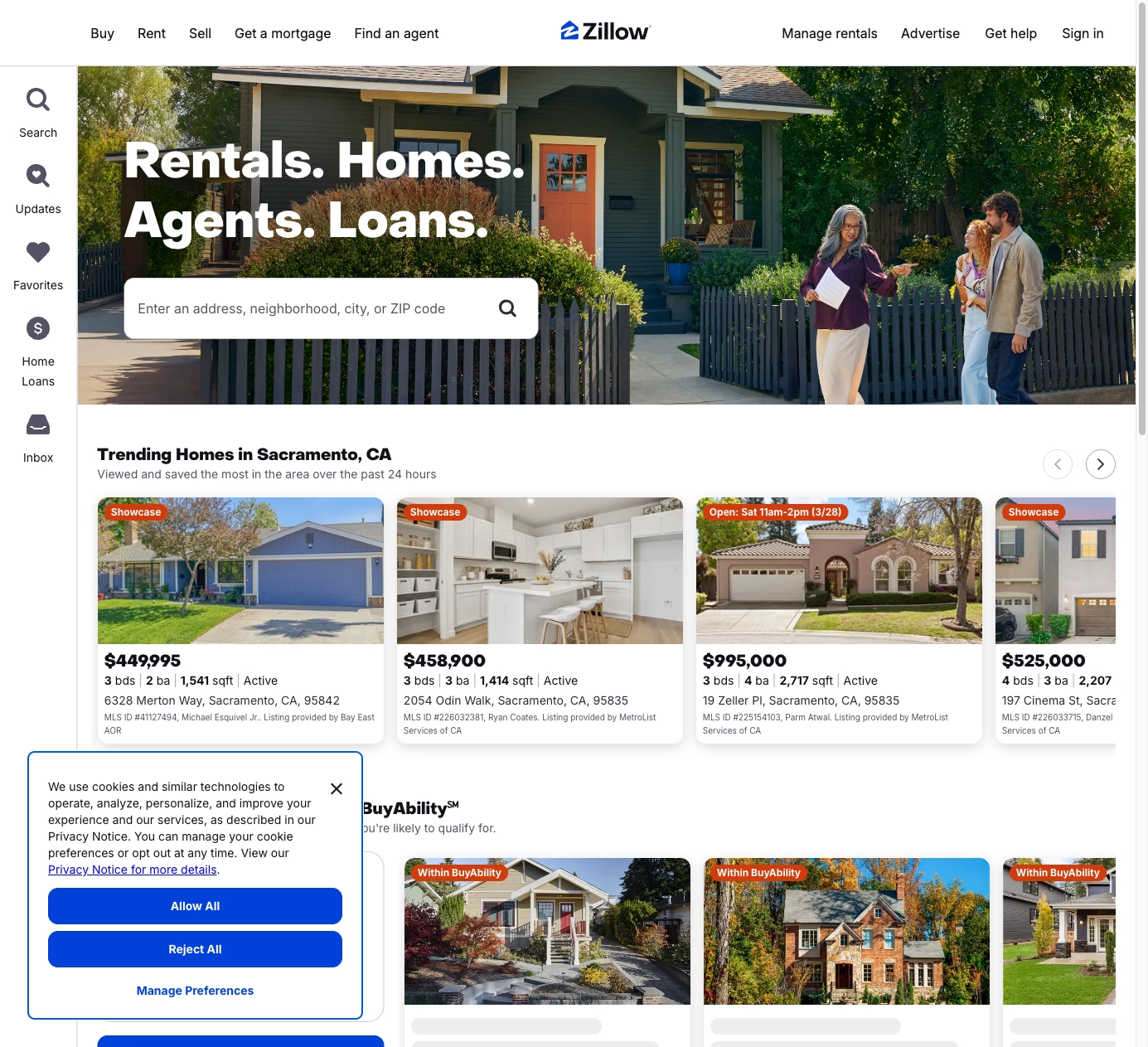
Zillow is not an agent website, but it is the benchmark your website competes against. The search experience is fast, the filters are comprehensive, and the Zestimate (however inaccurate) gives every visitor a number. The mobile app is the most-used real estate app in the US.
What to steal: The search speed and filter depth. Your IDX search does not need to beat Zillow, but it needs to be fast enough and comprehensive enough that visitors do not leave your site for Zillow. If your property search takes more than 2 seconds to load results, that is too slow.
2. Compass
Compass agents get some of the best-designed agent websites in the industry. The platform provides clean templates with high-quality photography, neighborhood pages, and integrated CMA tools. Each agent’s site feels boutique while maintaining brand consistency.
What works: The neighborhood content. Each Compass agent’s neighborhood pages include market statistics, lifestyle descriptions, walkability scores, and recent sales. This content ranks for “[neighborhood] real estate” searches and positions the agent as the local expert.
3. The Corcoran Group
Corcoran’s website demonstrates luxury real estate marketing done right. Full-screen photography, minimal text, and a browsing experience that feels like a magazine. The property detail pages use virtual tours, floor plans, and neighborhood context to sell the lifestyle, not just the square footage.
What to steal: Property presentation quality. Even if you are not selling $10 million apartments, the principle applies. Professional photography, thoughtful descriptions, and virtual tours generate more inquiries than MLS-feed listings with phone photos and “3BR/2BA, must see!” descriptions.
4. Redfin
Redfin’s website is built on data transparency. Listing pages show price history, tax records, school ratings, walkability scores, and commute times. The “Compete Score” (renamed from Hot Homes) tells buyers how competitive a listing is. Every piece of data Redfin surfaces is designed to help buyers make faster, more confident decisions.
What to steal: Data layering on listings. Adding school ratings, commute times, and recent comparable sales to your listing pages adds value that the MLS feed alone does not provide. This keeps visitors on your site instead of cross-referencing data on other platforms.
5. KW.com (Keller Williams)
Keller Williams gives agents a branded website with CRM integration, lead capture, and property search. The agent search pages are well-designed, and the platform handles the technical SEO (sitemap, schema, page speed) that individual agents typically neglect.
What works: Lead capture integration. Every property search, every saved listing, every market report generates a lead that flows directly into the agent’s CRM. Your website should not just display information. It should capture visitor data at every interaction point.
6. Realtor.com
Realtor.com differentiates on listing accuracy (they pull directly from MLS feeds) and provides the most comprehensive “What’s Nearby” data of any real estate portal. Schools, restaurants, grocery stores, parks, and transit are all mapped around each listing.
What to steal: Hyperlocal content around listings. When a buyer views a property, they also want to know about the neighborhood. Adding local amenities, school ratings, and commute data to your listing pages provides context that turns browsers into leads.
7. Robert Paul Properties
Robert Paul is a regional luxury brokerage in Cape Cod and Boston whose website demonstrates what a boutique firm can do with strong design. The property search is fast and visual. Community pages are genuine (not template content), with insider knowledge about each town. The blog publishes market reports that position the team as data-driven experts.
What to steal: Authentic community content. A neighborhood page that reads like a local wrote it (because one did) builds trust that template content from a national portal cannot. If you know your market deeply, that knowledge is your competitive advantage. Put it on your website.
Mistakes That Lose Leads
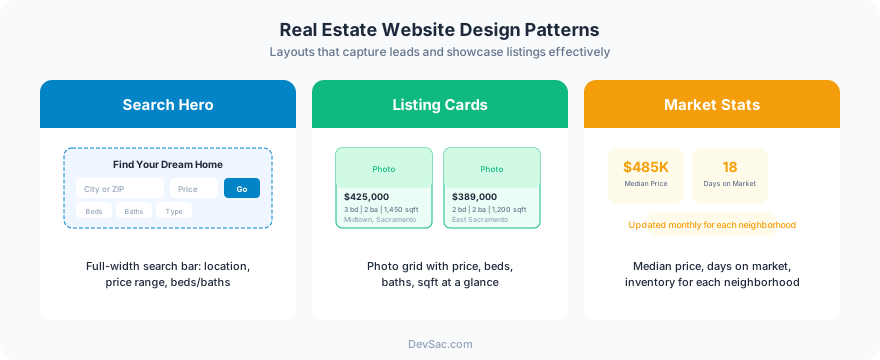
Slow IDX search. If your property search takes more than 2 seconds to return results, visitors go to Zillow. Invest in a fast IDX provider, even if it costs more.
No neighborhood content. “Browse homes in Sacramento” is not a neighborhood page. Individual neighborhood pages with market data, lifestyle descriptions, and local knowledge rank for “[neighborhood] homes for sale” and position you as the local expert.
Registration walls too early. Forcing visitors to register before viewing listings drives them to Zillow where registration is optional. Let visitors browse freely and gate premium features (saved searches, price alerts, detailed reports) instead.
No mobile property search. Buyers search on their phones at open houses, in the car between showings, and on the couch at night. If your property search does not work flawlessly on mobile, you are invisible during the moments when buyers are most engaged.
No market data. Sellers want to know what their home is worth. Buyers want to know if the market is going up or down. Monthly market reports, neighborhood price trends, and days-on-market data build credibility and generate return visits.
Building a Real Estate Website That Generates Leads
The best real estate websites combine fast property search, neighborhood expertise, and lead capture at every step. Whether you are a solo agent or a brokerage, the principles are the same: make search fast, make content local, and make contact easy.
Frog Stone Media builds real estate websites that generate leads through fast IDX search, neighborhood-level content, and mobile-first design. From property pages to market reports and local SEO that puts you in front of buyers and sellers in your market. Get in touch about your website.