Best Contractor Websites: Designs That Generate Leads
85% of homeowners research contractors online before requesting an estimate. The contractor with the better website gets the call. Not the one with 30 years of experience and a truck wrapped in vinyl. The one whose website loads on a phone, shows completed projects, and has a phone number you can tap to call.
Most contractor websites are templates with stock photos of hammers. Here is what the best ones actually do.

What Generates Leads for Contractors
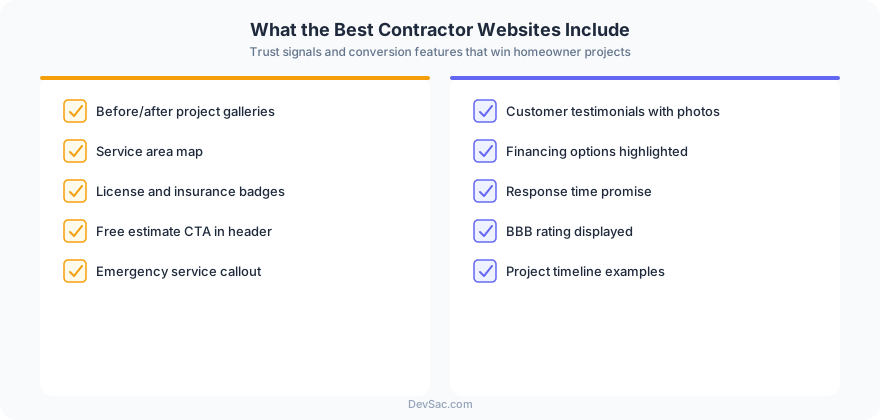
Contractor websites have a different conversion pattern than most businesses. Homeowners are not buying a product. They are hiring someone to come into their home. Trust is everything. The contractors that generate the most online leads share these traits:
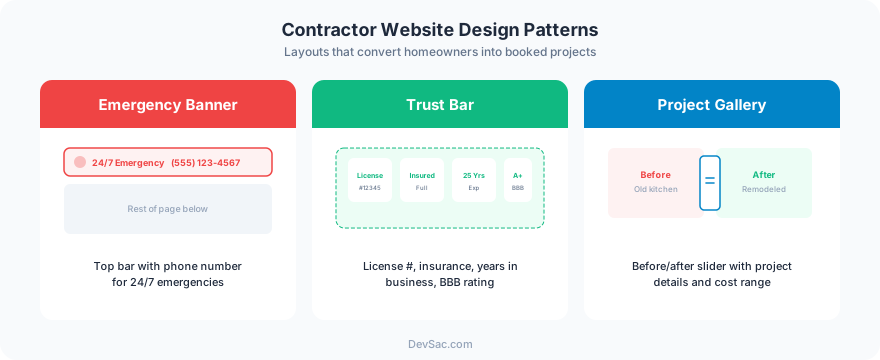
Project galleries with real photos. Before-and-after photos of completed work are the single most persuasive element on a contractor website. Not stock photos of finished kitchens. Real photos of real projects you completed, with descriptions of the work, timeline, and location (city, not address). A homeowner looking at a kitchen remodel wants to see kitchens you have actually remodeled.
Reviews from real customers. Google reviews pulled directly onto your website. Homeowners check reviews before calling, and seeing those reviews on your site (not just on Google) keeps them on your page longer. The best contractor websites display reviews with the reviewer’s first name, project type, and star rating.
Click-to-call on every page. When a homeowner decides to call, the phone number needs to be one tap away. Not a contact form. Not a “request a quote” page. A phone number in the header that works on mobile. Contractors get calls from people standing in their kitchen staring at a problem. Make it easy.
Service area pages. “We serve the greater Sacramento area” is not a service area page. Individual pages for each city you serve (Roseville, Folsom, Elk Grove, Rocklin) rank for “[service] [city]” searches and tell homeowners explicitly that you work in their neighborhood. DevSac uses the same structure for its own service areas, including Rocklin web design and Auburn website design.
License and insurance prominently displayed. Licensed, bonded, insured. These three words build more trust than any amount of marketing copy. Display your contractor license number and insurance verification on every page.
1. Power Home Remodeling
Power’s website leads with a massive project gallery organized by project type (roofing, siding, windows, doors). Each project page shows before-and-after photos, materials used, and location. The free estimate flow is simple and prominent. The design is clean and professional without looking corporate.
What works: The gallery volume. Hundreds of real project photos create an overwhelming sense of experience. A homeowner browsing 50 completed roof replacements in their area has no doubt about the company’s capability.
2. Mr. Rooter Plumbing
Mr. Rooter’s franchise model means every location has its own optimized local page. Each page includes local phone number, service area, and location-specific content. The “Request a Job Estimate” form is on every page with minimal fields. The 24/7 emergency service messaging is prominent for urgent plumbing needs.
What to steal: Location-specific pages at scale. If you serve multiple cities, each city should have its own page with a local phone number, specific service descriptions, and local content. This is basic local SEO, and most contractors skip it.
3. Angi (formerly Angie’s List)
Angi is a marketplace, not a contractor, but it demonstrates what homeowners expect from the search-to-hire experience. Filter by service type, read verified reviews, see pricing estimates, request quotes from multiple contractors. The UX research Angi has invested in shows exactly what homeowners want: reviews, pricing transparency, and easy contact.
What to steal: Pricing ranges. Most contractor websites avoid discussing cost. “Kitchen remodels typically range from $25,000 to $75,000 depending on scope” is more useful than “Contact us for a quote” and it pre-qualifies leads so you spend less time on estimates that go nowhere.
4. Case Design/Remodeling
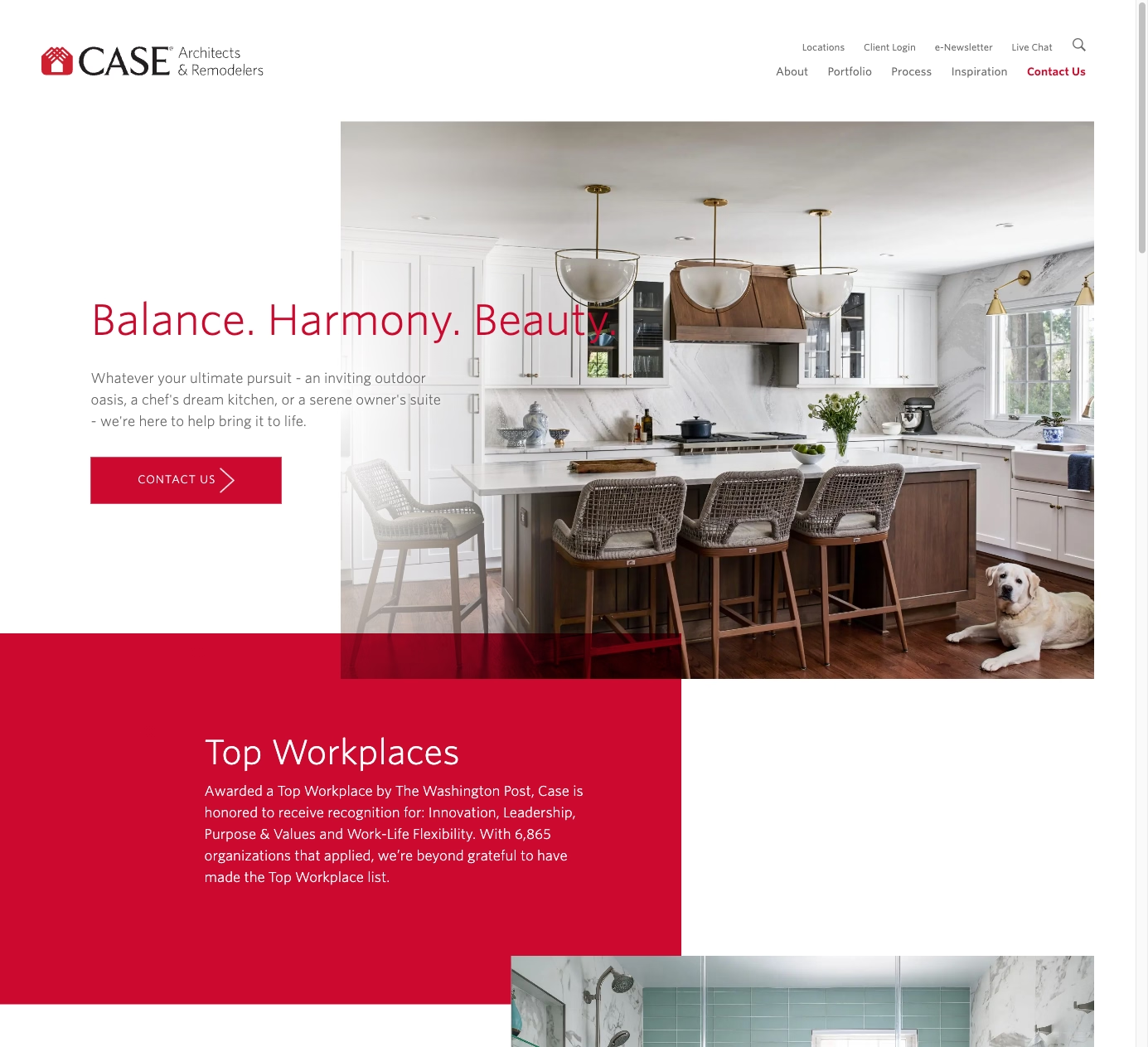
Case Design’s website positions them as a premium remodeler through portfolio photography and design process content. The project gallery is organized by room and style. The “Our Process” page walks homeowners through the design-build experience from initial consultation to final walkthrough. This content addresses the anxiety homeowners feel about major renovations.
What works: Process transparency. Homeowners hiring a contractor for a $50,000+ remodel are anxious about the experience. Walking them through your process (consultation, design, permitting, construction, walkthrough) builds confidence and reduces the barrier to that first call.
5. BuildZoom
BuildZoom is a contractor matching platform that adds a layer most contractor websites lack: permit data. They pull building permits to verify that contractors actually complete the projects they claim. For homeowners, this is powerful social proof. For contractors, it demonstrates accountability.
What to steal: Permit history as proof of work. If your jurisdiction publishes building permits online, linking to your permit history proves you do the work you claim. This is more credible than self-reported project counts.
Mistakes That Cost Estimates
Stock photos instead of real work. Homeowners can tell. A stock photo of a finished kitchen does not prove you can remodel a kitchen. Real project photos, even shot on a phone, are more credible.
No mobile optimization. Homeowners search for contractors from the room that needs work. If your website does not load and display properly on a phone, you lose the lead to the contractor whose site does.
Missing license information. If a homeowner has to ask for your license number, they are already less confident. Display it prominently. It costs nothing and builds immediate trust.
One page for all services. Each service you offer (roofing, siding, bathrooms, kitchens, additions) should have its own page with relevant photos, descriptions, and keywords. A single “Services” page with bullet points does not rank for anything.
No reviews on the website. Having great Google reviews but not displaying them on your website means visitors have to leave your site to see your credibility. Embed them directly on your homepage and service pages.
Building a Contractor Website That Gets Calls
The best contractor websites share a focus on visual proof, trust signals, and frictionless contact. Real project photos, real reviews, license information, and a phone number that works on mobile.
Frog Stone Media builds contractor websites that generate leads, not just look professional. From project galleries to service area pages and local SEO that puts you in the map pack when homeowners search for your services. Get in touch about your website.