Best Plumber Websites: Designs That Get Emergency Calls
When a pipe bursts at 2 AM, nobody is browsing website galleries. They are Googling “emergency plumber near me” on their phone, standing in an inch of water. The plumber whose website loads fastest, shows a phone number biggest, and confirms 24/7 availability clearest gets the call.
Plumber websites have the most urgent conversion pattern of any local business. Here is what the best ones get right.

What Converts for Plumbers
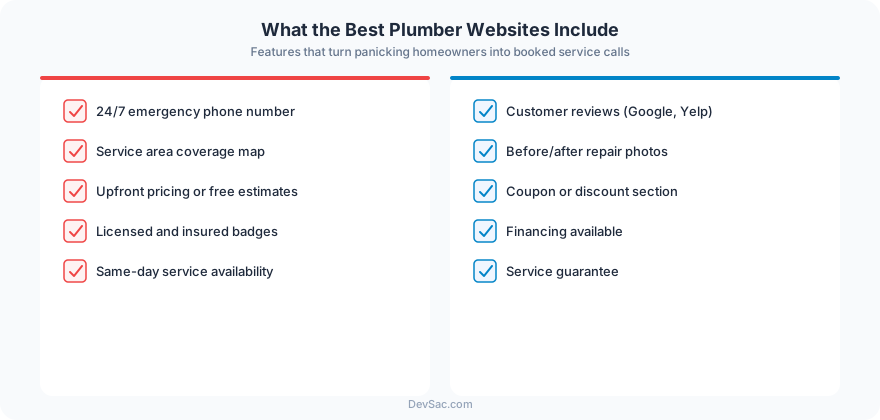
Plumbing website visitors split into two groups with very different needs:
Emergency callers have water on the floor right now. They need a phone number, confirmation you are available, and a sense that you will actually show up. They are not reading your “About Us” page. They need to call in under 10 seconds.
Planned service seekers need a water heater replaced, a bathroom remodeled, or an inspection before buying a home. They are comparing multiple plumbers, checking reviews, and looking at pricing. They want detail and trust signals.
The best plumber websites serve both groups without compromising either experience.
1. Roto-Rooter
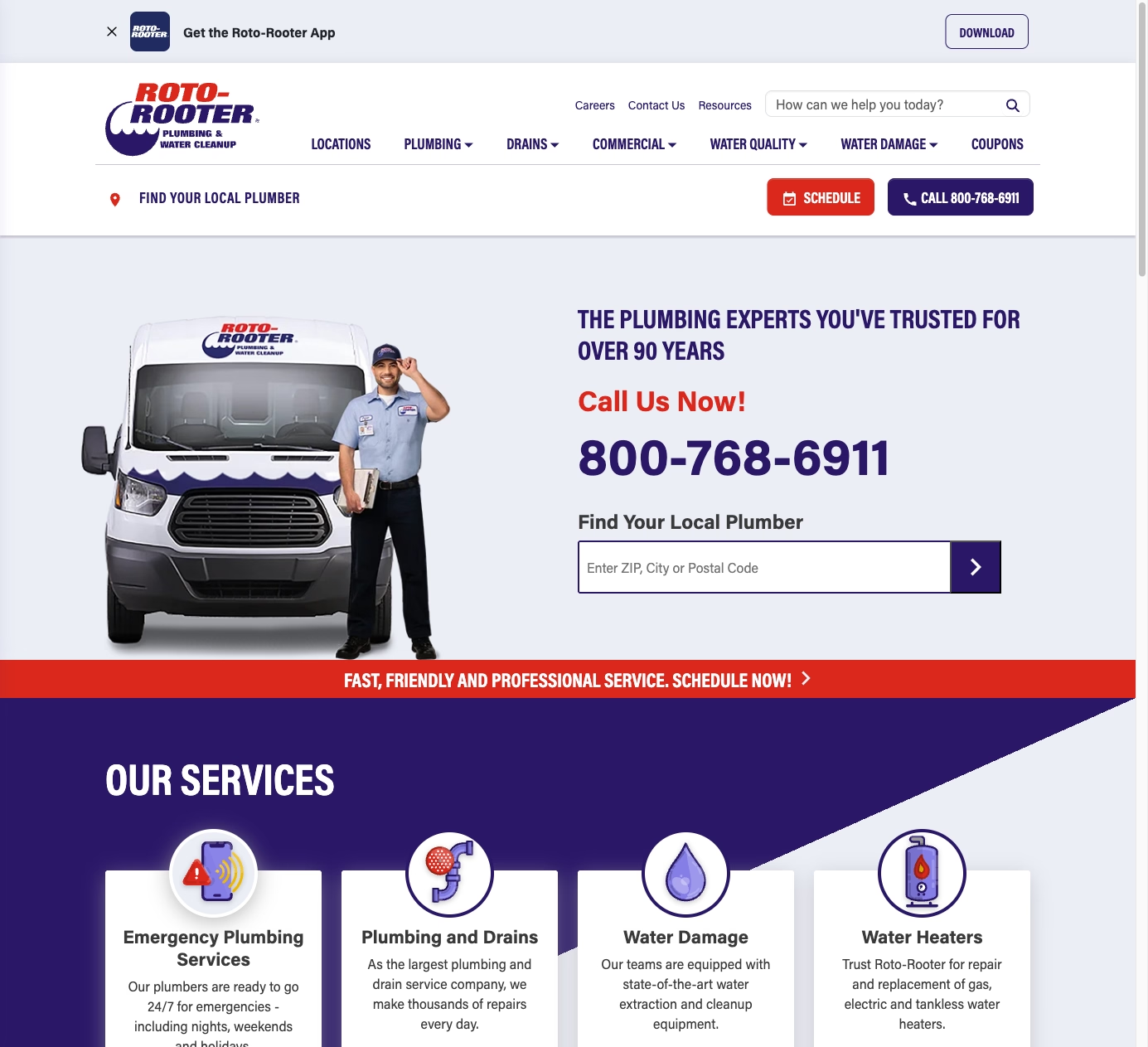
Roto-Rooter’s website is optimized for emergency conversions. The phone number is massive in the header. “24/7 Emergency Service” is stated prominently. The location finder shows the nearest service center with local phone number. For a national brand, they do an excellent job of feeling local.
What works: The emergency-first hierarchy. The phone number and availability statement are the first things you see, above everything else. A homeowner with water pouring from the ceiling does not need to scroll.
2. Benjamin Franklin Plumbing
Benjamin Franklin leads with their on-time guarantee, which addresses the biggest pain point in home services: waiting. Their website uses a booking widget that shows available appointment slots, which is rare for plumbing companies. Each location has its own microsite with local content, phone number, and reviews.
What to steal: Appointment booking for non-emergency work. Emergency calls will always be phone calls. But planned services (water heater replacement, repiping, inspections) can be booked through an online scheduler. This captures leads outside of business hours when your phones are not staffed.
3. Rescue Rooter
Rescue Rooter’s website balances emergency messaging with service depth. The homepage features prominent emergency contact, but service pages go deep: each service (drain cleaning, water heater, sewer repair, leak detection) has its own page with explanations, pricing factors, and FAQ content. This content ranks for informational searches that lead to service calls.
What works: Service page depth. “Drain cleaning” as a bullet point does not rank. A full page explaining what causes drain clogs, signs you need professional drain cleaning, what the process involves, and approximate cost ranges captures search traffic from homeowners researching their problem before they call.

4. Mr. Rooter Plumbing
Mr. Rooter’s franchise model gives each location its own fully built-out website with local phone number, local reviews, and city-specific content. The “Find a Location” flow is fast and GPS-aware. Each location page shows real team photos and local service area maps.
What to steal: Hyperlocal service area pages. Instead of one “Service Areas” page listing 15 cities, each city gets its own page: “Plumber in Roseville,” “Plumber in Folsom,” “Emergency Plumber Elk Grove.” These pages rank for city-specific searches and tell homeowners you actually work in their neighborhood.
5. ARS/Rescue Rooter
ARS combines plumbing with HVAC, and their website handles the dual-service model cleanly. The navigation separates plumbing and heating/cooling into distinct paths. Special offers and financing options are prominently displayed, which is important for planned services like water heater replacement where cost is a deciding factor.
What to steal: Financing visibility. A water heater replacement costs $1,500-3,000. Financing options reduce sticker shock and convert homeowners who would otherwise delay the purchase. If you offer financing, it should be visible on every service page, not buried in a footer link.
Mistakes That Cost Calls
Phone number as an image, not text. If your phone number is embedded in a logo or header image, it is not clickable on mobile. Use an HTML link with tel: protocol so it is one tap to call.
No after-hours messaging. If your website does not clearly state whether you offer 24/7 service, after-hours callers will call the plumber whose site does. “24/7 Emergency Service” or “Call us anytime, day or night” should be visible on every page.
Slow mobile load times. A homeowner with an active leak is not waiting 5 seconds for your hero image slider to load. Plumber websites need to load in under 2 seconds on mobile. Strip the slider, compress the images, and prioritize the phone number.
No service area specificity. “Serving the Sacramento area” loses to “Serving Sacramento, Roseville, Folsom, Elk Grove, Rancho Cordova, and Citrus Heights” because the second version ranks for searches in each of those cities. That is the same reasoning behind keeping a dedicated page for web design in Rancho Cordova rather than folding it into a Sacramento page.
Generic stock photos. A stock photo of a wrench does not build trust. A photo of your team, your trucks, or your work does. Even a phone photo of a completed job is more credible than a stock image.
Building a Plumber Website That Rings the Phone
The best plumber websites serve two audiences: the emergency caller who needs a phone number in 5 seconds, and the planned service seeker who is comparing three plumbers. Emergency-first design with service page depth behind it captures both.
Plumber websites from Frog Stone Media are designed to get calls. Emergency-optimized mobile design, service area pages for every city you cover, and local SEO that puts you in the map pack for “plumber near me.” Get in touch about your website.