Best Nonprofit Websites: Designs That Drive Donations
63% of donors give online. The nonprofit with the better website raises more money. Not the one with the bigger need, the longer track record, or the celebrity endorsement. The one whose website makes it easy to give, shows where the money goes, and tells a story that connects.
Here is what the best nonprofit websites do differently, with patterns you can apply whether your annual budget is $50,000 or $50 million.
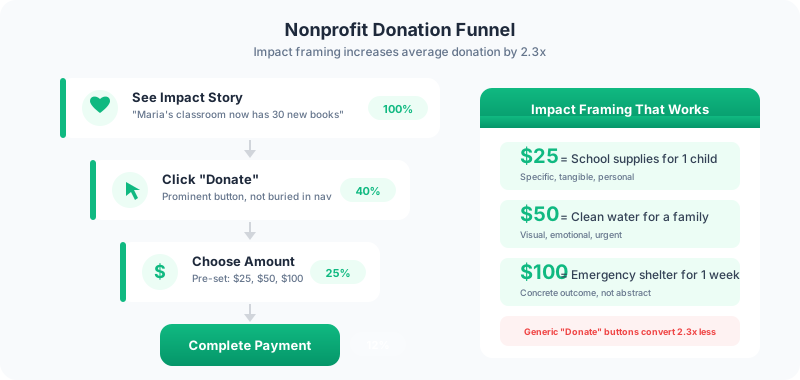
What Drives Online Donations
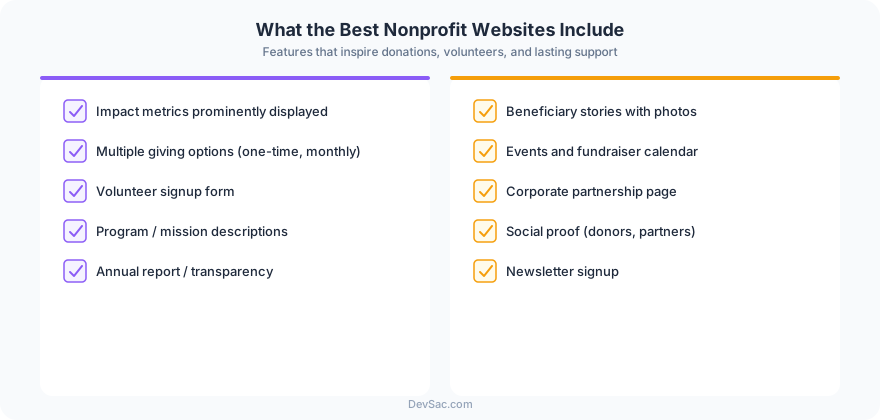
After reviewing dozens of nonprofit websites, the conversion pattern is clear. The organizations that raise the most online share five traits:
The donate button is visible on every page. Not just the homepage. Not just the donation page. Every single page has a visible path to give. The best implementations use a persistent button in the header navigation that follows the visitor as they scroll.
The donation flow takes under 60 seconds. Every additional field, every extra click, every page load between “I want to give” and “donation confirmed” costs you donors. The best donation forms are single-page with preset amounts, recurring options, and minimal required fields.
Impact is quantified, not vague. “$25 provides school supplies for one child for a year” converts better than “Your donation helps children succeed.” Specific amounts tied to specific outcomes let donors see exactly what their money does.
Financial transparency is prominent. Donors want to see where the money goes. The nonprofits that publish annual reports, financial breakdowns, and program expense ratios directly on their website build trust that increases both first-time and recurring giving.
Stories come before statistics. A photo of a specific person with their name and story is more compelling than aggregate data. The best nonprofit websites lead with individual stories and support them with data, not the other way around.
1. Charity: Water

Charity: Water is the benchmark for nonprofit web design. The 100% model (every dollar goes to water projects, overhead is funded separately) is communicated immediately. The donation flow is elegant: pick an amount, see exactly what it funds, choose one-time or monthly. Project pages show GPS coordinates, photos, and community impact reports for completed projects.
What works: Radical transparency. Donors can see exactly where their money went, down to the GPS coordinates of the well their donation helped fund. This level of accountability is rare and drives both trust and repeat giving.
2. St. Jude Children’s Research Hospital
St. Jude’s website leads with stories. Real patients, real families, real outcomes. The emotional connection is immediate and authentic. The donation flow is prominent but not aggressive, it is woven into the storytelling rather than interrupting it. The monthly giving program (“Partner in Hope”) is positioned as the primary ask, with clear impact statements.
What to steal: Monthly giving as the default. St. Jude frames recurring donations as the primary option, not an afterthought. Recurring donors have 5x higher lifetime value than one-time donors. Your donation page should make monthly giving the easiest choice.
3. Khan Academy
Khan Academy’s website demonstrates how a nonprofit can be both a service delivery platform and a fundraising vehicle. The educational content is the product, free and accessible. The donation pitch is simple: “If you’ve ever used Khan Academy, please give today.” Users who have experienced the value firsthand are the most likely to give.
What works: Letting the product speak first. Khan Academy does not lead with a donation ask. They lead with value delivery. Once a visitor has experienced the free educational content, the ask to support it feels natural rather than transactional.
4. World Wildlife Fund
WWF’s website uses visual storytelling to drive emotional connection. Full-screen wildlife photography, species conservation trackers, and interactive maps create engagement beyond the donation page. The “Adopt an Animal” program turns giving into a tangible experience with plush animals and adoption certificates.
What to steal: Tangible giving options. “Adopt a panda” converts better than “Support wildlife conservation” because it feels concrete. Any nonprofit can create named giving tiers tied to specific outcomes that make donors feel they are funding something real.
5. DonorsChoose
DonorsChoose lets donors fund specific classroom projects, and the website makes browsing projects effortless. Filter by subject, grade level, location, or urgency. Each project shows exactly what the teacher needs, how much remains, and a message from the teacher explaining why it matters. After funding, donors receive photos and thank-you letters from the classroom.
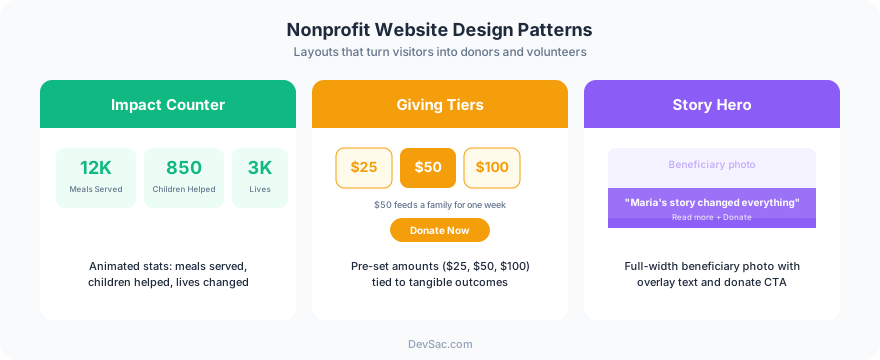
What to steal: Project-level giving. Letting donors choose exactly what they fund creates agency and connection. Even if your nonprofit does not have classroom-level granularity, breaking your mission into fundable components (“$50 feeds a family for a week”, “$500 sponsors a training session”) gives donors a sense of direct impact.
6. Feeding America
Feeding America’s website balances urgency with data. The homepage shows hunger statistics alongside personal stories. The “Find Your Local Food Bank” tool connects the national mission to local action. The donation page quantifies impact with a meals-per-dollar calculator that updates as you change the amount.
What works: The impact calculator. Showing “$1 = 10 meals” as a dynamic calculation that updates in real time makes the donation feel immediately meaningful. This is more effective than static text because the donor interacts with it.
7. ACLU
The ACLU’s website is built for action beyond donations. Petition signing, volunteer registration, know-your-rights guides, and legal updates create multiple engagement paths. The design is bold and confident, matching the organization’s voice. The donation page includes options for general support and issue-specific giving (voting rights, immigrant rights, LGBTQ+ rights).
What to steal: Multiple engagement paths. Not every visitor is ready to donate. The ACLU gives visitors other ways to connect (sign a petition, share a story, volunteer) that build relationship and lead to future giving. A single “Donate” button misses everyone who is not ready to give today but could become a donor tomorrow.
Mistakes That Cost Donations
Burying the donate button. If a visitor scrolls past your homepage and does not see a clear way to give, you have lost their impulse. The donate button should be in the main navigation, visible on every page.
Complex donation forms. Every required field reduces completion rates. Name, email, amount, payment method. That is all you need for a first-time donation. Ask for the mailing address later if you need it for tax receipts.
No recurring giving option. A donor who gives $25/month is worth $300/year without any additional fundraising effort. If your donation form defaults to one-time giving with recurring as a checkbox, you are leaving money on the table. Make monthly giving the primary option.
No impact reporting. Donors who see where their money went give again. Donors who give into a void do not. Annual reports, project updates, and specific outcome metrics should be easy to find on your website.
Ignoring mobile. Over 50% of nonprofit website traffic comes from mobile devices, and mobile giving increases significantly during fundraising campaigns shared on social media. If your donation form does not work flawlessly on a phone, you are losing gifts.
Building a Nonprofit Website That Raises Money
The best nonprofit websites share a focus on reducing friction, building trust, and making impact visible. Whether you are a community food bank or a national advocacy organization, the principles are the same: make giving easy, show where the money goes, and tell stories that connect.
I build nonprofit websites that are designed to raise money and build supporter relationships. From optimized donation flows to impact reporting and mobile-first design that works during your biggest campaigns. Let’s talk about your organization’s website.