Stakeholder Interviews: How to Gather Requirements for a Website Redesign
The fastest way to build the wrong website is to skip stakeholder interviews. A CEO has a vision for the brand. A sales rep knows what prospects ask. A customer knows what almost stopped them from buying. If you build the site without those perspectives, you are designing in the dark.
Stakeholder interviews are part of every redesign project. They take 2-4 hours total and prevent weeks of rework. The insights from a 30-minute conversation with a sales rep have changed the direction of entire projects.
Here is the process.
Who to Interview

Internal Stakeholders
CEO or business owner. They set the vision. Their interview establishes the project’s goals, brand direction, and definition of success. Without this conversation, the design team is guessing at priorities.
Marketing team. They know the messaging, the campaigns, and the content needs. Marketing interviews reveal which pages drive leads, what content is planned, and how the website fits into the broader marketing strategy.
Sales team. Sales reps talk to prospects every day. They know the objections, the questions, and the moments when a prospect decides to buy or leave. The language your sales team uses to close deals should appear on your website.
IT or development. They understand the technical constraints: what integrations are required, what systems need to connect, what security requirements exist. Ignoring IT until development starts causes scope creep.
External Stakeholders
Customers. Existing customers tell you what worked and what almost stopped them. Their feedback reveals usability issues, trust gaps, and content that your internal team thinks is clear but is actually confusing.
Partners. If your business relies on referral partnerships, partner feedback shapes how you present co-marketing opportunities and referral flows on the site.
End users. For B2B or SaaS products, the daily users of your platform have different needs than the buyers. Interview both.
When to Involve Each Stakeholder
Not every stakeholder belongs in every meeting. Involving too many people at the wrong time slows projects and creates design-by-committee problems.
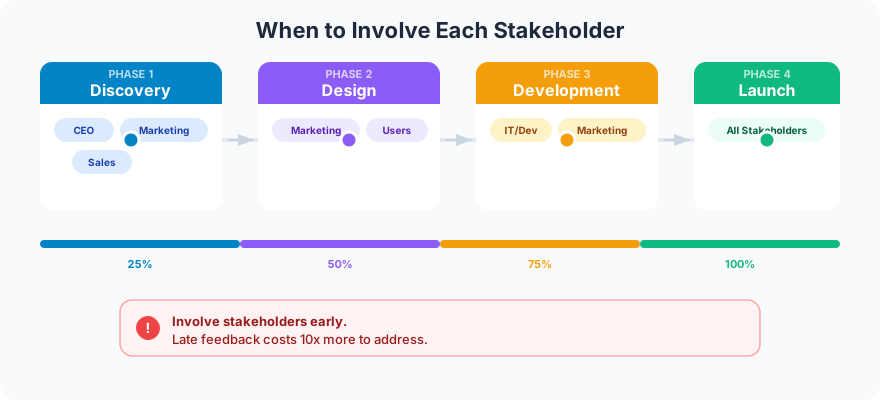
Discovery phase: CEO, marketing, and sales. These interviews happen before any design work begins. They establish the project’s goals, audience, and requirements.
Design phase: Marketing and end users. Show wireframes and prototypes to the people who will use the site daily and the team responsible for content. Get feedback before visual design locks in the structure.
Development phase: IT and marketing. IT ensures integrations work correctly. Marketing validates that content fits the templates and that conversion paths function as designed.
Launch phase: All stakeholders. A pre-launch review catches issues that individual reviews missed. Every stakeholder should see the final site and confirm their requirements are met.
The rule is: involve stakeholders early or pay for it later. Feedback in the discovery phase costs 30 minutes. The same feedback after development costs weeks of rework.
The Right Questions to Ask
Generic questions produce generic answers. “What do you want the website to look like?” gives you vague adjectives (clean, modern, professional). Specific questions produce actionable requirements.
Questions for the CEO / Business Owner
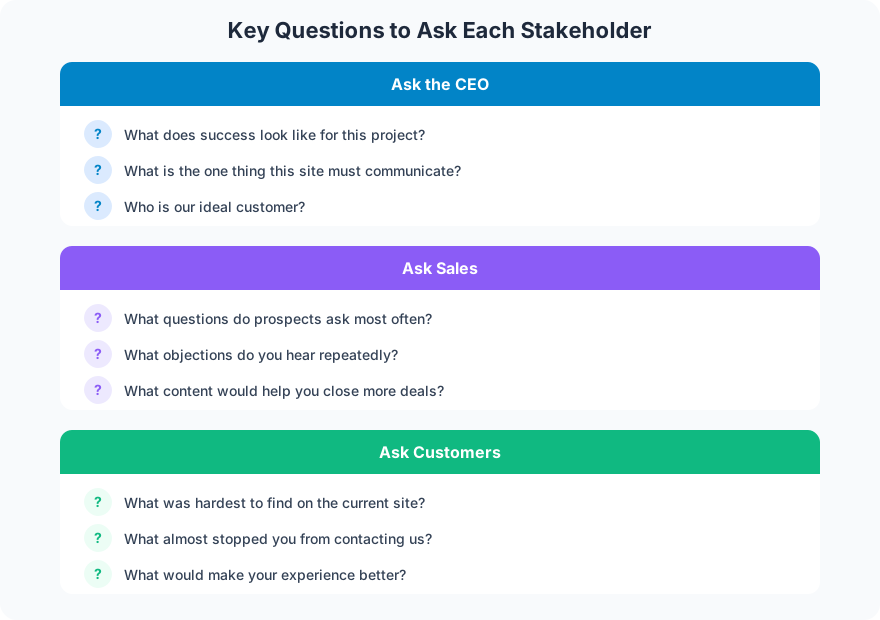
- What does success look like for this project? (Get a measurable answer, not “a better website.”)
- What is the one thing this site must communicate to a first-time visitor?
- Who is our ideal customer? Describe them specifically.
- What competitors do you respect, and why?
- What about the current site is not working?
Questions for Sales
- What questions do prospects ask most often before buying?
- What objections do you hear repeatedly?
- What content or tool would help you close more deals?
- At what point in the sales process do prospects visit the website?
- What do prospects say about our website compared to competitors?
Questions for Customers
- What was hardest to find on the current site?
- What almost stopped you from contacting us?
- If you could change one thing about your experience, what would it be?
- How did you find us originally?
- Would you recommend us based on the website alone?
Questions for Marketing
- What are the top 3 performing pages on the current site?
- What content is planned for the next 6 months?
- How does the website fit into the broader marketing funnel?
- What conversion tracking needs to be in place at launch?
- What brand guidelines or messaging frameworks exist?
Synthesizing Interview Findings
Raw interview notes are not requirements. You need to synthesize them into actionable insights.
Group by theme. After all interviews, identify recurring themes. If three stakeholders mention that the current site’s navigation is confusing, that is a priority item.
Separate facts from opinions. “Our bounce rate is 80%” is a fact. “The homepage should be blue” is an opinion. Facts inform requirements. Opinions inform preferences but should not override data.
Prioritize by business impact. Not every request makes the final scope. Rank requirements by their impact on the project’s stated goals. If the CEO said success means “more qualified leads,” every requirement should be evaluated against that benchmark.
Document with website design requirements as the output. Turn your synthesis into a formal requirements document that the entire team can reference throughout the project.
FAQ
How many stakeholders should I interview for a website redesign?
5-10 is the sweet spot for most projects. Too few and you miss perspectives. Too many and you get conflicting opinions that slow the project. At minimum, interview the business owner, one marketing person, one sales person, and 2-3 customers.
How long should a stakeholder interview take?
30-45 minutes per person. Prepare your questions in advance and stick to the agenda. Longer interviews produce diminishing returns because answers start repeating or become tangential.
What if stakeholders disagree on the website direction?
This is normal. Document the disagreements and present them to the decision-maker (usually the CEO or project sponsor). Include the reasoning behind each position. The decision-maker resolves conflicts so the design team is not caught in the middle.
Stakeholder interviews are the cheapest insurance against building the wrong website. A few hours of conversations upfront saves weeks of rework downstream. The best sites start with great discovery, not great design.
Starting a redesign? Start with the right conversations.