How to Prioritize Website Changes: The Impact/Effort Matrix
Every business owner has a list of website changes they want to make. New pages, design tweaks, feature additions, content updates. The list grows faster than the budget allows. The question is never “what should I change?” It is “what should I change first?”
The impact/effort matrix is part of every client project. It takes 30 minutes to set up, and it eliminates months of wasted effort on changes that do not move the needle.
The Four Quadrants
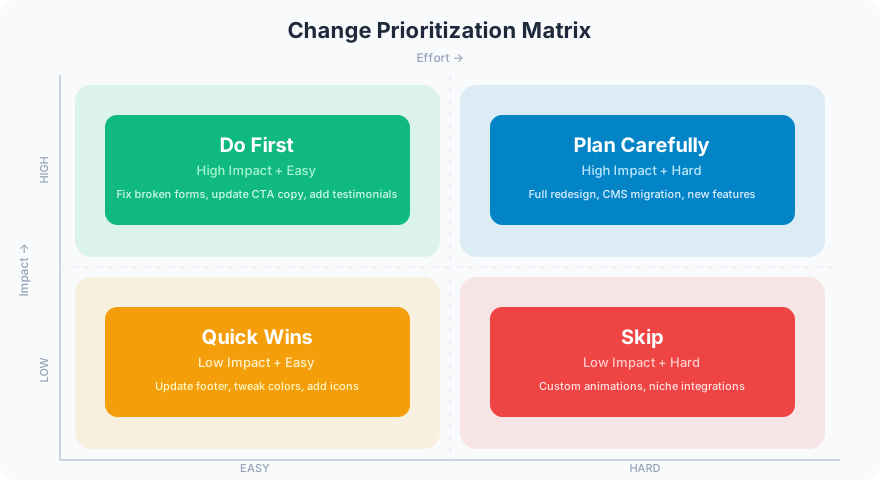
The matrix has two axes: impact on business goals (vertical) and effort to implement (horizontal). Every change falls into one of four quadrants.
Quadrant 1: High Impact, Low Effort (Do First)
These are your quick wins. Updating title tags and meta descriptions. Adding calls to action to high-traffic pages. Fixing broken links. Compressing images for faster load times.
A Sacramento law firm client added a click-to-call button on its mobile site in 20 minutes. Phone inquiries increased 18% that month. That is a high-impact, low-effort change.
Quadrant 2: High Impact, High Effort (Plan Carefully)
These are major projects that deliver real results but need proper planning and budget. A full site redesign. Migrating to a faster platform. Building a custom booking system. Creating a 20-page content hub.
Do not rush these. Scope them, budget them, and schedule them with a timeline. They are worth doing, but doing them poorly wastes the investment.
Quadrant 3: Low Impact, Low Effort (Quick Wins When Time Allows)
These are small improvements that do not move revenue but make the site better. Adjusting font sizes, fixing minor styling inconsistencies, updating copyright years. Do these when you have spare time, not as priority work.
Quadrant 4: Low Impact, High Effort (Skip)
These are the changes that eat budgets and deliver nothing. A fancy animation that takes 40 hours to build. A custom feature that 2% of visitors will use. A design overhaul on a page that gets 10 visits a month.
Skip these entirely, or move them to a “someday” list. Every hour spent here is an hour stolen from Quadrant 1 and 2 work.
How to Score Changes
Start by running a website content audit to identify what is working and what is not. Then list every proposed change and score each one.
Impact scoring (1-5): Does this change affect revenue, leads, traffic, or conversion rate? A change that directly increases conversions scores 5. A cosmetic tweak scores 1.
Effort scoring (1-5): How many hours, how much budget, and how many people does this take? A 15-minute fix scores 1. A 3-month project scores 5.
Plot each change on the matrix. The visual layout makes priorities obvious.
Data Beats Opinions
The biggest mistake is prioritizing based on what the business owner likes instead of what the data shows. “I do not like the color of that button” is an opinion. “The contact form has a 2% completion rate and the industry average is 8%” is data.
Pull your analytics before the prioritization session. Look at page traffic, bounce rates, conversion rates, and user flow. The numbers tell you where effort will produce returns.
FAQ
How often should you re-prioritize website changes?
Quarterly works for most businesses. Review your matrix every 3 months, remove completed items, add new ones, and re-score anything that has shifted. Major business changes like a new product launch or market shift should trigger an immediate re-prioritization.
What if your developer disagrees with your priorities?
A good developer will explain the technical effort accurately, but the impact scoring is your call as the business owner. If a developer says something is high effort, trust that assessment. If they say something is low impact, ask for data to support it. The matrix works because it separates the business judgment (impact) from the technical judgment (effort).
Need help building your prioritization matrix? Get in touch to map out your highest-ROI website changes.