What Is a Good Bounce Rate? Benchmarks by Page Type
“My bounce rate is 72%. Is that bad?” This question comes up constantly, and the answer is always the same: it depends on the page type. A 72% bounce rate on a blog post is completely normal. A 72% bounce rate on a checkout page is a serious problem.
Bounce rate without context is a meaningless number. Here are the benchmarks that actually matter.
What Bounce Rate Measures
Bounce rate is the percentage of visitors who land on a page and leave without taking any additional action. No second page view, no form submission, no click to another section. They arrived, they saw the page, they left.
In Google Analytics 4, this metric has been replaced by “engagement rate,” which measures the inverse. A 30% bounce rate equals a 70% engagement rate. The benchmarks below apply to both frameworks.
Benchmarks by Page Type
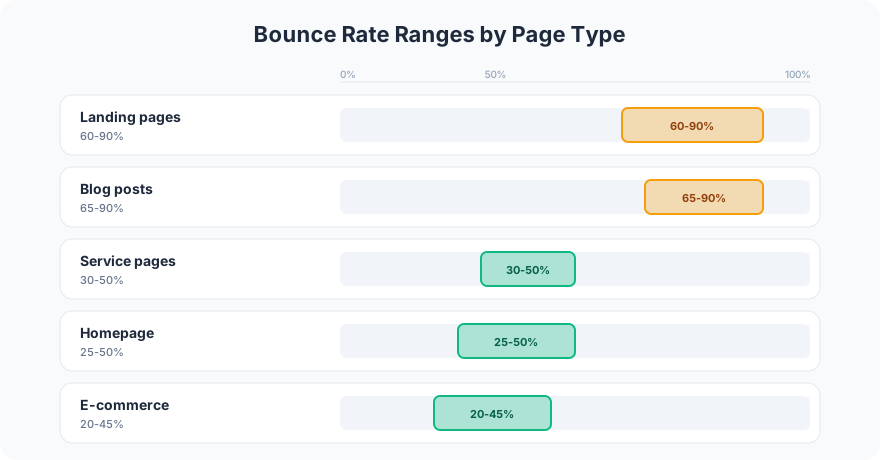
Landing Pages: 60-90%
Standalone landing pages for ad campaigns typically have bounce rates between 60-90%. This is normal because landing pages are designed to do one thing: convert. A visitor either fills out the form or leaves. There is no menu, no blog link, no reason to visit a second page.
A landing page bounce rate above 90% signals a mismatch between the ad and the page content.
Blog Posts: 65-90%
Blog posts naturally have high bounce rates. A reader searches a question, finds your article, reads the answer, and leaves. That is a successful interaction even though it counts as a bounce.
Some DevSac blog posts have 85% bounce rates, and they drive consistent organic traffic and position the site as an authority. The bounce rate is not a problem. The traffic and brand visibility are the value.
Service Pages: 30-55%
Service pages should drive visitors deeper into your site. A visitor reading about your web design services should click through to your portfolio, pricing, or contact page. Bounce rates above 55% on service pages indicate the content is not compelling enough to drive action.
Homepage: 25-50%
Your homepage is a navigation hub. Visitors should find what they are looking for and click through to a specific section. A bounce rate above 50% on your homepage means visitors are not finding a clear path forward. Understanding what causes high bounce rates will help you diagnose and fix homepage engagement issues.
E-commerce Product Pages: 20-45%
Product pages should lead to add-to-cart actions, related product clicks, or category browsing. High bounce rates on product pages often indicate pricing issues, poor product photos, missing information, or slow load times.
When High Bounce Rate Is Actually Fine
A contact page with a phone number has a legitimate high bounce rate. The visitor called you. That is a conversion, not a failure. Same for a directions page, a single-page site, or any page where the desired action happens on that page without a second click.
Track conversions alongside bounce rate. A page with 80% bounce rate and strong conversion numbers is working. A page with 80% bounce rate and zero conversions needs attention.
When to Worry
Worry when bounce rates are high AND conversion rates are low. Worry when bounce rates suddenly spike (broken page, slow load, content change). Worry when your service pages bounce higher than your blog posts, because that means your sales content is less engaging than your informational content.
FAQ
Does a high bounce rate hurt my Google rankings?
Google has stated that bounce rate is not a direct ranking factor. But Google does measure engagement through other signals. If visitors consistently return to search results immediately after visiting your page (pogo-sticking), Google interprets that as a quality issue. Focus on providing value rather than gaming the bounce rate number.
How do I lower my bounce rate on service pages?
Add clear calls to action above the fold. Include social proof (reviews, testimonials, case studies) early on the page. Link to related services and portfolio examples within the content. Make sure the page loads in under 3 seconds. Test your mobile experience, as 60%+ of traffic is mobile for most businesses.
Not sure if your bounce rates signal a problem or are perfectly normal? Get in touch for a benchmark of your pages against industry standards.