Is Your Website AI-Friendly? The 8-Point Checklist
Your website was built for human visitors and Google’s crawler. But a growing percentage of your potential customers are finding businesses through AI tools: ChatGPT, Perplexity, Claude, and Google AI Overviews.
These AI systems read your website differently than humans do. They cannot see images (only alt text), cannot interact with JavaScript-rendered content, and rely heavily on structured data to understand what your business is and does.
An AI-friendly website is not a redesign. It is a set of technical optimizations that make your existing content readable, parseable, and citable by AI models.
What AI Can and Cannot Read
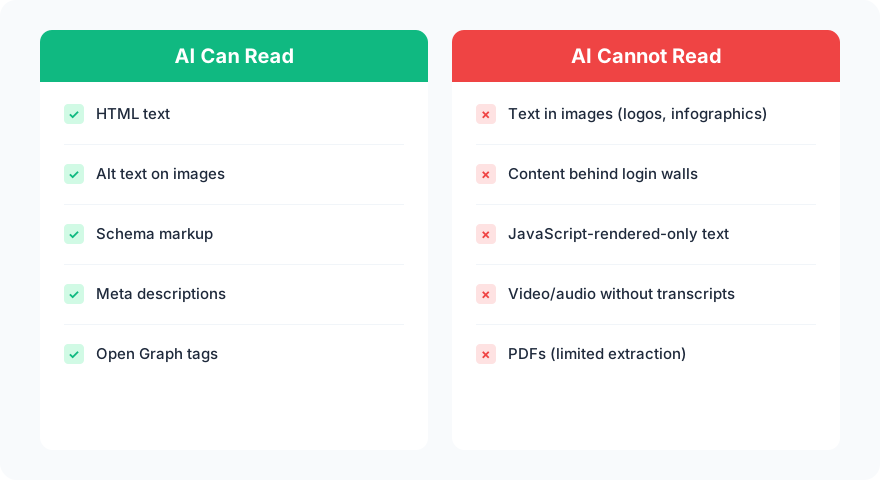
AI reads HTML text. Your headings, paragraphs, lists, and alt text are all visible to AI crawlers. This is the content that gets cited in AI-generated answers.
AI cannot read text in images. Your logo, infographic text, testimonial screenshots, and award badge images are invisible. If important information only exists as an image, AI does not know it exists. Every testimonial and data point should appear as HTML text somewhere on the page.
AI has limited access to JavaScript-rendered content. If your site is a single-page application that renders content client-side, AI crawlers may see an empty page. Server-rendered HTML or static HTML (like the Astro architecture I use) is immediately accessible.
Building Your AI Entity Profile
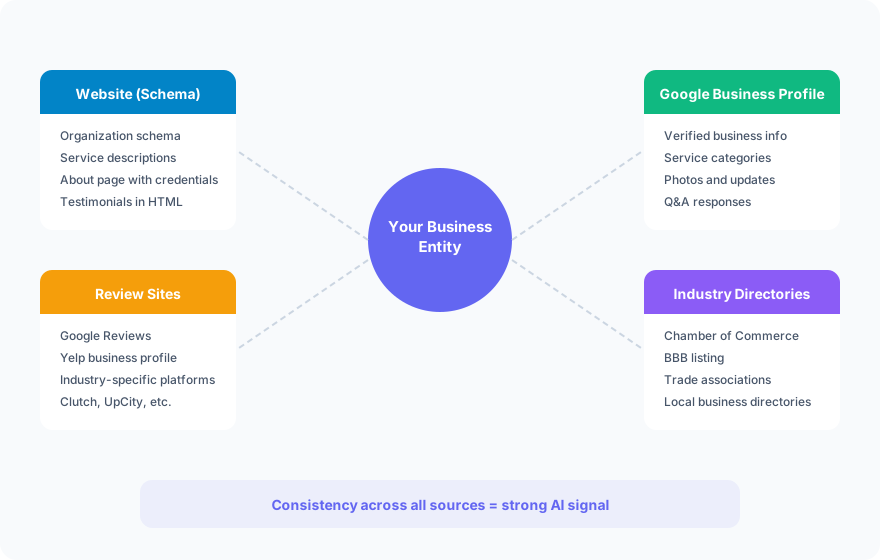
AI models build an understanding of your business entity by synthesizing information from multiple sources. The more consistent and detailed your entity profile is across the web, the more confidently AI can recommend you.
Website schema identifies your business to AI in machine-readable format. Organization schema, Person schema, LocalBusiness schema, and Service schema all contribute to your entity profile.
Google Business Profile is one of the primary data sources AI models reference for local businesses. A complete profile with services, reviews, photos, and Q&A strengthens your entity signal.
Review sites provide third-party validation. AI models weight information more heavily when it is confirmed across multiple independent sources.
Industry directories add professional credibility signals. Chamber of Commerce listings, professional association memberships, and industry-specific directories each add a data point to your entity profile.
The key is consistency. Your business name, address, services, and description should match exactly across all sources. Inconsistencies confuse AI models and weaken your entity signal.
The 8 Points in Detail
-
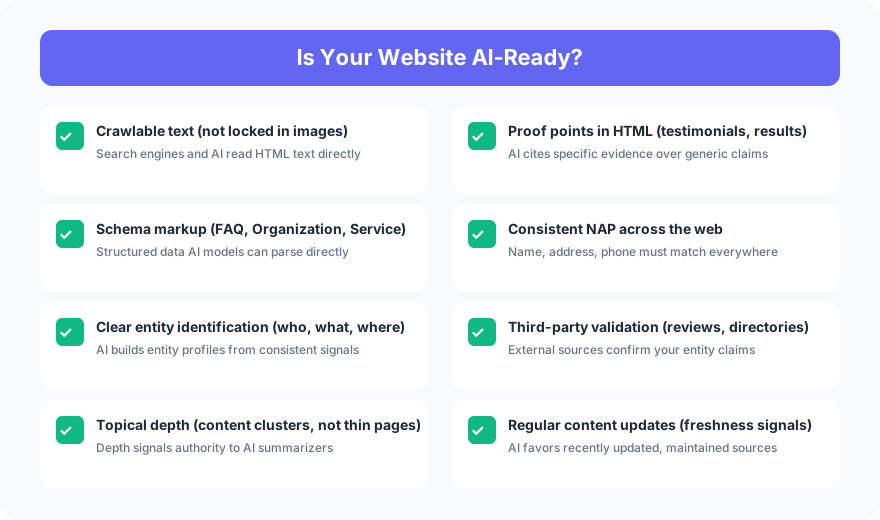
Crawlable text. Make sure your most important content is in HTML, not images or JavaScript-only renders.
-
Schema markup. Add Organization, LocalBusiness, FAQ, and Service schema to every relevant page.
-
Clear entity identification. Your About page, Contact page, and footer should clearly state who you are, what you do, and where you operate.
-
Topical depth. Build content clusters. 50+ interconnected pages on related topics signals deep expertise to AI models.
-
Proof points in HTML. Testimonial quotes, case study results, and awards should appear as crawlable text, not just images.
-
Consistent NAP. Your Name, Address, and Phone number should be identical across every online listing.
-
Third-party validation. Active profiles on review sites, directories, and professional associations.
-
Regular content updates. Fresh content signals an active, maintained business. AI models favor current information over stale pages.
FAQ
Is an AI-friendly website different from an SEO-friendly website?
There is significant overlap. Both require quality content, structured data, and technical accessibility. AI-friendly optimization adds emphasis on entity consistency across the web, crawlable proof points, and structured data that AI can parse directly (FAQ schema, HowTo schema).
Do I need to change my website design for AI?
No. AI-friendliness is primarily about how your content is structured, not how it looks. The changes are technical (adding schema, ensuring content is in HTML text, optimizing for crawlability) and strategic (building third-party signals, maintaining consistency across directories).
Making your website AI-friendly is an afternoon of technical work with compounding returns. The businesses that optimize now will be the ones AI recommends when your next customer asks for help.
Want an AI readiness audit for your site? Let’s check your visibility.