Country-Specific Domain Names: ccTLD vs Subdirectory for International SEO
Should you register example.de for your German audience or use example.com/de/? This is one of the most common international SEO questions, and the answer depends on your business structure, budget, and SEO goals.
This decision has come up on client projects for markets including Mexico, Canada, and multiple European countries. The wrong choice costs months of SEO effort. The right choice compounds your existing domain authority into new markets.
ccTLD vs gTLD: The Core Tradeoff
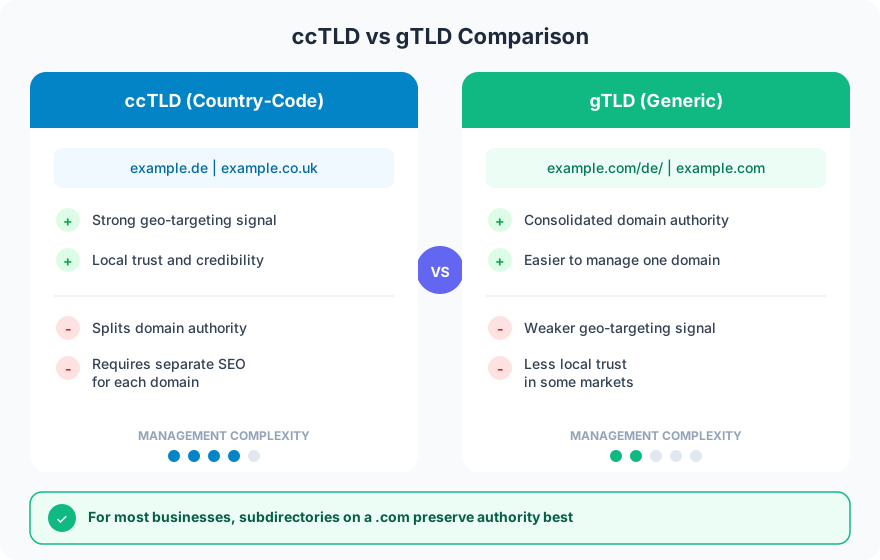
A country-code top-level domain (ccTLD) like .de, .co.uk, or .com.au sends a strong geo-targeting signal to search engines. Google treats a .de domain as explicitly targeting Germany. Local users trust it. But every ccTLD is a separate domain with separate authority. Your backlinks to example.com do not help example.de rank.
A generic top-level domain (gTLD) like .com with subdirectories (/de/, /fr/) keeps everything under one domain. All backlinks benefit all language versions. You manage one domain, one analytics property, and one SEO campaign. The geo-targeting signal is weaker, but hreflang tags and Google Search Console’s international targeting settings compensate.
For most businesses, subdirectories on a .com preserve domain authority better and cost less to maintain.
The Decision Tree
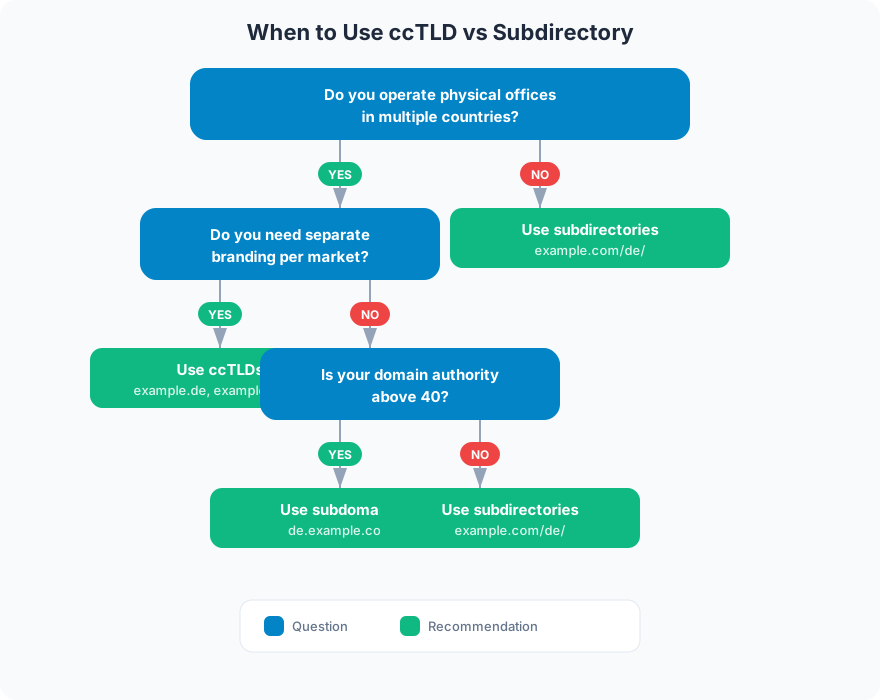
Do you operate physical offices in multiple countries? If no, use subdirectories. ccTLDs without local presence look inauthentic and are harder to rank.
Do you need separate branding per market? If yes, ccTLDs allow completely independent brand identities. If no, subdirectories maintain brand consistency.
Is your domain authority above 40? If yes, you have enough authority to consider subdomains (de.example.com) which partially share authority. If no, stick with subdirectories to concentrate your authority.
URL Structure Options
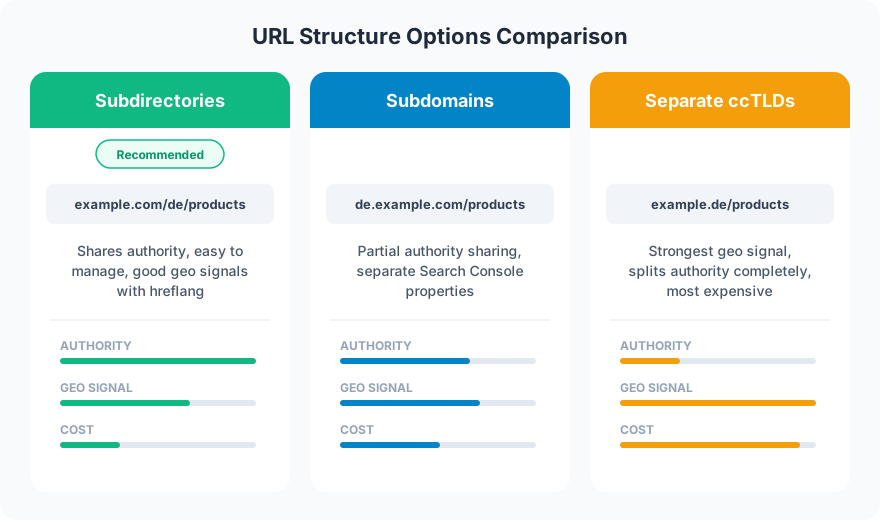
Subdirectories (Recommended)
example.com/de/products. All content lives under one domain. Every backlink to any page strengthens the entire site. Cheapest to implement and maintain. Works with any hosting setup.
This approach applies to every multilingual project unless there is a specific business reason for separate domains. The SEO benefits of consolidated authority outweigh the slightly weaker geo-targeting signal.
Subdomains
de.example.com/products. Each language gets its own subdomain. Google treats subdomains as partially separate from the root domain. They share some authority but not all. Each subdomain needs its own Google Search Console property.
This approach makes sense for large organizations where different teams manage different markets and need operational independence.
Separate ccTLDs
example.de/products. The strongest geo-targeting signal but the highest cost. Each ccTLD needs its own hosting, SSL certificate, SEO campaign, and backlink profile. No authority sharing between domains.
Reserve this for enterprises with dedicated local teams, local offices, and budgets that support maintaining multiple independent web properties.
Implementation Tips
Always use hreflang tags. Regardless of URL structure, hreflang tags tell Google which page serves which language and region. Without them, Google may show the wrong version in search results. Implement them in the HTML head, the HTTP header, or the XML sitemap.
Set geographic targets in Search Console. For gTLD domains with subdirectories, use Google Search Console’s International Targeting report to associate each subdirectory with its target country.
Avoid automatic redirects based on IP. Do not redirect visitors based on their geographic location. Google crawls from the US and may never see your non-US content. Instead, show a language suggestion banner and let visitors choose.
Consistent internal linking. The Spanish version of a page should link to other Spanish pages, not randomly to English pages. Cross-language links should be intentional (the language switcher, not inline content links).
FAQ
Which is better for SEO: ccTLD or subdirectory?
Subdirectories on a .com are better for most businesses because they consolidate domain authority. ccTLDs send a stronger geo-targeting signal but split your authority across multiple domains. Google has confirmed that all three approaches (ccTLD, subdomain, subdirectory) can work well with proper hreflang implementation.
Can I use a .com domain and still rank in other countries?
Yes. Use subdirectories (/de/, /fr/), implement hreflang tags, set geographic targeting in Google Search Console, and create locally relevant content. Many global brands rank well in local markets using a single .com domain.
What about new TLDs like .io, .dev, or .ai?
Google treats these as gTLDs, not ccTLDs, even though .io (British Indian Ocean Territory) and .ai (Anguilla) are technically country codes. They do not provide geo-targeting signals for their original countries. Use them for branding purposes but not for international targeting.
The URL structure decision is one you make once and live with for years. Choose subdirectories on a .com unless you have a compelling reason for separate domains. The SEO benefits of consolidated authority almost always outweigh the marginal geo-targeting advantage of ccTLDs.
Planning an international website? Get help choosing the right structure for your business.