Dev Sac
Content Site

VanBriggle.net | Museum-Quality Collector's Guide to Van Briggle Pottery

Museum-quality collector's guide to Van Briggle art pottery (1901-2012). 625+ images, 200+ maker marks, gallery pieces from the Met and Art Institute of Chicago, and a Stripe-integrated identification service. Built with Astro 6, custom Art Nouveau SVG components, and parallax effects.

Astro TypeScript Tailwind CSS Pagefind Stripe
VanBriggle.net | Museum-Quality Collector's Guide to Van Briggle Pottery screenshot 1
VanBriggle.net | Museum-Quality Collector's Guide to Van Briggle Pottery screenshot 2
VanBriggle.net | Museum-Quality Collector's Guide to Van Briggle Pottery screenshot 3
0+
Images
0
Gallery Pieces
0+
Maker Marks
0
Articles

The problem

Van Briggle Pottery operated in Colorado Springs from 1901 until its closure in 2012. Over that 111-year span, the company produced thousands of distinct forms across dozens of glaze families, with maker marks that changed by era, artist, and production method. Today, collectors trying to identify, date, or value a piece have almost nothing to work with online. The authoritative books (Sasicki & Fania, Scott Nelson) are out of print and sell for $80 or more used. Forum posts on collector sites offer conflicting opinions with no sourcing. eBay listings routinely misattribute pieces by decades. There is no central, well-organized, image-rich reference that treats this pottery with the seriousness it deserves.

What I built

VanBriggle.net is the definitive online collector’s guide to Van Briggle Pottery. The site serves as a museum, reference library, and identification tool rolled into one.

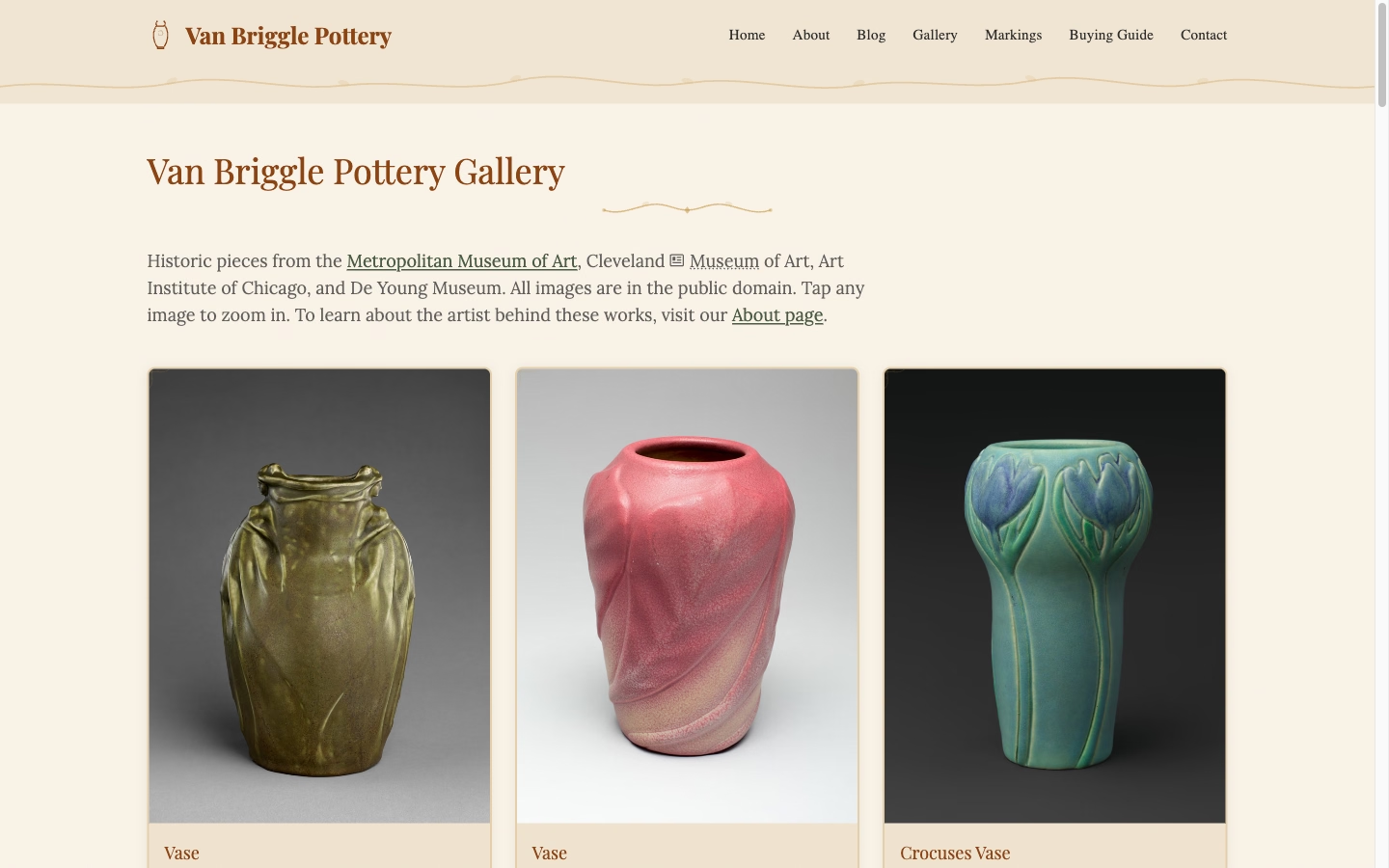
Gallery. 23 pieces sourced from the permanent collections of the Metropolitan Museum of Art, the Cleveland Museum of Art, the Art Institute of Chicago, and the De Young Museum. Every image is public domain, high resolution, and presented with full provenance: date, dimensions, glaze, accession number, and museum attribution.

Maker Mark Directory. Over 200 identified marks cataloged by era, with photographic examples and dating guidance. This is the largest freely-available Van Briggle mark reference online. A collector can photograph a bottom mark, match it against the directory, and narrow a piece’s production date to within a few years.

Reference Library. Five deep-dive guides covering the topics collectors ask about most: a dating guide that walks through every method of determining a piece’s age, a glaze reference documenting named glazes by period, a clay body history explaining the shift from Colorado Springs red clay to white, a novelties section on commercial production pieces, and an ephemera collection of historical catalogs and advertisements.

Blog. 18 articles covering pottery history, collecting strategy, and market analysis. Topics range from the founding story of Artus and Anne Van Briggle to practical guides on spotting reproductions and evaluating condition.

Identification Service. A Stripe-integrated service where collectors submit photos of unknown pieces for professional identification and dating. This fills the gap for collectors who need expert attribution but lack access to in-person appraisers.

01 1901 Founded by Artus 04 1904 Artus dies, Anne leads 20 1920s Commercial expansion 55 1955 Mid-century production 12 2012 Pottery closes

Design

Van Briggle pottery is Art Nouveau. The design language of the site matches the pottery’s period: organic curves, nature-inspired ornamentation, and a color palette pulled directly from the glazes themselves.

Color palette. Terracotta (#8B4513), cream (#FAF3E8), sage (#4A5B42), charcoal (#2D2D2D), deep moss (#2C3B25), and gold (#C4943D). These aren’t arbitrary brand colors. They map to the most iconic Van Briggle glazes: the matte green, the Persian Rose, the Mountain Crag Brown.

Typography. Playfair Display for headings and Lora for body text. Both are serif faces with the kind of contrast and organic stroke variation that feels right next to Art Nouveau pottery. No sans-serif anywhere.

Custom SVG components. I built corner flourishes, vine borders, section dividers, and heading ornaments as inline SVG components. These are not decorative clip art. Each one follows Art Nouveau design principles: asymmetric curves, whiplash lines, floral abstractions. They render crisply at any viewport size and use CSS custom properties for theming.

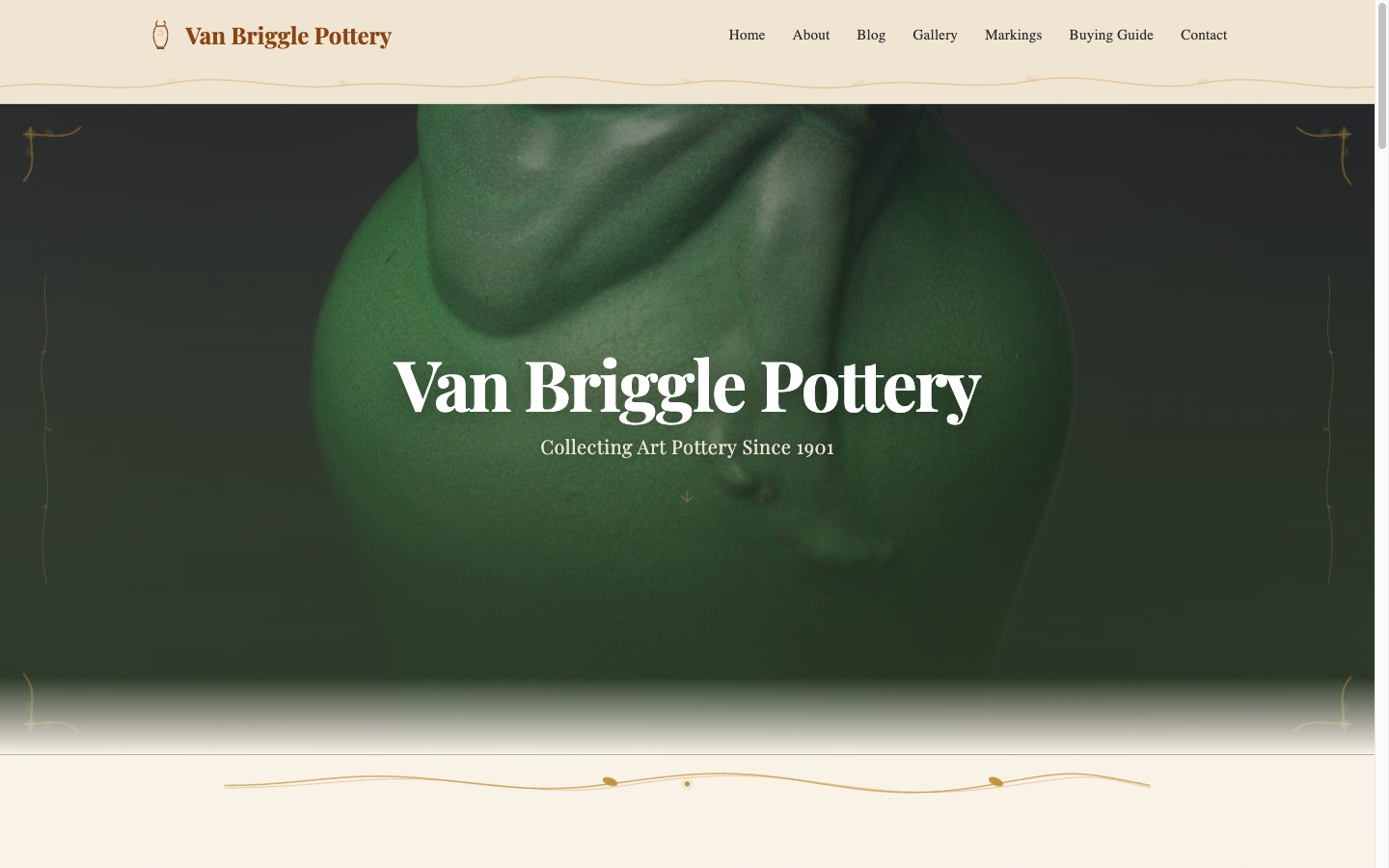
Parallax hero. The homepage opens with a parallax scrolling hero featuring a particle dissolution effect. As users scroll, pottery imagery breaks into particles that drift and reform. This took significant iteration to get the performance right, and it runs at 60fps on mobile.

View Transitions. Every page navigation uses the Astro View Transitions API for seamless, animated transitions between pages. The gallery especially benefits from this, as clicking a piece smoothly morphs the thumbnail into the detail view.

Reference Library Dating Guide Glaze Reference Clay Body History 200+ Maker Marks Novelties Ephemera Pagefind Search Index

Architecture

The site is a static Astro 6 build that handles 625+ images without performance degradation.

Image pipeline. Every image is AVIF-optimized at quality 90 and served through Astro’s built-in image optimization. Museum-sourced photos are high resolution originals, not thumbnails upscaled from eBay screenshots. The build pipeline generates responsive sizes and lazy-loads everything below the fold.

View Transitions. Astro’s View Transitions API drives seamless page navigation across the entire site. I replaced the standard medium-zoom library with a custom image zoom implementation because medium-zoom conflicted with View Transitions during page morphs. The custom solution handles the zoom animation, respects the transition lifecycle, and works correctly when navigating between gallery items.

Pagefind. The static search index covers all 18 blog articles, 200+ maker marks, gallery items, and reference pages. A collector searching for “Mountain Crag Brown 1920s” gets results in milliseconds without any server-side processing.

Scroll-timeline animations. SVG section dividers animate using CSS scroll-timeline, drawing vine and flourish patterns as the user scrolls through content. These are purely CSS-driven with no JavaScript, falling back gracefully in browsers that lack support.

Performance. Despite the image-heavy nature of a pottery reference site, pages load quickly. Static generation means zero server-side rendering overhead. Cloudflare CDN handles distribution. The parallax hero uses will-change and GPU-composited layers to maintain 60fps.

Content strategy

The 18 blog articles target collector-intent keywords with low competition and high specificity. Topics like “how to date Van Briggle pottery” and “Van Briggle glaze identification” attract exactly the audience that benefits from the reference library and identification service.

The gallery sources all images from four major museum collections: the Met, Cleveland Museum of Art, Art Institute of Chicago, and De Young. Every image is public domain under the museums’ open-access policies. This gives the site museum-quality photography that no competitor can match, because competitors rely on collector snapshots and eBay listing photos.

Buying guides connect collecting knowledge to purchasing decisions. Each guide links to relevant Amazon products (books, display cases, cleaning supplies) through affiliate links, and each one surfaces the Stripe identification service for collectors who need expert help with specific pieces.

Monetization

Three revenue streams run simultaneously.

Google AdSense. Display advertising across all pages. The niche collector audience delivers strong CPMs because advertisers targeting antiques, art pottery, and collectibles pay premium rates for qualified traffic.

Stripe identification service. Collectors pay for expert identification and dating of their pieces. The checkout flow is Stripe-integrated with photo upload. This is the highest-margin revenue stream because it converts the site’s reference authority into direct service income.

Amazon affiliate links. Buying guides link to collector reference books, display stands, and pottery care supplies. These are contextually relevant recommendations embedded in content that collectors are already reading for purchasing guidance.

Like what you see?

I build tools that solve real problems. If you have an idea or a project that needs engineering, let's talk.

Get in Touch