Website Traffic Sources: Where Your Visitors Come From and How to Get More
Every visit to your website arrives through a traffic source. Google Analytics categorizes these into channels: organic search, direct, referral, social, email, and paid. Understanding where your traffic comes from is the first step to getting more of it.
After managing analytics for dozens of websites, the pattern is clear: most small business owners focus on social media while organic search quietly drives over half of their traffic. The gap between perception and reality is where opportunities live.
Here is how each traffic source works and what to do about it.
Organic Search: The Biggest Channel
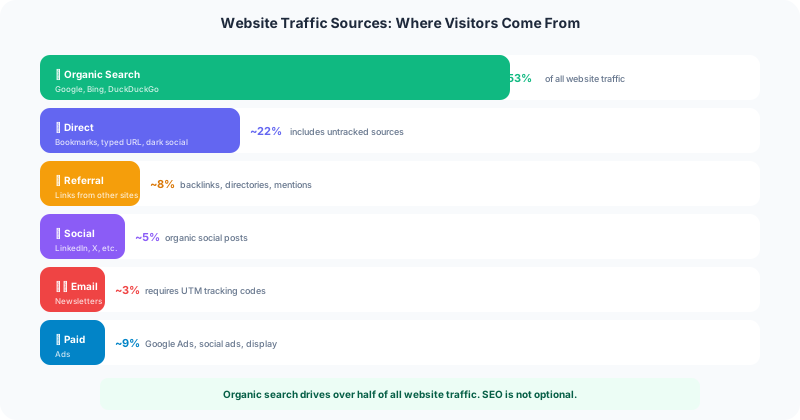
Organic search accounts for roughly 53% of all website traffic across industries. These are visitors who typed a query into Google, Bing, or DuckDuckGo and clicked a result that was not an ad.
This is the traffic source with the highest long-term ROI because it compounds. A blog post that ranks on page one generates traffic for months or years without additional effort. A service page optimized for the right keyword attracts qualified visitors who are actively looking for what you offer.
To grow organic search traffic:
Target keywords with commercial intent. “Sacramento web design” brings visitors who want to hire someone. “What is web design” brings students writing essays. Both have search volume, but only one converts. Use SEMrush or Google Keyword Planner to find keywords with buying intent.
Build topic clusters. A single page about “web design” will not outrank established competitors. But a cluster of 10 interconnected pages covering homepage best practices, web design tips, footer design, layout patterns, and design trends builds topical authority that Google rewards. This is the internal linking strategy that scales.
Publish consistently. Google favors sites that produce fresh, relevant content. Publishing one high-quality article per week is more effective than publishing ten articles in one month and then nothing for three months.
Direct Traffic: The Mystery Channel
Direct traffic is the catch-all bucket in GA4. It includes visitors who typed your URL directly, clicked a bookmark, opened a link from an untracked source (text messages, some apps, PDF links), or arrived through any channel that GA4 cannot identify.
For most websites, direct traffic represents 15-25% of total visits. A portion of this is genuinely direct (people who know your URL), but a significant portion is “dark traffic” from untrackable sources.
You cannot directly control direct traffic, but you can influence it:
Make your URL memorable. Short, clean domain names get typed in directly more often. DevSac.com is easier to remember than SacramentoWebDesignAndDevelopmentServices.com.
Build brand recognition. People who see your name frequently, through Google results, social posts, local events, or word of mouth, are more likely to type your URL directly. Direct traffic is often a lagging indicator of successful marketing across other channels.
Referral Traffic: Links From Other Websites
Referral traffic comes from links on other websites. When another site links to yours and someone clicks it, that visit is recorded as referral traffic. This includes links from directories, blog mentions, partner websites, and resource pages.
Referral traffic does double duty: it sends visitors directly and it builds the backlink profile that improves your organic search rankings. A link from a high-authority site passes domain authority to your site.
To grow referral traffic:
Create linkable content. Original research, comprehensive guides, and useful tools get linked to naturally. Data-driven content (surveys, case studies with real numbers) earns more backlinks than opinion pieces.
List your business in relevant directories. For local businesses, Google Business Profile, Yelp, BBB, and industry-specific directories drive both referral traffic and local SEO signals.
Build relationships with complementary businesses. A web designer linking to an SEO agency (and vice versa) is natural and beneficial for both parties.
Social Media Traffic: Smaller Than You Think
Social traffic typically accounts for only 3-5% of total website traffic for most businesses. That number surprises people who spend hours crafting social media posts. The algorithms on major platforms actively suppress links because they want to keep users on their platform, not send them to your website.
Social media is valuable for brand awareness and audience engagement, but it is not a reliable traffic source for most small businesses.
To get the most traffic from social:
Focus on one platform. LinkedIn for B2B, Instagram for visual businesses, YouTube for educational content. Spreading thin across five platforms produces five weak results.
Share your content, not just links. A post that summarizes the key points of a blog article and includes a link performs better than a post that just says “New blog post!” with a URL.
Email Traffic: Your Owned Audience
Email traffic comes from clicks in your newsletters and marketing emails. This is your most reliable channel because you own the audience list. No algorithm changes can take it away.
Email traffic requires UTM tracking codes. Without them, clicks from email show up as “direct” traffic in GA4, and you lose visibility into one of your most valuable channels.

To grow email traffic:
Build your list with every piece of content. Every blog post should have a subscribe CTA. Every service page should have a lead capture form. The list grows slowly at first and compounds over time.
Send valuable content, not just promotions. Newsletters that provide useful information get opened. Newsletters that are just sales pitches get unsubscribed.
Paid Traffic: Instant but Temporary
Paid traffic (Google Ads, social ads, display advertising) delivers immediate results. You set a budget, target an audience, and traffic starts flowing. When you stop paying, traffic stops instantly.
Paid traffic is valuable for testing. If you want to know whether a new service page converts before investing in SEO, run a small Google Ads campaign and measure the results. If the page converts at a reasonable cost per lead, invest in organic rankings for those keywords.
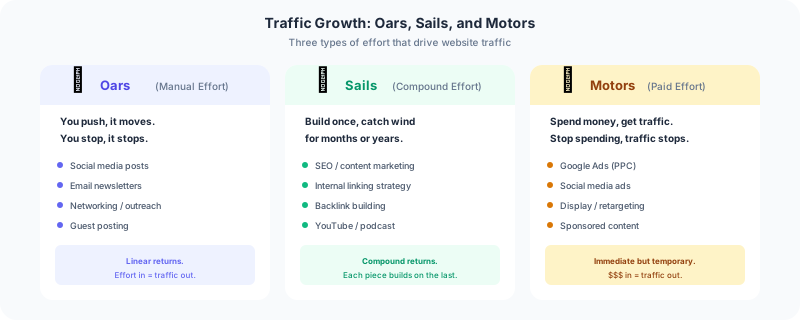
The danger of paid traffic is dependency. If paid ads are your primary traffic source, your marketing costs never decrease. Organic search and content marketing are investments that appreciate over time. Paid ads are expenses that depreciate the moment you stop spending.
What to Do With This Information
Open your GA4 account. Go to Acquisition, then Traffic Acquisition. Look at the channel breakdown for the last 90 days.
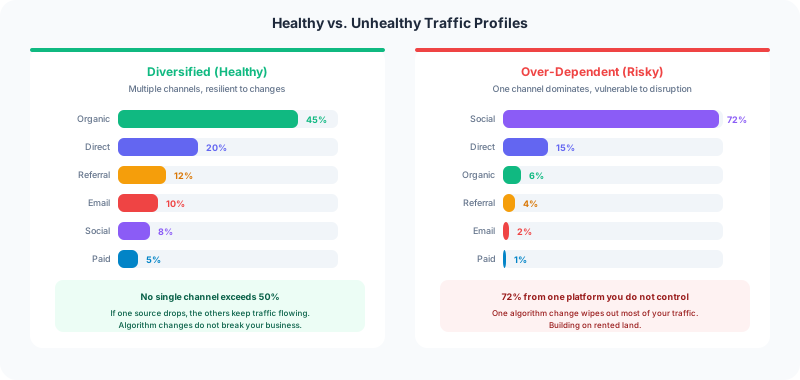
If organic search is below 40%, your SEO needs work. If direct traffic is above 30%, you have tracking issues (add UTM codes to your emails and social posts). If social is your biggest channel, you are building on rented land and need to invest in organic search.
The healthiest traffic profile is diversified: organic search as the foundation, direct as a brand awareness indicator, referral from quality backlinks, and email as an owned audience. Paid traffic fills gaps while organic grows.
Understanding your traffic sources is the first step to growing the right ones. If your analytics show a lopsided traffic profile, or if most of your traffic is “direct” because tracking is not set up, get in touch for a review that identifies where the real opportunities are.