What Is the Average Website Lifespan? 5 Factors
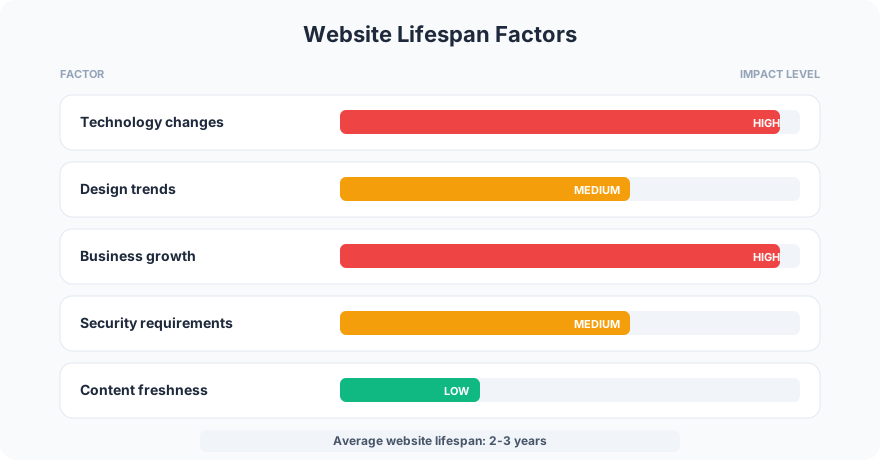
The average website lasts 2 years and 7 months before it gets a full redesign. That number comes from Orbit Media’s annual survey of over 1,000 websites. Some sites last 5 years. Some need a rebuild after 18 months. The difference comes down to five factors.
1. Technology Changes
Frameworks, CMS platforms, and browser standards evolve constantly. A site built on jQuery and Bootstrap 3 in 2020 looks and performs differently than one built on modern tools in 2025. PHP 7 reached end of life. Older WordPress themes stop receiving updates. Mobile-first CSS standards shifted how layouts work entirely.
Sites only 2 years old have needed rebuilds because the underlying technology fell behind. When your CMS vendor drops support or your hosting provider upgrades server software, the clock starts ticking.
2. Design Trends
Web design trends cycle every 2 to 3 years. Flat design replaced skeuomorphism. Then came bold typography and asymmetric layouts. Now clean, minimal interfaces with motion and micro-interactions dominate. A site that looked fresh in 2023 can feel dated by 2026.
This does not mean you need to chase every trend. But if your competitors all launched modern sites and yours still has a slider carousel and stock photo grid, visitors notice the gap immediately.
3. Business Growth
Your business in 2023 is not your business today. New services, new locations, new target audiences, a different competitive landscape. This happens constantly: a company launches a 5-page brochure site, then adds services, hires staff, and expands to new markets. The original site cannot accommodate that growth without a structural overhaul.
If you have added more than 3 services or changed your primary audience since launch, your site architecture is almost certainly wrong for your current business.
4. Security Requirements
SSL certificates, Content Security Policies, GDPR banners, ADA compliance requirements. The security and compliance landscape shifts every year. A site built before 2023 probably lacks modern Content Security Policy headers. Sites on older CMS versions carry known vulnerabilities that automated bots scan for daily.
Security headers and plugin versions on DevSac client sites get updated monthly. Without active maintenance, a 3-year-old WordPress site has an average of 12 plugins with available security patches sitting uninstalled.
5. Content Freshness
Google’s Helpful Content Update prioritizes fresh, updated content. A blog that stopped publishing 18 months ago signals abandonment to both visitors and search engines. Service pages with outdated pricing, old team photos, or references to last year’s events erode trust.
Every client hears the same thing: a website is not a project with a finish line. It is an ongoing asset that needs regular content updates. For a deeper look at the signals that tell you it is time to rebuild, check out the post on when to rebuild your website.
FAQ
Can maintenance extend my website’s lifespan?
Yes. Active maintenance, including security patches, content updates, performance optimization, and design refreshes, can extend a site’s useful life to 4 or 5 years. Without maintenance, most sites hit a wall at 2 to 3 years.
How do I know if my site needs a redesign or just updates?
If the site architecture (page structure, navigation, URL patterns) still fits your current business, you need updates. If you have outgrown the structure, added services that do not fit the original layout, or your technology stack is unsupported, it is time for a full redesign.
Not sure where your site stands? Get in touch for an assessment of your site’s current health with a clear timeline for what needs attention.