How Much Does a Website Cost in Sacramento? (2026 Pricing Guide)
Every Sacramento business owner asks the same question: how much does a website cost? The honest answer is that it depends, but that is not helpful. Here is what actually drives the number, based on real projects and competing bids in the Sacramento market.
How Much Does a Website Cost in Sacramento?
The cost of a Sacramento business website comes down to three things: how complex the site is, how much custom design it needs, and who writes the content. Who builds it matters too. A freelancer and an agency can deliver the same site, and the agency quote carries its account managers and overhead. An e-commerce store costs more than a brochure site, and a custom web application costs more than either.
If a quote is far below everyone else’s, you are getting a template with your logo swapped in. If a brochure site is quoted like a web application, you are paying for their office lease. How to evaluate these bids is covered in what Sacramento small businesses should know before hiring a developer.

The Biggest Cost Driver Is Complexity, Not Page Count
A 30-page site with straightforward content costs less than a 5-page site with a booking system, customer portal, or product configurator. What drives cost is custom logic, not URL count.
The second driver is design. A fully custom visual system with original illustrations, animations, and responsive layouts takes three to four times longer than adapting a component library. The DevSac homepage with its animated Tower Bridge SVG and interactive Sacramento map took more design time than most 20-page brochure sites.
The variable people underestimate is content. If you walk in with final copy and high-quality photos, a site costs less and ships faster. If the developer has to write service descriptions, source imagery, and organize a product catalog, that adds 15 to 30 hours to the project.
Brochure Website
This is a 5 to 7 page site: homepage, about, services, contact, and a blog. Responsive, fast, basic SEO configured. For most Sacramento small businesses, this is enough to establish a professional online presence and start showing up in local search results.
What you get at this tier: custom design, mobile-responsive layout, on-page SEO with proper meta tags and schema markup, a contact form, Google Business Profile integration, SSL certificate, and performance optimization. The website cost breakdown on the services page shows what drives each line item for different project types.
The platform decision at this tier comes down to how often you update your site and whether you want to do it yourself.
WordPress is the better choice if you are publishing blog posts weekly, adding new services regularly, or want your team making changes without calling a developer. The admin dashboard is intuitive, the plugin ecosystem is massive, and with proper hosting and ongoing maintenance a WordPress site runs smoothly for years. Most Sacramento businesses that actively manage their own content belong on WordPress.
Astro is the better choice if your site changes infrequently, maybe a few times a year, and you want the fastest possible load times. Astro generates pure static HTML with no database and no server-side processing. The result is a site that is dramatically faster, cheaper to host, and virtually unhackable. The tradeoff is that content changes go through the developer instead of a dashboard.
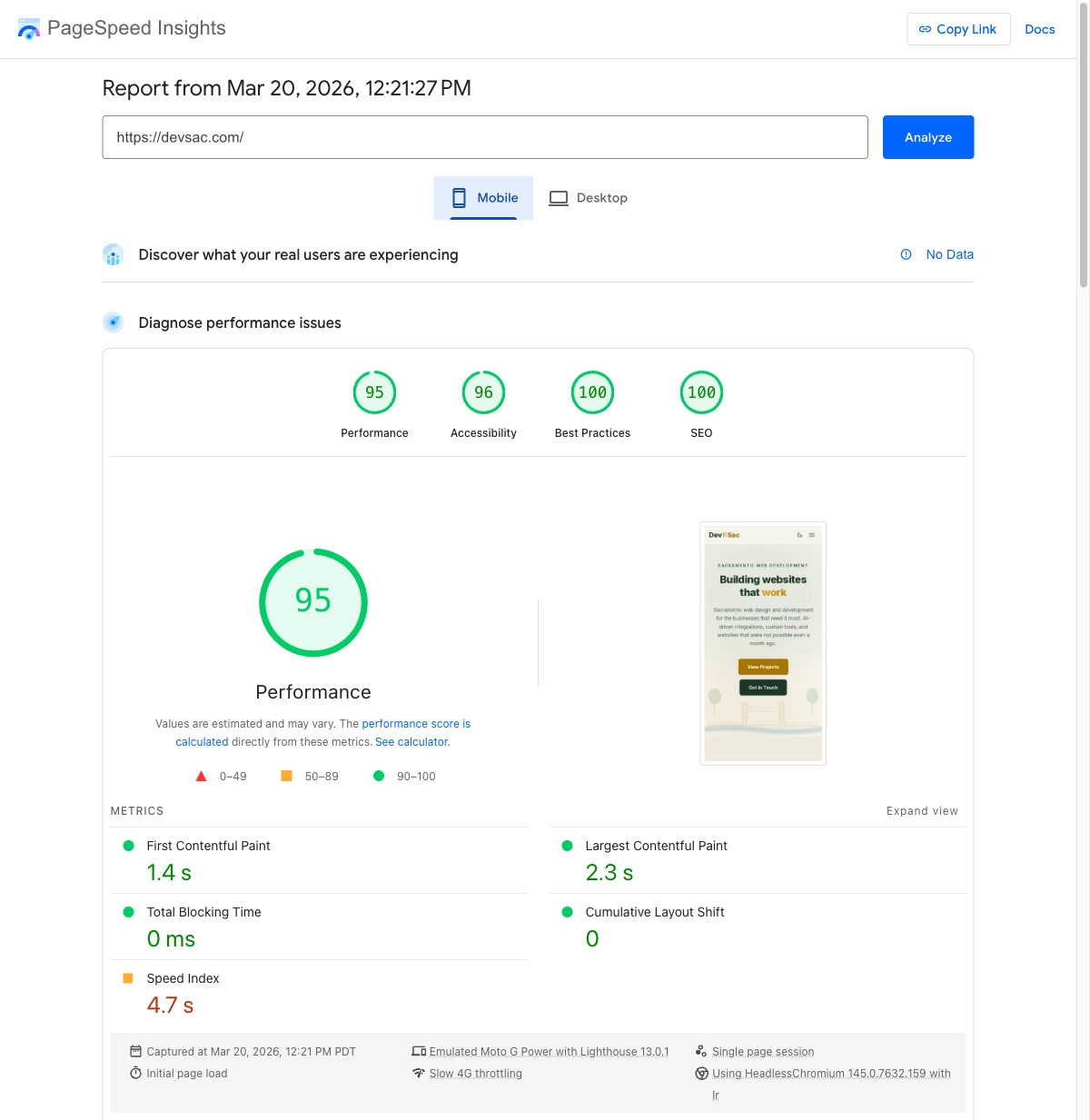
DevSac.com is built with Astro. It scores 95 on mobile and 100 on desktop in PageSpeed Insights. But for a Sacramento restaurant updating their menu weekly or a real estate agent posting new listings, WordPress with managed hosting is the right tool. Frog Stone Media builds both and recommends based on your actual workflow.
E-commerce Website
The range is wide because e-commerce complexity varies enormously. A Shopify store with 50 products and standard checkout is the smaller scope. A custom-built catalog with specific filtering, image optimization pipelines, and inventory management is several times the work.
Van Briggle Pottery’s e-commerce catalog is built with Astro. The most time-intensive part was not the code. It was optimizing hundreds of high-resolution product images so they load in under 2 seconds without losing the detail buyers need to see on handmade pottery. Each image went through an automated pipeline: resize, convert to AVIF, generate responsive srcsets, and lazy-load below the fold.
For Sacramento businesses selling physical products, budget more for product photography than for the website itself. A modest site with professional product photos will outsell an expensive site with phone camera snapshots every time.
Custom Web Application
If you need something a template or existing platform cannot do, you are in custom development territory. Booking systems, inventory management, customer portals, data pipelines, price comparison tools.
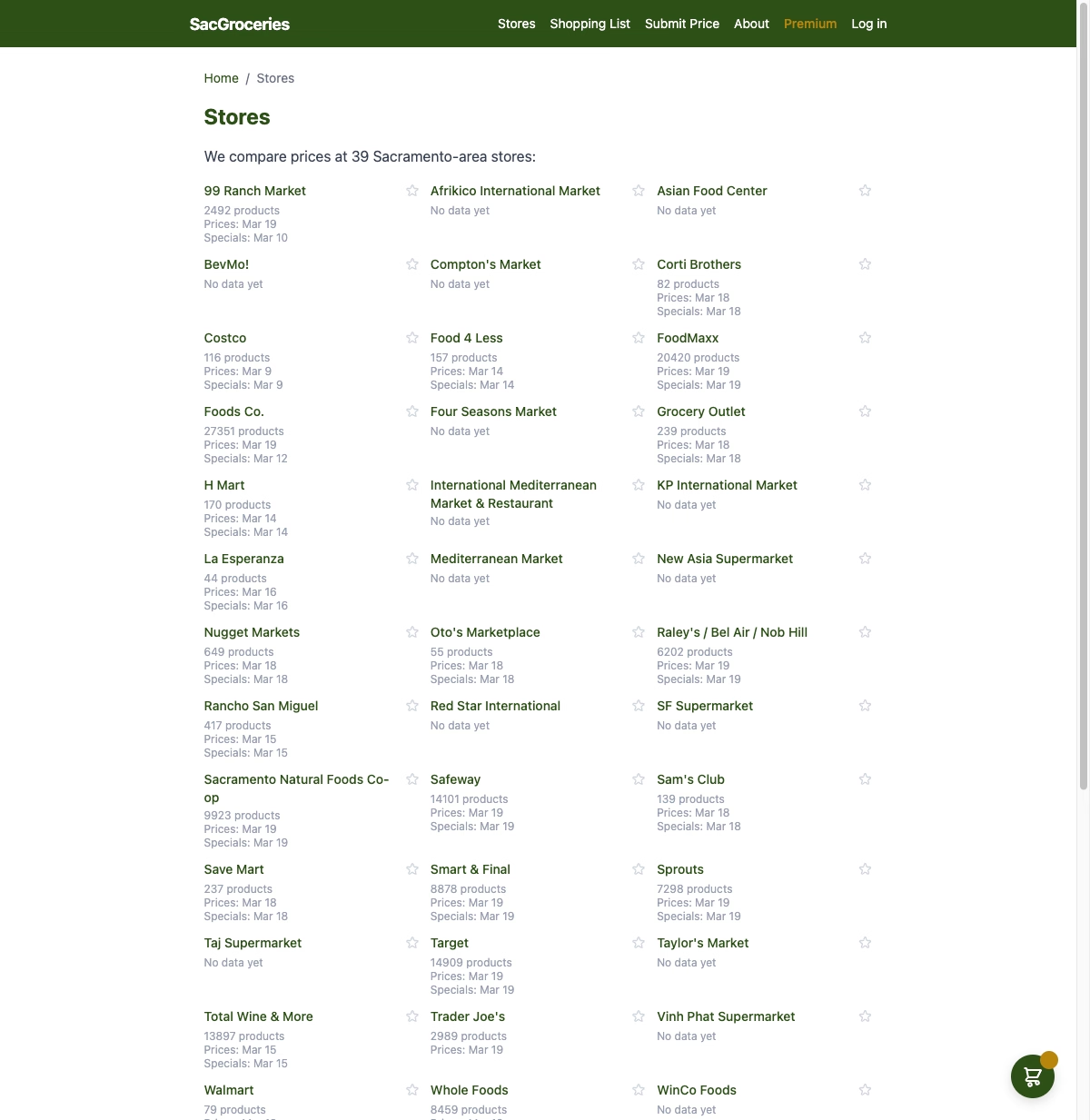
SacGroceries is an example. It compares grocery prices across 39 Sacramento stores, pulling data from multiple sources, normalizing product names, and updating weekly. That required a Cloudflare Workers backend, a D1 database, scheduled data pipelines, and a search interface that handles 134,000+ price records without slowing down.
ContentMK is another example. It is a desktop content management app built with Electron that handles what WordPress admin cannot: tag deduplication across 2,200 articles, content health scoring, internal link gap analysis, and batch operations. Projects like these cost more than any website because they involve database design, API development, and ongoing infrastructure.
What Are the Red Flags in Website Pricing?
A rock-bottom price for a “complete website.” You are getting a Squarespace or Wix template with your content pasted in. That is a legitimate choice if you just need a basic online presence, but it is not custom web design. It is data entry.
Web application pricing for a brochure site. Some Sacramento agencies quote a 10-page site like a custom software project. You are paying for account managers, project managers, strategy meetings, and a downtown office. The actual development work is identical to what a freelancer delivers for a fraction of that.
Monthly fees without clear deliverables. Some Sacramento web design companies charge low upfront costs and lock you into long monthly contracts. Ask what the monthly fee covers. If the answer is “hosting and maintenance,” know that hosting a static site costs next to nothing and maintenance means occasional plugin updates. This bait-and-switch mirrors the tactics in SEO scam emails targeting Sacramento businesses.
“We own the website.” Some agencies build on proprietary platforms and retain ownership. If you leave, you lose everything. Before signing, confirm in writing that you own your domain, your content, and your code.
Questions to Ask Before You Sign
- What exactly is included, and what is billed separately?
- Who writes the content and sources the photos?
- Who owns the domain, hosting account, and code after launch?
- What does the monthly fee cover, line by line?
- Can I see three Sacramento sites you built that are still live?
How Projects Are Priced
Every project is scoped after a free email exchange, then quoted at a flat rate or hourly depending on the project. No surprise invoices. The quote is itemized, so you see what the design, development, content, and launch each cost and can cut what you do not need.
Projects use WordPress or Astro depending on the need. WordPress when you need to manage content yourself and want a familiar dashboard. Astro when speed and low maintenance are the priority. Managed WordPress hosting and WordPress maintenance plans are available for businesses that want their site handled for them.
The projects page shows every build, with technical details and live links for each. Businesses across Sacramento, Roseville, Folsom, and the surrounding suburbs get the same scoping process. For help navigating the Sacramento web design market, read the guide to hiring a web designer in Sacramento. For an honest estimate, reach out through the contact page. You will hear what your project needs, even if the answer is “use Squarespace.”