Why Bad Agencies Win Bids and What Their Clients Failed to Check
Last year a Sacramento agency won a restaurant client over Frog Stone Media by quoting less. Fair enough. Six months later that restaurant owner called back. The site was a Wix template with their logo dropped in. It scored 34 on Google PageSpeed mobile. The agency had disappeared, and the owner couldn’t edit the site because the login credentials belonged to the agency’s account. Starting over with proper web design services cost more than doing it right the first time.
This pattern repeats often enough that it’s not bad luck. It’s a system. Agencies that win on price or polish tend to lose on delivery. Here’s what those clients didn’t check, and what would have saved them.
What Actually Goes Wrong
These aren’t hypotheticals. These are patterns that have repeated across Sacramento for years.
Locked Into a Platform You Don’t Own
The most common disaster. An agency builds your site on their proprietary platform or their agency account on Wix, Squarespace, or WordPress.com. You don’t own the hosting. You don’t have the code. You might not even own the domain. When you want to leave (or when they go under), you discover your entire web presence belongs to someone else.
Business owners have described losing years of blog content, customer reviews, and SEO rankings because they couldn’t migrate off a locked platform. One retail shop in Midtown had to rebuild from scratch after their agency closed. They lost 18 months of organic search progress.
”Mobile Responsive” That Isn’t
Every agency in 2026 claims mobile responsive design. Most of them mean “the desktop layout shrinks down.” That’s not the same thing. Real mobile optimization means rethinking the layout for thumbs, not cursors. It means tap targets large enough to hit. It means the menu works without a horizontal scroll. It means your phone number is tappable.
Over 60% of local search traffic in Sacramento comes from mobile devices. A site that looks “fine” on mobile but loads in 6 seconds and buries the phone number behind three taps is losing you calls every day.
The Template Swap
This one’s subtle. The agency shows you a beautiful mockup. You’re impressed. Then the delivered site looks… exactly like three other sites in their portfolio. Because it is. They bought a theme, changed the colors and logo, dropped in your content, and called it custom design.
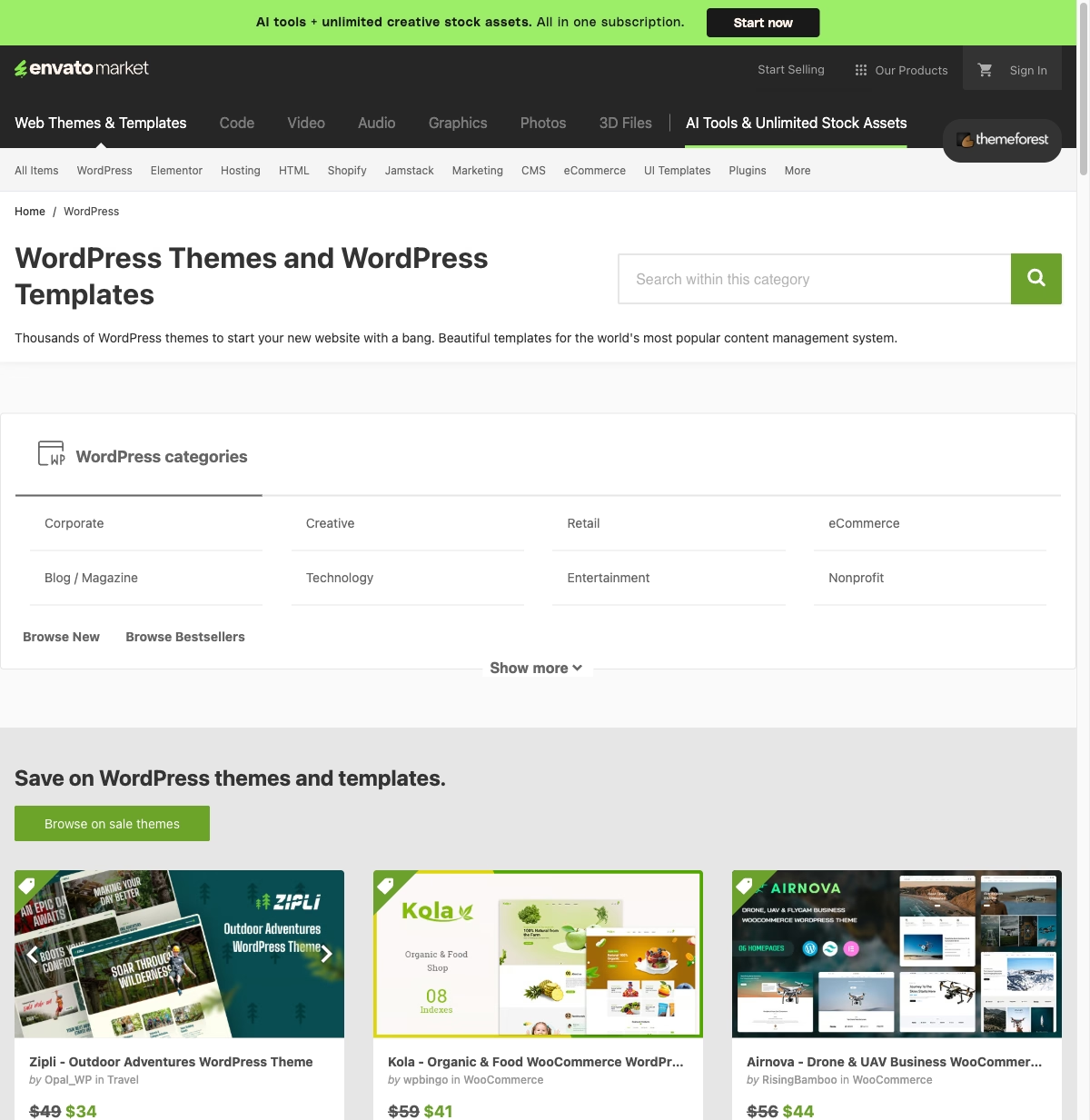
There’s nothing inherently wrong with starting from a template, if the price reflects it. The problem is paying custom-design prices for “custom design” and getting a $59 ThemeForest theme with a logo swap. Check their portfolio. If five client sites have the same layout with different colors, you know the game.
Ghosted After Launch
The agency was responsive during the sales process. Quick replies, polished proposals, a smooth onboarding. Then you signed off on the final site and… silence. Emails take a week. Small fixes get quoted as new projects. The “included maintenance” turns out to be “we’ll keep the server running.”
Post-launch support is where the real relationship starts. A business website isn’t a painting you hang on the wall. It needs updates, security patches, content changes, and someone who picks up the phone.
What to Actually Check Before You Hire
Every one of those disasters above was preventable. Here’s the diligence that would have caught them.
Run Their Portfolio on Your Phone
Not “look at their portfolio on mobile.” Open their client sites on your phone and actually use them. Try to find the phone number. Try to fill out the contact form. Try to read a page without zooming.
Then run those sites through PageSpeed Insights. A good agency should be producing sites that score above 80 on mobile. If their showcase work, the sites they’re proudest of, scores below 60, your site will be worse.
Ask One Question: “Do I Own Everything?”
You need to hear yes to all three:
- Domain name. Is it registered in your name with your email as the owner?
- Website code. Can you take the files and host them anywhere?
- Content. Do you own the text, images, and design, or are they licensed through the agency?
If the answer to any of these is “well, technically…” walk away. Ownership is binary.
Get References, Then Ask Tough Questions
Any agency can hand you three happy clients. The value is in what you ask:
- “What happened when something broke after launch?”
- “How long does it take to get a small change made?”
- “Has the site actually brought in new business?”
- “If you had to do it over, would you hire them again?”
That last question is the only one that matters. Listen to the pause before they answer.
Check Their Own Site
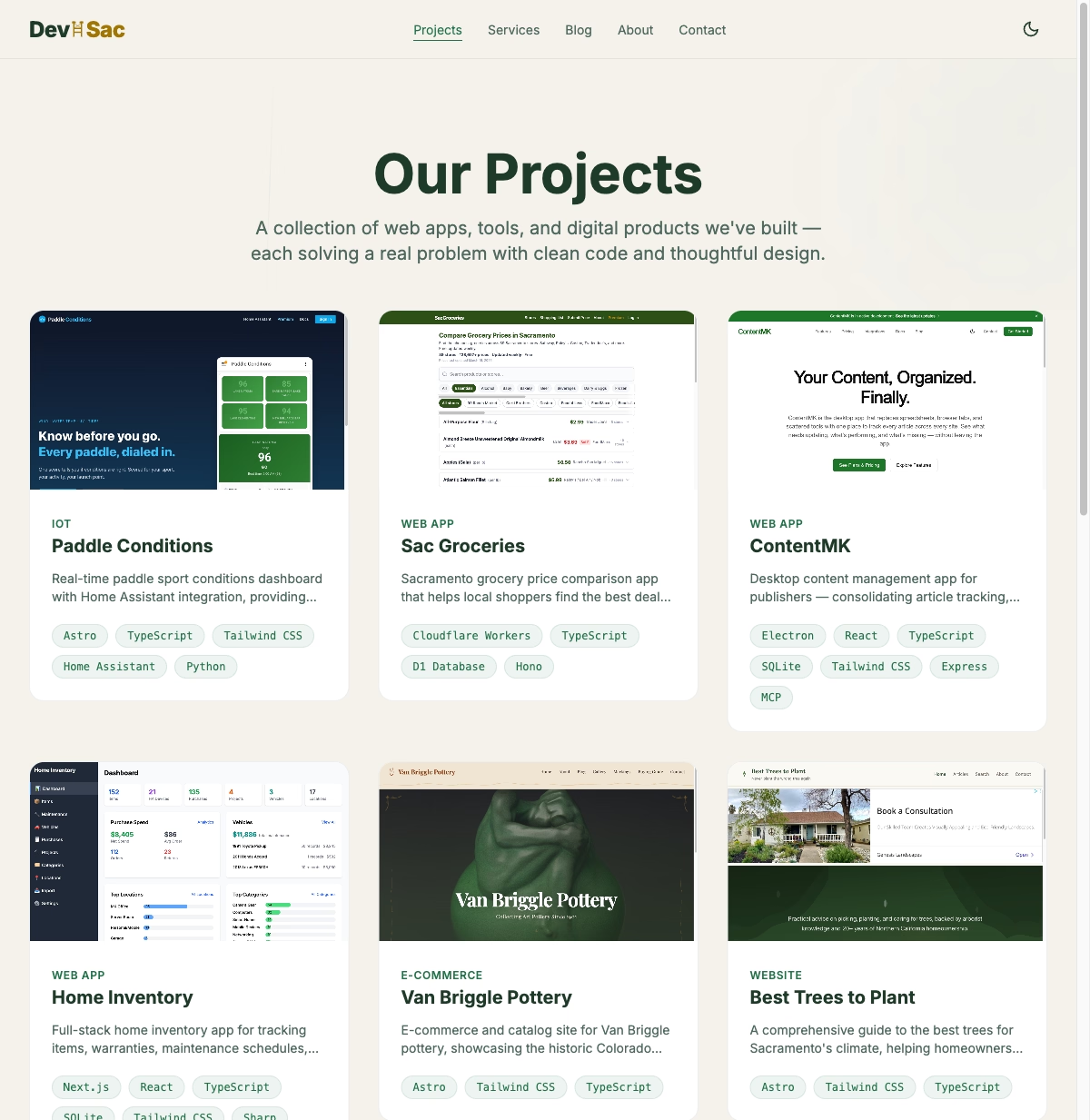
An agency’s website is their best work. Full creative control, unlimited time, no client constraints. If their own site is slow, outdated, or has a copyright date from 2023, that tells you everything about their standards.
Red Flags That Should End the Conversation
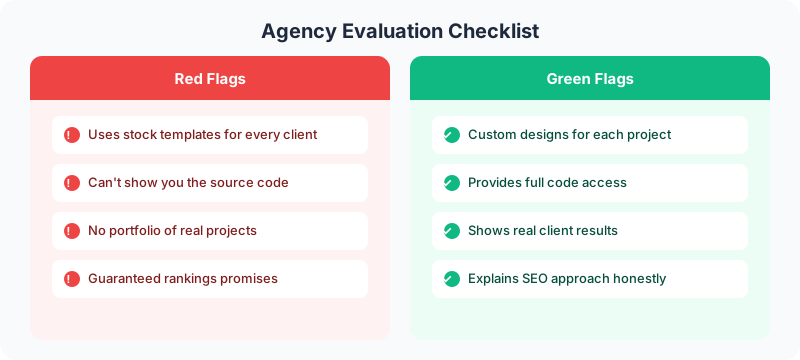
A bargain-bin quote for a business website. That’s a template install. There is nothing wrong with a template install if that’s what you need, but don’t confuse it with web design. Know what you’re buying. The Sacramento website pricing guide covers what each tier actually gets you.
“We guarantee first-page rankings.” Nobody controls Google’s algorithm. Anyone who guarantees rankings is either lying or using tactics that will get your site penalized. Guaranteed rankings is always the first tell when you spot SEO scam pitches.
A full proposal after a 15-minute call. If an agency can scope your entire project after a brief conversation, they aren’t scoping your project. They’re sending a templated proposal. Real discovery takes time. Understanding a business takes hours before any proposal, because a website that doesn’t reflect how you actually operate is a waste of your money.
Monthly fees with no clear breakdown. Basic hosting is one of the cheapest line items on any website. If the monthly retainer is many times what hosting costs, you should see an itemized list of what that covers. Updates, security monitoring, content changes, analytics reporting. If the answer is vague, you’re subsidizing their overhead.
What Each Tier Gets You in Sacramento
Quick reality check on Sacramento web design tiers:
- Template setup: Pre-built theme, your content, basic customization. Fine for a simple online presence. Not custom.
- Custom small business site: Real custom design. Original layout, mobile optimization, basic SEO, a few rounds of revisions.
- Complex custom site: Custom functionality. E-commerce, booking systems, integrations, content strategy.
The full cost breakdown goes deeper on each tier. If someone quotes a template-setup price for “fully custom design with SEO,” the math doesn’t work. Know what tier you’re shopping in.
The Real Criteria
Forget the slick pitch decks. A small business website needs to do three things: load fast, convert visitors into calls, and be something you can actually maintain after launch. Every question you ask during the hiring process should map back to one of those three.
For a complete breakdown of the Sacramento web design market, including agency types, pricing, and what to look for in a portfolio, read the Sacramento web design guide.
If you’re evaluating agencies and want a straight answer about what your business actually needs, reach out. Even if Frog Stone Media is not the right fit, you’ll hear what to look for.