How to Choose a Web Design Company in 2026
Choosing a web design company is one of the most consequential decisions a small business makes. A good website generates leads for years. A bad one costs you twice: once for the build and again when you have to rebuild it. After 15+ years of building websites and watching businesses make this choice from the other side, here is what actually matters.
Start With the Portfolio, Not the Pitch
Every web design company has a pitch. Ignore it. Look at the work.
Pull up 5-10 sites from their portfolio and evaluate each one on your phone (not desktop, because that is where your customers are). Ask yourself:
Do the sites load fast? Open each one on your phone with a cellular connection. If it takes more than 3 seconds to load, the company prioritizes design over performance. Your customers will not wait either.
Do the sites look different from each other? If every portfolio site looks like the same template with different logos, the company builds templates, not custom websites. That is fine if you want a template. It is a problem if you are paying custom prices.
Are the sites still up and maintained? Click through the portfolio links. If half of them are down, redirected, or visibly neglected, the company builds and abandons. A good web design company builds relationships, not just websites.
Do the sites rank in Google? Search for the business name and main service keywords. If a site built by this company does not rank for its own business name, that is a problem. If it ranks for competitive service keywords, that is a strong signal.
Evaluate the Proposal, Not the Price
Cheap websites are expensive. A bargain website that does not rank, does not convert, and needs to be rebuilt in 18 months costs more than a properly built website that generates leads for five years. Evaluate proposals on what you get, not what you pay.
What is included? A good proposal specifies: number of pages, content creation (or who provides it), SEO setup (meta tags, schema markup, sitemap), mobile optimization, hosting, and post-launch support. If the proposal just says “custom website,” ask for specifics.
Who writes the content? Content is the most important part of your website, and it is the part most web design companies skip. “Client provides content” means you are responsible for writing every word on your site. If you are not a writer, that means your website launches with placeholder text that never gets replaced. Budget for professional copywriting or choose a company that includes it.
What happens after launch? A website is not a project. It is an ongoing asset. Ask about maintenance plans, security updates, content updates, and who to call when something breaks. If the answer is “we hand it off and you are on your own,” plan for the cost of finding someone else to maintain it.
What is the timeline? A custom website typically takes 6-12 weeks from kickoff to launch. If someone promises 2 weeks, they are using a template. If the timeline stretches to 6 months, they have too many projects or unclear processes.
Red Flags
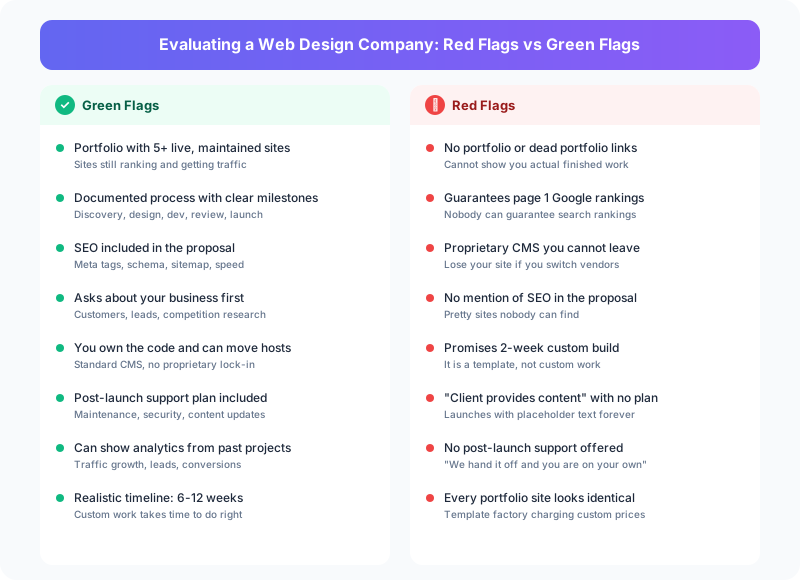
No portfolio or case studies. If a company cannot show you their work, they either do not have any or are not proud of it. Both are disqualifying.
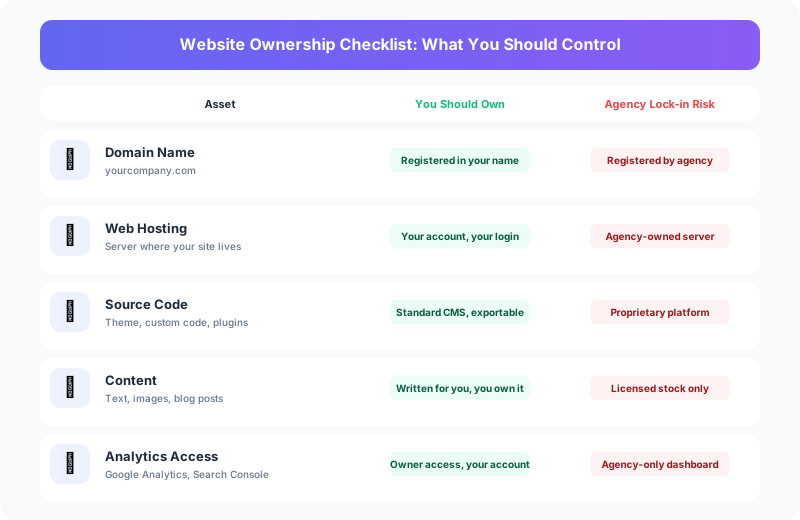
Proprietary CMS lock-in. Some companies build on proprietary platforms that only they can edit. If you leave, you lose your website. Ask upfront: “If we part ways, do I own the code and can I move it to another host?” The answer should be yes.
No discussion of SEO. If the proposal does not mention search engine optimization at all, the company builds pretty websites that nobody finds. SEO is not an add-on. It is a fundamental part of web design.
Guaranteed rankings. Nobody can guarantee Google rankings. A company that promises “page 1 for [your keyword]” is either lying or planning to use tactics that will get your site penalized. Run.
No process documentation. A professional company has a documented process: discovery, design, development, review, launch. If they cannot explain their process, they do not have one.
Questions to Ask
Before signing with any web design company, ask these:
-
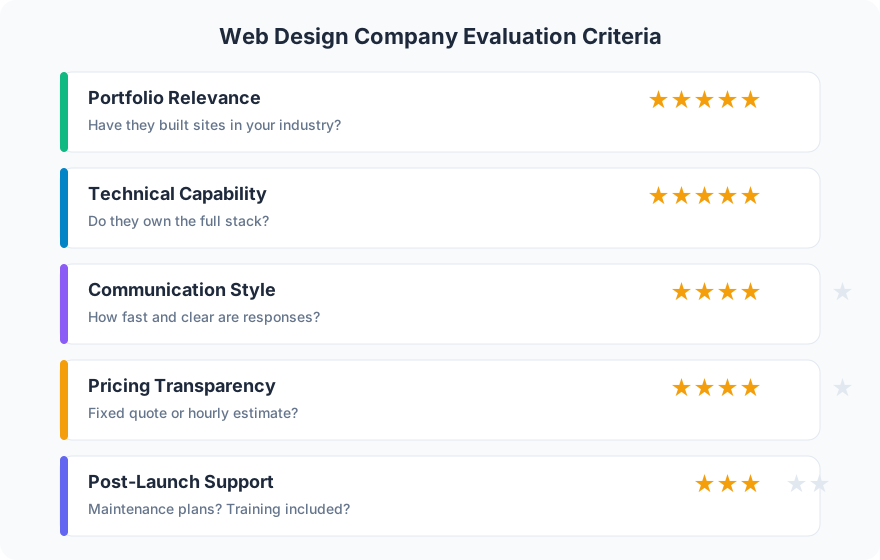
Can I see 3 sites you built in the last year that are similar to what I need? Recent work in your industry or at your scale is the best predictor of what you will get.
-
Who specifically will work on my project? Some companies sell with their A-team and deliver with junior staff. Know who is doing the work.
-
How do you handle content? The answer tells you whether they understand that content drives results or just design pretty containers.
-
What does ongoing support look like after launch? Monthly retainer, hourly billing, included maintenance plan. Know the cost of keeping your site alive.
-
Can you show me the analytics or business results from a past project? Any company can show you a pretty design. Fewer can show you traffic growth, lead generation, or conversion improvements.
-
What CMS will you use and do I own the code? WordPress, Astro, Webflow, Squarespace, each has trade-offs. But you should always own the output.
What Good Companies Do
A good web design company does more than build websites. They solve business problems that happen to require a website. Here is what that looks like in practice:
They ask about your business before they talk about design. Who are your customers? Where do your leads come from? What does your competition look like online? These questions matter more than color preferences.
They have opinions. A company that says yes to everything is not a partner. They are an order taker. A good company pushes back when your ideas would hurt your business (a homepage video that kills load speed, a design trend that sacrifices usability, removing the phone number because it “clutters the design”).
They show their process. Discovery, wireframes, design concepts, development, review, launch. Each step has deliverables and approval gates. You see progress throughout, not a big reveal at the end.
They measure results. After launch, they set up analytics, track conversions, and report on performance. A website that goes live without analytics is a website nobody is learning from.
Frog Stone Media builds websites with all of these principles. If you are in Sacramento, the local web design guide breaks down the market by agency type, pricing, and what to look for. See the work or get in touch about your project.