WHFoods.info | Nutrition Reference Library
Nutrition reference library rescued from the Internet Archive and rebuilt as a modern Astro static site. Food profiles, recipes, nutrient pages, and meal plans built on nutrient data merged from USDA, CIQUAL, and NIH databases. Ad-free, cookie-free, tracking-free.
Who it helps
WHFoods.info helps readers find evidence-based nutrition information written for real people, without supplement ads or academic jargon. Search for “salmon nutrition” elsewhere and you get SEO-optimized listicles selling supplements, calorie counters with no context, and academic databases that require a biochemistry degree to parse. The original World’s Healthiest Foods research was evidence-based and detailed, but it sat on aging WordPress infrastructure, and when that infrastructure failed, the research started disappearing from the internet. The Internet Archive still had snapshots.
What it does
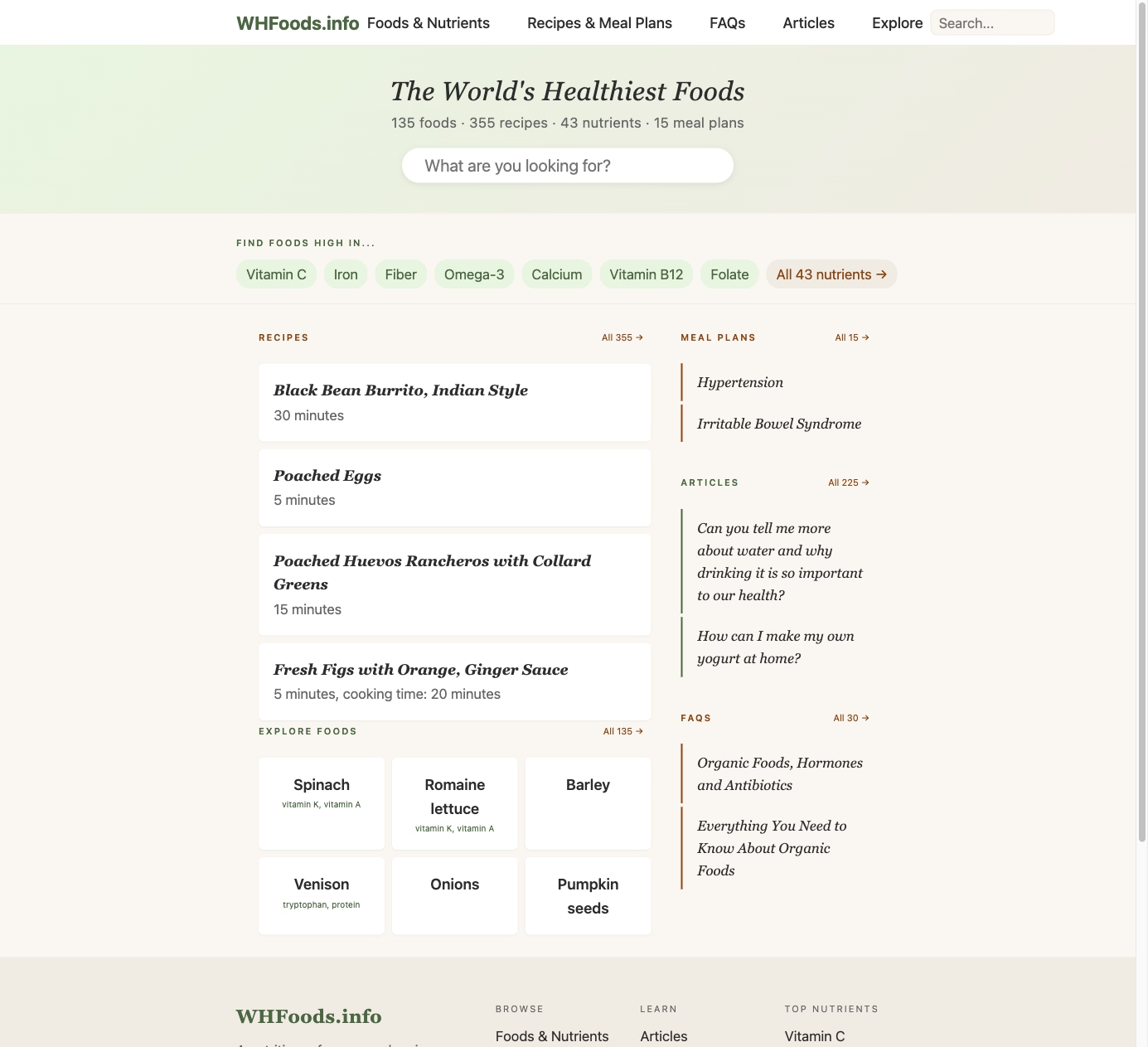
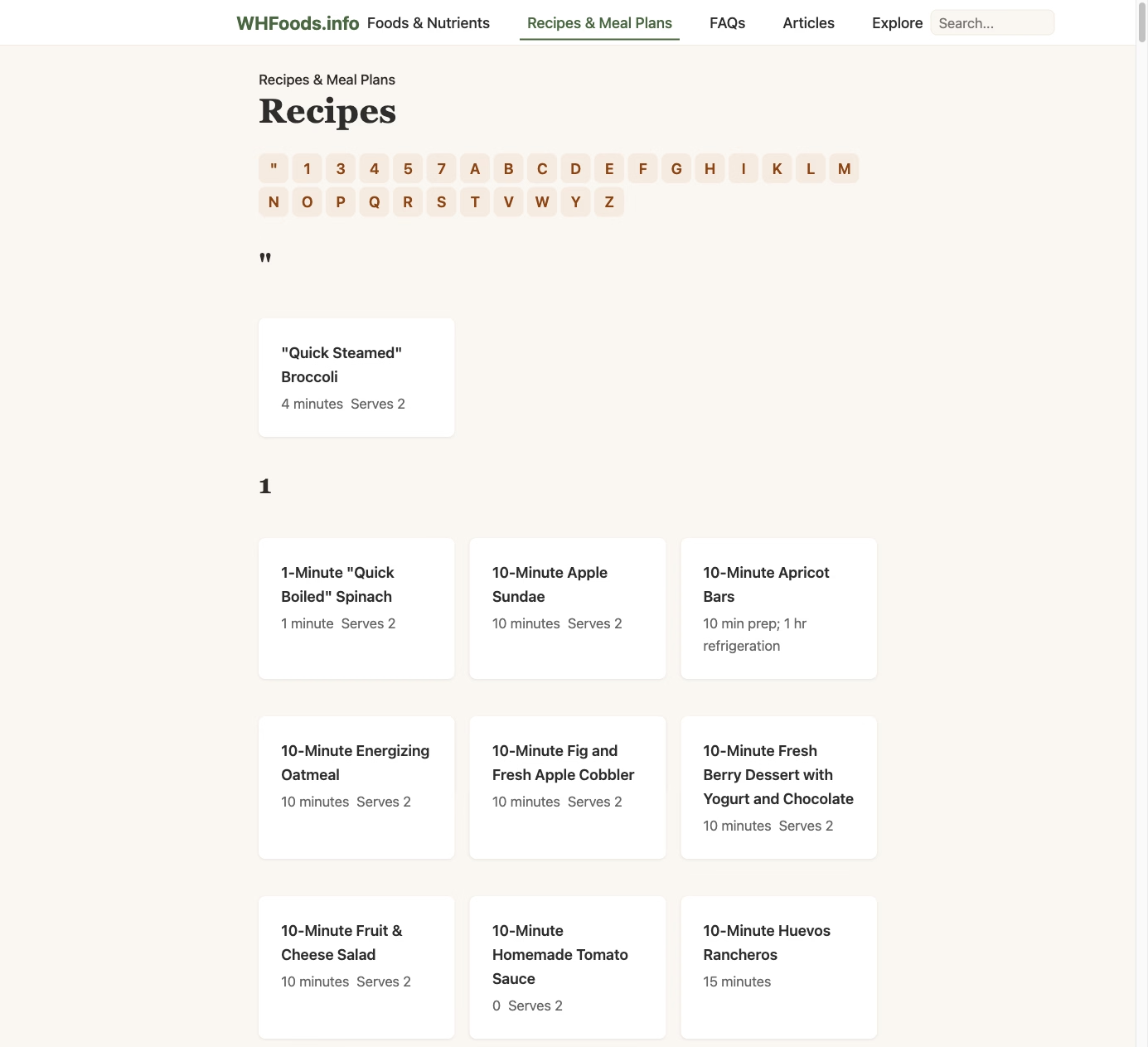
WHFoods.info is a complete nutrition reference library rescued from the Internet Archive and rebuilt as a modern static site. It holds food profiles with nutrient density ratings, recipes with prep times and serving sizes, nutrient reference pages showing which foods are richest in each nutrient, and condition-specific meal plans for diabetes, hypertension, osteoporosis, and more, plus articles and FAQs. The site carries no ads, cookies, or tracking scripts.
The recovery pipeline
The Internet Archive’s CDX API was the starting point. The pipeline queried it to discover every URL the Wayback Machine had captured for the original site, then a rate-limited evaluator with exponential backoff pulled down each snapshot without hammering Archive.org’s servers. The raw HTML went through a Cheerio-based parser that extracted content from the original page structure, stripping navigation chrome, ads, and layout markup while preserving the nutritional tables and cross-reference links that make the content valuable.
The Wayback Machine captured different pages at different times, so the same food page might exist in a 2019 snapshot and a 2022 snapshot with different nutrient data. A multi-era merging system reconciles these differences, preferring the most recent data while flagging conflicts for manual review. A debranding rules engine then strips all references to the original organization, replacing them with neutral language so the preserved content stands on its own.
Architecture
The nutrient data pipeline is the most complex piece of engineering on the site. Each food profile draws from four databases: USDA FoodData Central for macronutrients and standard vitamins, CIQUAL 2025 for European reference values, the USDA Flavonoid Database for polyphenol data, and NIH Office of Dietary Supplements for recommended daily allowances and upper limits. When any two sources disagree by more than 10%, the merge engine flags the conflict, and every flagged value is resolved by hand against peer-reviewed sources.
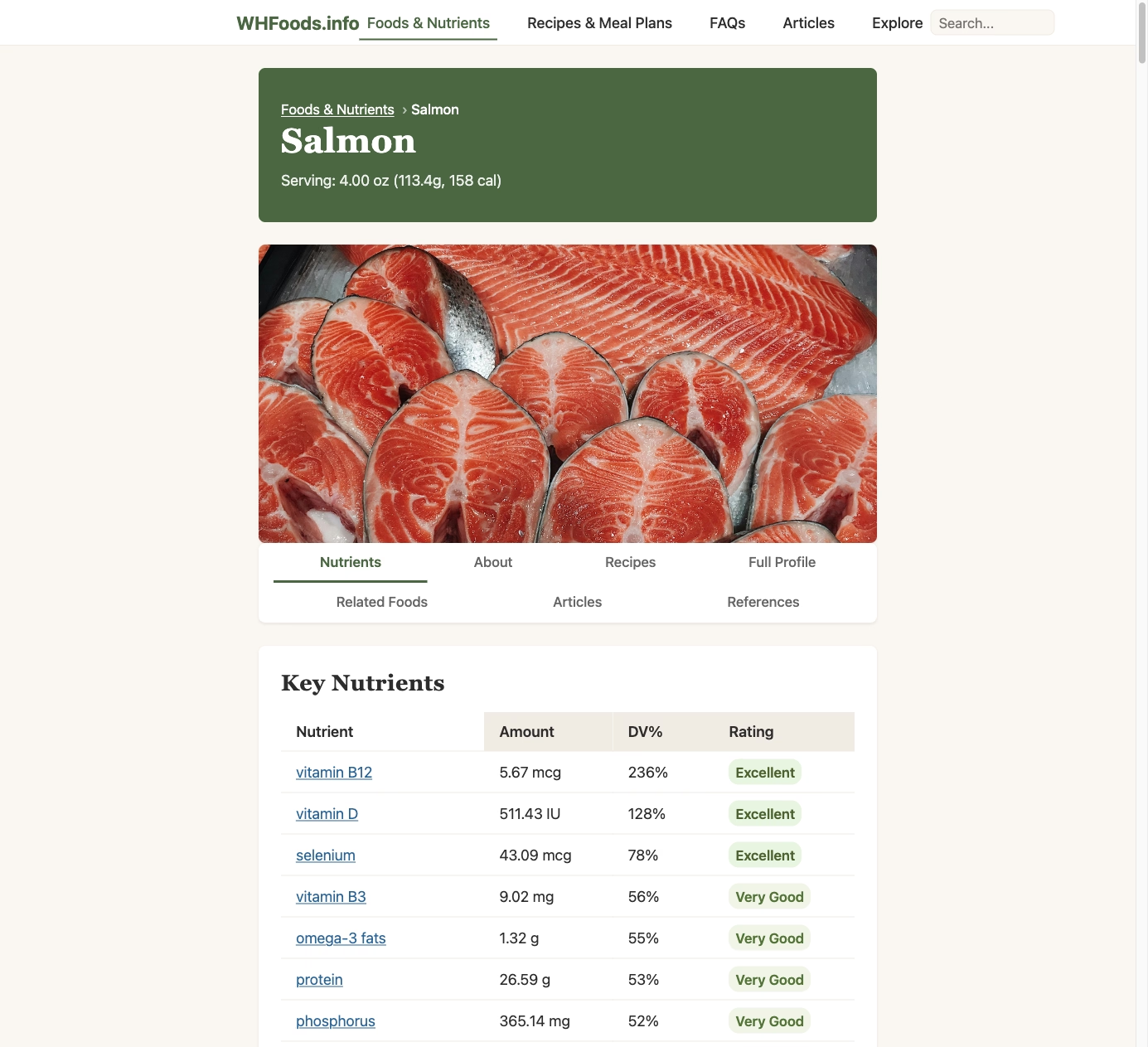
The food pages themselves use a tab navigation system with sections for Nutrients, About, Recipes, Full Profile, Related Foods, Articles, FAQs, and References. Nutrient tables show raw vs. cooked comparison data, daily value percentages, and a rating system (Excellent, Very Good, Good) based on nutrient density per calorie.
Fuse.js powers a client-side fuzzy search that spans every page across every content type: foods, recipes, nutrients, meal plans, articles, and FAQs. Type “vitamin C” and you get the nutrient page, the richest food sources, recipes that preserve it, and articles explaining absorption. Schema.org structured data marks up every page with Article, BreadcrumbList, and NutritionInfo types for rich search results.
The visual design uses a two-pillar color system: green tones for reference content (food profiles, nutrient pages) and brown tones for cooking content (recipes, meal plans). Typography pairs Georgia for headings with system sans-serif for body text to keep load times minimal while maintaining readability across dense nutrient tables.
Content architecture
The site manages 24 content types, all cross-linked. A food page for salmon links to its best nutrient scores, the recipes that use it, the meal plans it appears in, and the articles that reference it. A nutrient page for Omega-3 lists the richest food sources ranked by density. A meal plan for hypertension connects to the specific foods, recipes, and nutrients that support cardiovascular health. Every connection is bidirectional, so users can enter from any content type and navigate the full reference network.
This cross-referencing required careful data modeling to avoid circular dependencies and duplicate content. Each content type owns its primary data and references other types by ID. The Astro build resolves these references at compile time, generating the correct links and preview cards for each cross-reference. The result is a site where every page is a hub, not a dead end.
Testing and deployment
The data pipeline and content parsers were built test-first with Vitest. Real HTML fixtures from the Wayback Machine snapshots serve as test inputs, so the parser tests validate against actual archived markup rather than synthetic examples, which surfaces edge cases in the original site’s HTML.
GitHub Actions handles CI/CD. Every push triggers a full site build, runs the test suite, and deploys to cPanel via rsync. Cloudflare provides CDN caching and SSL termination.
What makes it different
The site has no ads, tracking, cookies, newsletter popups, or cookie banners, and the evidence-based nutrition research is preserved and freely accessible. The nutrient data comes from four authoritative databases with automated conflict detection, not from a single source that might be wrong. Every food profile shows raw vs. cooked comparisons because cooking changes everything about a food’s nutrient profile. The meal plans target specific health conditions with specific foods and recipes, not generic “eat healthy” advice.
Want something like this for your business?
Send a short email about the problem you want solved and get a written scope back. No sales call required.
Start With a Free Email Scope