Local SEO Checklist: 15 Steps to Rank in Your City
Local SEO is how your business shows up when someone searches “[your service] near me” or “[your service] [your city].” It is different from traditional SEO because it includes factors that regular search optimization does not: your Google Business Profile, local citations, reviews, and geographic signals.
Frog Stone Media has done local SEO for businesses in Sacramento and across California. The process is the same everywhere. Here is the complete checklist.
How Local Search Rankings Work
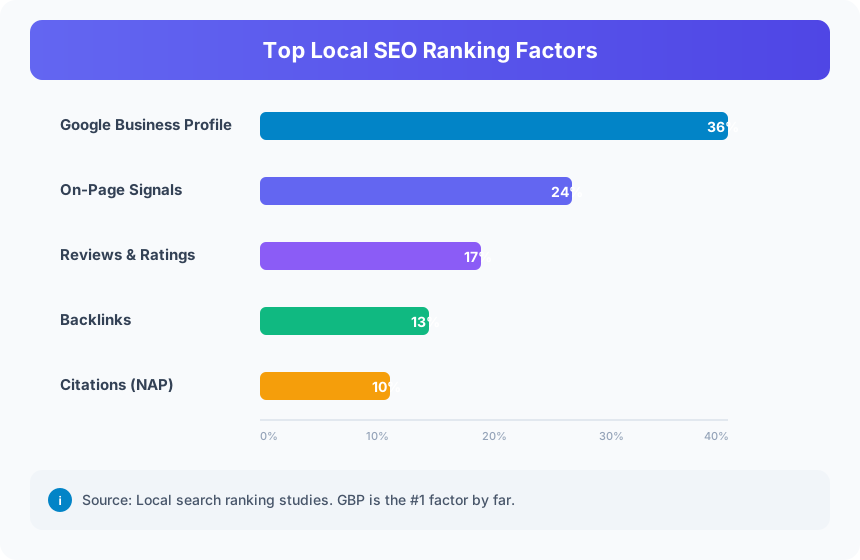
Local rankings depend on different factors than traditional organic rankings. The biggest single factor is your Google Business Profile.
Google evaluates three things for local results: relevance (does your business match what the searcher wants?), distance (how close are you to the searcher?), and prominence (how well-known and well-reviewed is your business?).
You cannot control distance. You can control relevance and prominence. This checklist focuses on both.
Google Business Profile (Steps 1-5)
Your Google Business Profile (GBP) accounts for 36% of local ranking factors. Getting this right is the single highest-impact action for local SEO.
1. Claim and Verify Your Profile
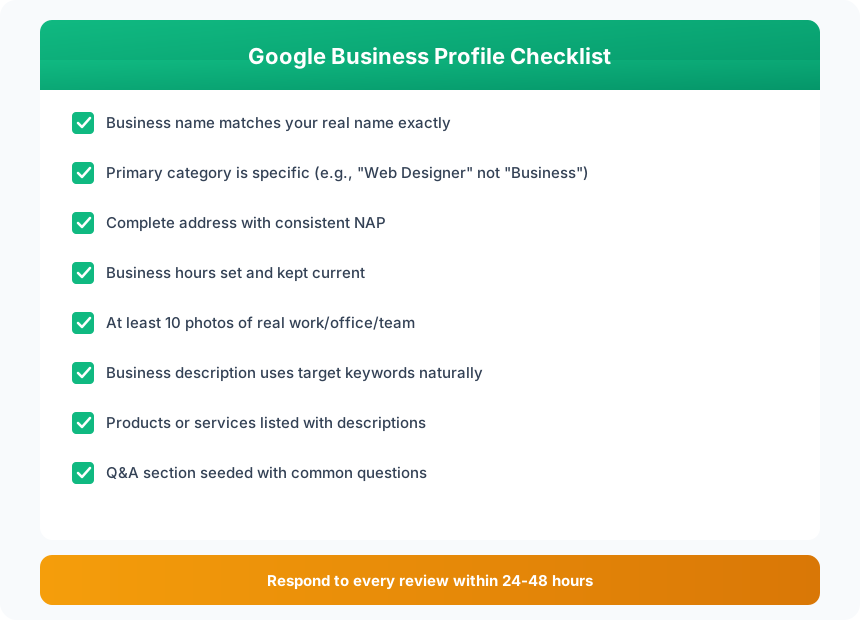
If you have not claimed your GBP, do it now. Search for your business on Google Maps. If a listing exists, claim it. If it does not, create one. Google will verify your address through a postcard, phone call, or email.
2. Choose the Right Primary Category
Your primary category is the single strongest relevance signal in local SEO. Be specific. “Web Designer” is better than “Business Consultant.” “Family Dentist” is better than “Medical Professional.”
Google allows up to 10 categories. Use them all, but make your primary category the most specific match for your core service.
3. Complete Every Field
Fill out every available field: business hours, phone number, website URL, service area, attributes, products, services, and business description. Google rewards complete profiles with higher visibility.
Your business description should include target keywords naturally. “Sacramento web design and development” is better than “we make websites.”
4. Add Photos Weekly
Businesses with 100+ photos on GBP get 520% more calls than businesses with fewer than 10 photos. Post photos of your work, your office, your team, and your customers (with permission).
Add at least 2 new photos per week. This signals to Google that your business is active and engaged.
5. Respond to Every Review
Respond to every review within 24-48 hours. Positive reviews get a genuine thank you. Negative reviews get a professional, empathetic response that addresses the concern. Never argue in review responses.
The volume, velocity, and diversity of your reviews directly affect local rankings. Ask every customer for a review, not only the ones you expect to be happy. Make it easy by sending them a direct link to your GBP review page. Most profiles have common GBP mistakes that cost real calls before the owner even realizes the profile is working against them.
On-Page Local SEO (Steps 6-9)
6. Optimize Title Tags with City Name
Include your city name in title tags for service pages. “Web Design Sacramento | DevSac” tells Google exactly where you operate and what you do. Do not stuff every city into one title tag. Create separate pages for each city you serve.
7. Add LocalBusiness Schema Markup
Add JSON-LD structured data with your business name, address, phone number, hours, and services. This gives Google machine-readable data about your business that supplements your GBP listing.
Include areaServed to specify every city and region you cover. This helps Google understand your service area even if you do not have physical offices in every city.
8. Create Location-Specific Content
If you serve multiple cities, create a dedicated page for each one. Each page needs unique content, not just the city name swapped into a template. Include local landmarks, local business references, and specific information about that market.
DevSac has 11 area pages for Sacramento metro cities. Each one has unique content, local FAQs, and specific references to that community.
9. Optimize for “Near Me” Searches
“Near me” searches have grown 500% in recent years. You do not need to put “near me” on your pages (Google determines proximity automatically). Instead, make sure your NAP (name, address, phone) is consistent across your site and that your schema markup includes precise geographic coordinates.
Citation Building (Steps 10-12)
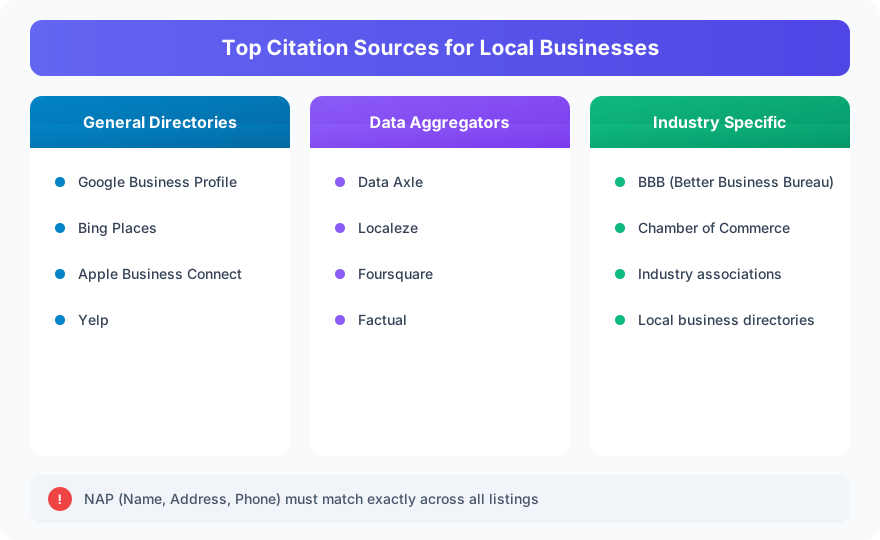
Citations are mentions of your business name, address, and phone number (NAP) on other websites. Consistency is critical.
10. Submit to Major Directories
At minimum, submit your business to: Google Business Profile, Bing Places, Apple Business Connect, and Yelp. These four cover the majority of local search visibility.
11. Submit to Data Aggregators
Data aggregators distribute your business information to hundreds of smaller directories. Submitting to Data Axle, Localeze, and Foursquare covers the broadest distribution with the least effort.
12. Ensure NAP Consistency
Your business name, address, and phone number must be identical everywhere. “123 Main St” on your website but “123 Main Street” in your GBP is an inconsistency that confuses search engines. Audit all listings quarterly.
Local Link Building (Steps 13-15)
13. Join Your Local Chamber of Commerce
Chamber of Commerce websites typically have high domain authority. A membership listing with a link to your website is one of the easiest high-quality local backlinks you can get.
14. Sponsor Local Events or Organizations
Event sponsors typically get a link on the event website. Local charities, school events, and community organizations all offer link opportunities that also build genuine community relationships.
15. Get Featured in Local Publications
Local news sites, business journals, and community blogs are always looking for expert sources. Offer yourself as a subject matter expert for stories related to your industry. Each feature typically includes a link to your website.
FAQ
How long does local SEO take to show results?
Most businesses see measurable improvement in local rankings within 3-6 months of implementing these steps. GBP optimization and citation building show results fastest (4-8 weeks). Content and link building take longer but have compounding effects.
What is the most important local SEO factor?
Your Google Business Profile. It accounts for 36% of local ranking factors and is the only element that directly controls how you appear in the local map pack. Optimize your GBP before investing time in any other local SEO activity.
Do I need separate pages for each city I serve?
Yes, if you want to rank in those cities. A single page targeting “web design in Sacramento, Roseville, Folsom, and Elk Grove” will not rank as well as four dedicated pages, each with unique content about that specific market. Mine are split that way too, down to web design in Rancho Cordova and Folsom web design.
Local SEO is not a one-time project. It is an ongoing process of keeping your GBP current, building citations, earning reviews, and creating local content. The businesses that dominate local search are the ones that do this work consistently, not the ones that do it once and forget about it.
Need help with local SEO for your business? Get in touch to build your local visibility.