Website Competitive Analysis: Tools and Methods for Every Project
Every website build starts with a look at the competition. Not to copy them. To find the gaps they are leaving wide open.
Competitive analysis revealed that every Sacramento web design competitor stacks their keywords on the homepage instead of building dedicated service pages. It also showed that one competitor has 442 ranking keywords, all pointing to a single URL. These are structural weaknesses that show up immediately when you run the right tools.
Here is the exact framework, and the tools behind every competitive analysis.
The 5-Step Competitive Analysis Framework
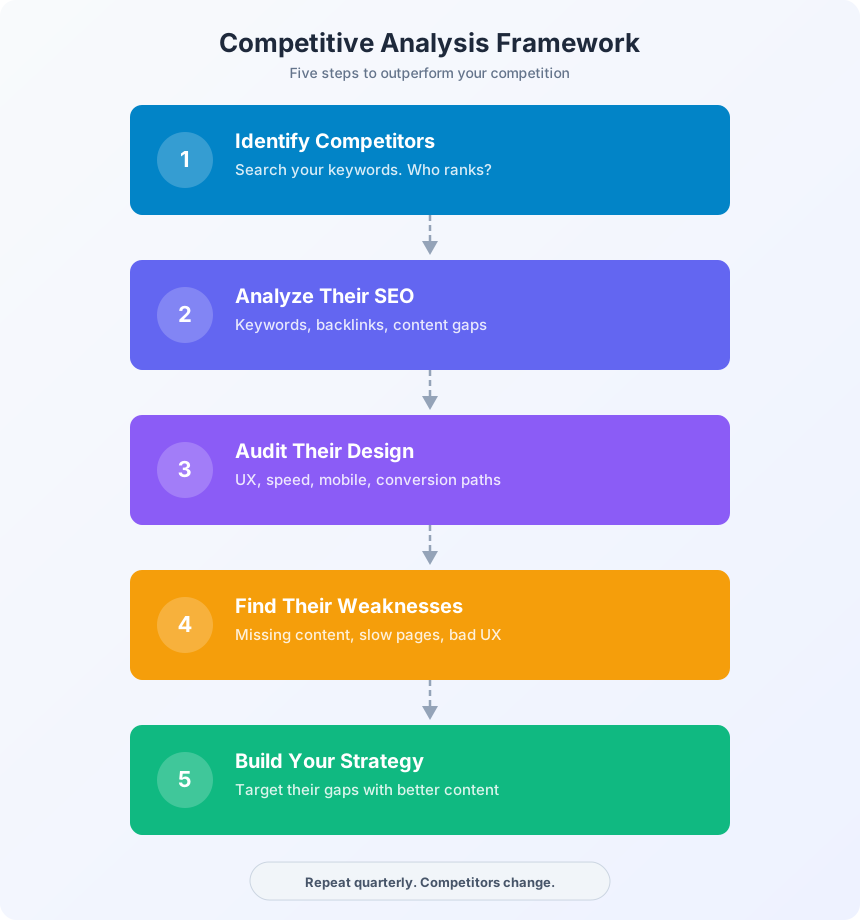
Step 1: Identify Your Actual Competitors
Your business competitors and your search competitors are not always the same. A Sacramento law firm competes for clients against other Sacramento law firms. But in search results, they compete against Avvo, FindLaw, and national legal directories.
Search for your top 5 target keywords in Google. Write down every domain that appears on page 1. These are your search competitors. Focus on the ones that are closest to your business model (similar size, similar geography, similar services).
Step 2: Analyze Their SEO
This is where tools earn their cost. You want to know: what keywords do they rank for, how much organic traffic do they get, and where do their backlinks come from?
SEMrush handles this. Enter a competitor’s domain and you immediately see their top keywords, traffic estimates, and the specific pages driving that traffic. The keyword gap tool is particularly valuable: it shows keywords your competitors rank for that you do not.
In the Sacramento analysis for DevSac, the keyword gap tool revealed 1,217 keywords that competitors owned but DevSac did not rank for. Eight of those keywords had all three local competitors ranking, with zero presence from DevSac. That is a prioritized target list.
Step 3: Audit Their Design and UX
Tools cover SEO data, but you need human eyes on the actual websites. Open each competitor’s site on desktop and mobile. Evaluate:
- Page speed. Run each competitor through Google PageSpeed Insights. Slow competitors are vulnerable. If they load in 5 seconds and you load in 2, that is a ranking factor you win by default.
- Mobile experience. Tap through their mobile menu. Fill out their contact form on your phone. If it is clunky, frustrating, or broken, their mobile visitors are looking for alternatives.
- CTA structure. Where are their calls to action? How specific are they? “Contact Us” is weaker than “Get a Free Quote.” Weak CTAs mean lower conversion rates and more visitors leaving without acting.
- Content depth. Are they publishing blog content? How often? Is it substantial or thin? Competitors who do not blog leave a massive content gap you can fill.
Step 4: Find Their Weaknesses
Every competitor has weaknesses. The common ones:
All keywords on the homepage. This is the most common mistake in local web design markets. Competitors stuff every service keyword onto a single homepage instead of creating dedicated pages. A dedicated page for “Sacramento web design” will outrank a homepage that also targets 30 other keywords.
No blog content. Competitors who rely entirely on service pages have a ceiling. They can only rank for commercial keywords. A blog targeting informational keywords (like this article) builds topical authority that lifts the entire domain.
Thin service pages. A service page with 200 words and a stock photo will not outrank a page with 1,500 words, custom graphics, FAQ schema, and client testimonials. Depth wins.
No schema markup. Most small business competitors do not use structured data. Adding LocalBusiness, FAQ, and Service schema gives you rich result opportunities they are not competing for.
Step 5: Build Your Strategy
Turn your findings into a priority list. Target the keywords with the best combination of volume, difficulty, and business value. Build pages that are demonstrably better than what competitors have.
This is not about matching competitors. It is about exceeding them on every dimension: better content, faster loading, stronger trust signals, more specific CTAs.
Competitive Analysis Tools
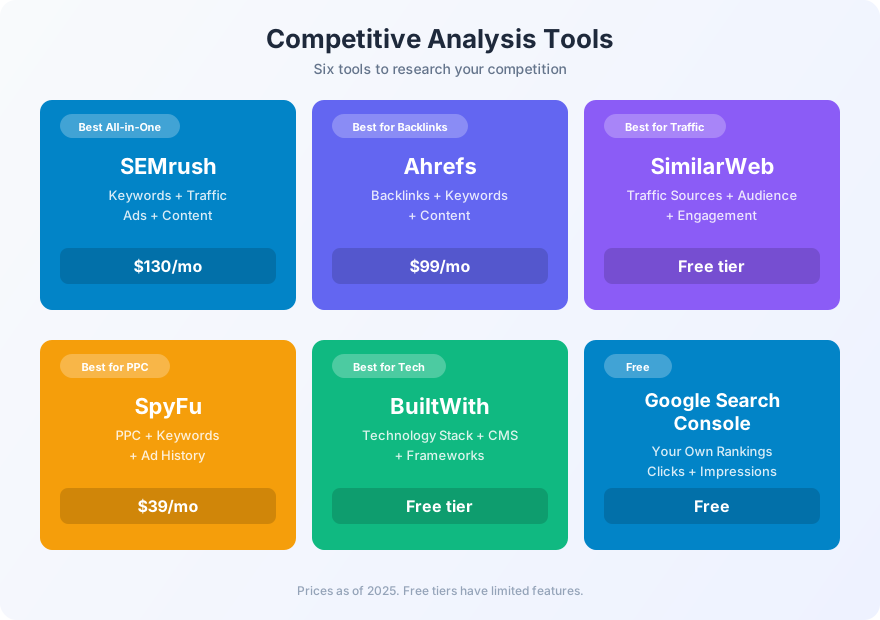
SEMrush ($130/month)
The primary tool. SEMrush does keyword research, backlink analysis, competitor traffic estimates, advertising intelligence, and content gap analysis all in one platform. The keyword gap tool (comparing your domain to competitors) is the single most valuable feature for building a competitive strategy.
Ahrefs ($99/month)
The strongest backlink database. If your strategy involves link building (it should), Ahrefs shows you where competitors get their backlinks, which content earns links naturally, and what broken links on competitor sites you could replace with your own content.
SimilarWeb (Free tier)
Estimates total traffic, traffic sources, and audience demographics. The free version gives enough data to compare traffic levels across competitors. Useful for benchmarking.
SpyFu ($39/month)
Specializes in PPC competitive intelligence. Shows every keyword a competitor has bid on, their estimated ad spend, and their ad copy. Valuable if you run Google Ads alongside your SEO strategy.
BuiltWith (Free tier)
Reveals the technology stack behind any website. CMS, analytics tools, hosting, frameworks, marketing tools. Useful for understanding what competitors are using and finding opportunities where their technology choices create limitations.
Google Search Console (Free)
Not a competitive tool in the traditional sense, but your own Search Console data shows which of your pages compete for the same queries as your competitors. Use the Performance report to find queries where you rank on page 2 (positions 11-20). These are the keywords closest to breaking through.
What to Look For on Competitor Websites
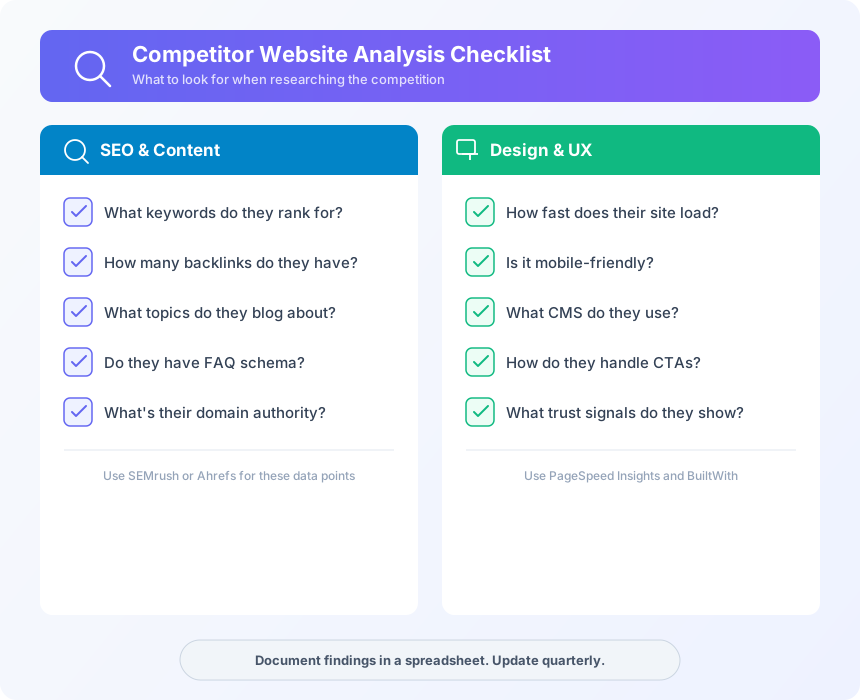
Document everything in a spreadsheet. One row per competitor, columns for each metric. Update it quarterly because competitors change their strategies too.
How Competitive Analysis Shapes Client Projects
Every new client project starts with a competitive analysis before a single line of code. It produces:
The keyword target list. Which keywords have the best combination of volume, difficulty, and commercial intent? Which ones do competitors rank for that the client does not?
The content plan. What topics should the blog cover? What gaps exist in competitor content that better, deeper articles can fill?
The design benchmarks. What do competitor sites look like? Where are they weak on UX? What can the new site do differently that visitors will notice?
The technical advantages. Are competitors slow? Do they lack schema? Is their mobile experience poor? Every technical weakness is an opportunity to differentiate.
FAQ
How often should you do a competitive analysis?
Run a comprehensive analysis before any major web project (redesign, new site, content strategy overhaul). After that, do a quarterly check to see if competitors have changed their approach, added new content, or improved their SEO.
Do you need paid tools for competitive analysis?
You can start with free tools. Google Search Console, BuiltWith, and SimilarWeb’s free tier give you useful data. But paid tools like SEMrush and Ahrefs provide depth that free tools cannot match. If your business depends on search traffic, the $100-130/month investment pays for itself.
What is the most important thing to look for in a competitor analysis?
Content gaps. Keywords that competitors rank for and you do not. These represent proven search demand that you are not capturing. Fill those gaps with better content and you take traffic directly from competitors.
Competitive analysis is not about watching the other guy. It is about finding the opportunities they are missing. Every weakness in a competitor’s SEO, design, or content is a gap you can fill.
Want a competitive analysis for your market? Get in touch for a look at your competition.